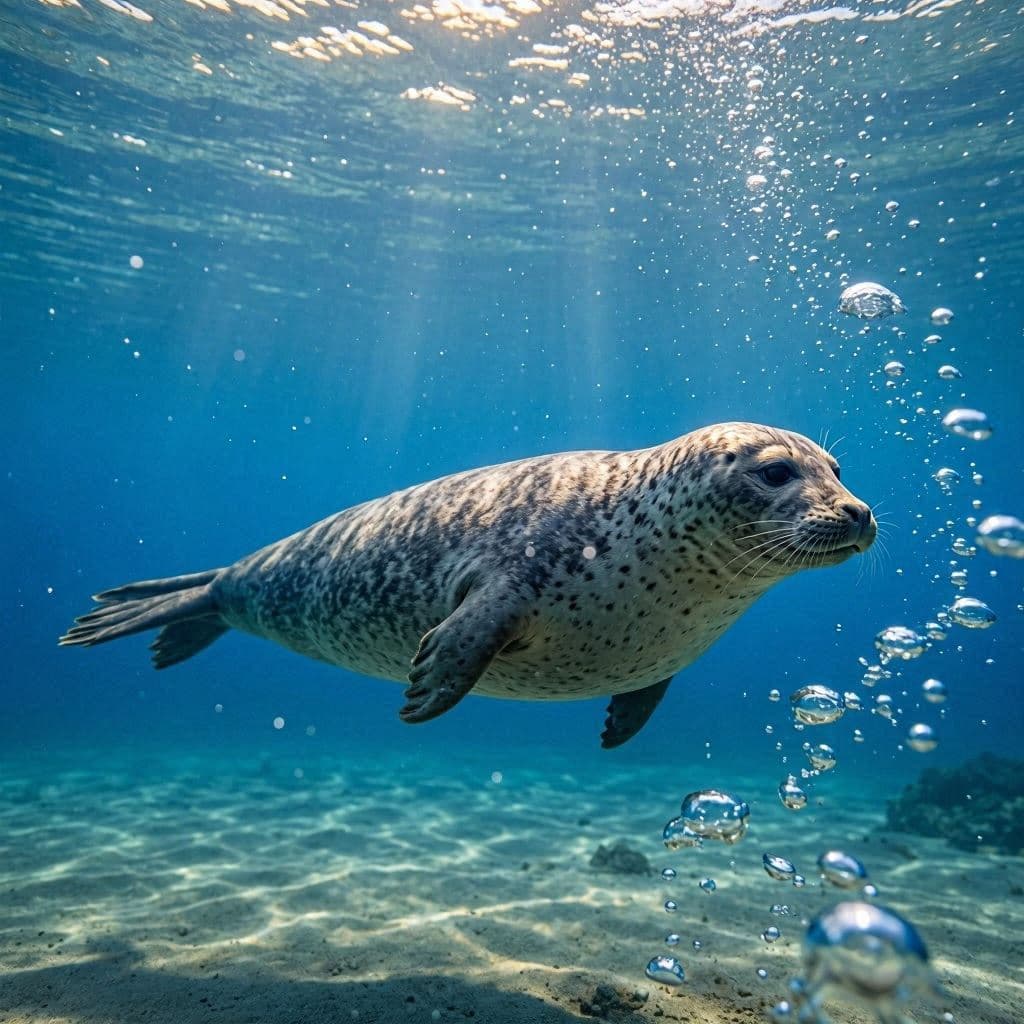
The ocean is a realm of sound, where whispers travel farther and louder than in the air above. For seals, navigating this acoustic landscape is essential for survival, allowing them to hunt, communicate, and avoid predators. Recent research has unveiled a remarkable adaptation in their ears: a specialized ability to regulate pressure and protect hearing during deep dives. This evolutionary breakthrough is not just a biological quirk; it is a testament to the ingenuity of natural selection. It invites reflection on how life adapts to extreme environments, the intricate connection between form and function, and the silent innovations that have allowed marine mammals to thrive in the depths.
Body: Seals are master divers, capable of reaching depths where pressure is crushing and temperatures are near freezing. To survive, they have evolved a suite of physiological adaptations, including the ability to slow their heart rate and redirect blood flow. Their ears, however, play a crucial role in managing the physical stresses of diving. The new findings reveal that seals possess a unique vascular structure in their middle ear that allows them to equalize pressure rapidly, preventing damage to sensitive tissues.
This adaptation likely evolved millions of years ago as ancestral seals transitioned from land to sea. Fossil evidence and comparative anatomy suggest that changes in ear structure were key to this transition. By modifying existing structures rather than creating new ones from scratch, evolution demonstrated its efficiency. This process of exaptation, where traits serve new functions, is a common theme in biological history. It highlights the resourcefulness of life.
For researchers, understanding this mechanism provides insights into human health. Pressure-related ear injuries are common in divers and aviators. Studying seal physiology could lead to new treatments or preventive measures for barotrauma. It is a reminder that nature often holds solutions to medical challenges, waiting to be discovered through careful observation. The bridge between wildlife biology and human medicine is stronger than we often realize.
The social implications of hearing are also significant. Seals use vocalizations to maintain contact with pups and mates in murky waters. Protecting their hearing ensures that these vital communications remain clear. Disruption to their acoustic environment, such as noise pollution from shipping, poses a threat to their well-being. Understanding their auditory capabilities helps advocate for quieter oceans. It is a call for environmental stewardship.
Evolutionary biology often reveals convergent solutions, where unrelated species develop similar traits to solve similar problems. Whales and dolphins have their own adaptations for deep diving, yet seals offer a unique perspective due to their amphibious lifestyle. Comparing these species enriches our understanding of mammalian evolution. It shows the diverse paths life can take to achieve success.
The study involved advanced imaging techniques and detailed anatomical analysis. By examining the soft tissues of seal ears, scientists were able to map the blood vessels and muscles involved in pressure regulation. This level of detail was previously impossible, highlighting the importance of technological advancement in scientific discovery. It opens new avenues for research into other marine mammals.
Public interest in marine life continues to grow, driven by documentaries and conservation efforts. Stories like this one help connect people to the wonders of the natural world. They foster a sense of awe and responsibility, encouraging support for ocean protection. Education is a powerful tool for change.
Closing: In the end, the secret of the seal’s ear is a celebration of evolutionary innovation. It reminds us of the complex adaptations that allow life to flourish in challenging environments. As we learn more about these creatures, the hope is that we will deepen our respect for the ocean and its inhabitants, ensuring their survival for generations to come.
AI Image Disclaimer: The visual representations associated with this article are AI-generated artistic interpretations designed to illustrate the themes of marine biology and evolution.
Sources: National Geographic Science Daily Journal of Experimental Biology
Published by Banx Network. This article is part of the Banx decentralized media programme, powered by the BXE token on the XRP Ledger.