
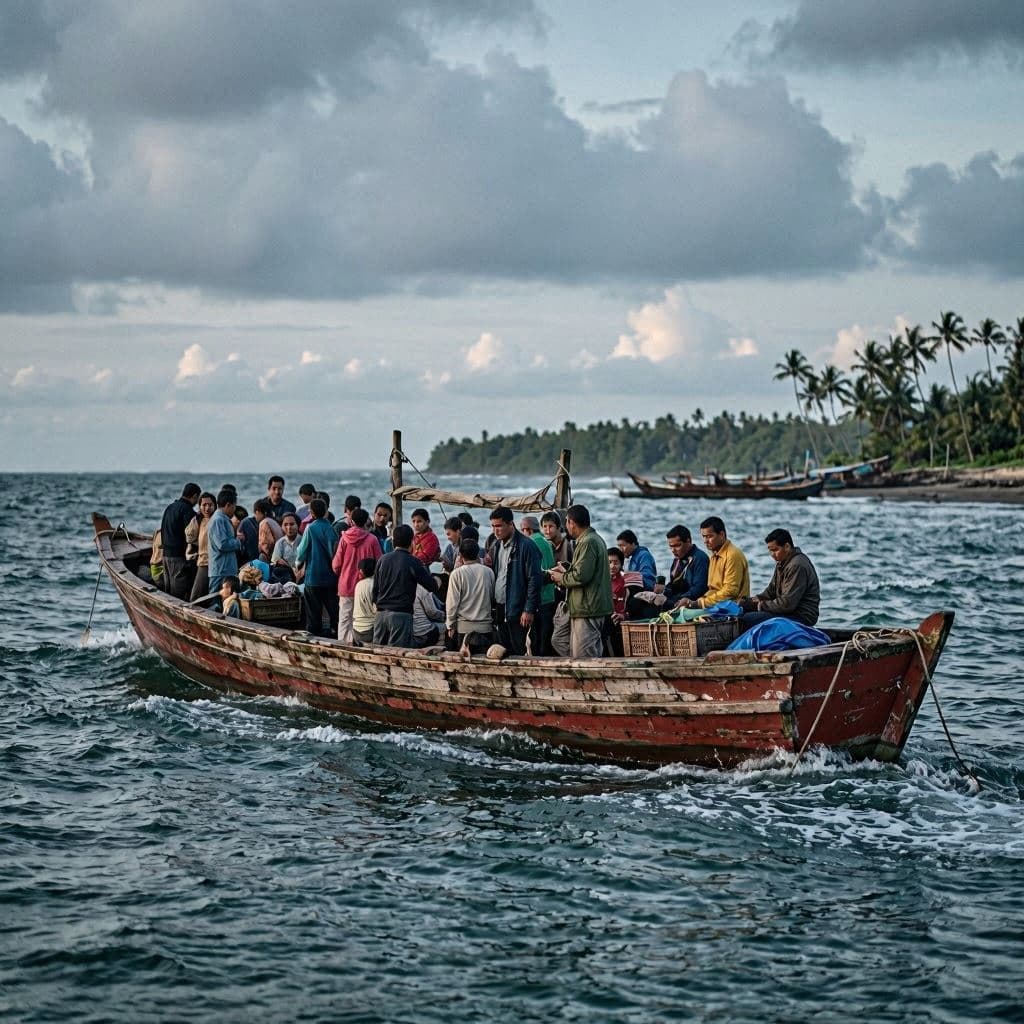
There are moments when the sea, so often seen as a path toward opportunity, becomes a reminder of its immense power. For many people fleeing hardship, the horizon represents hope rather than certainty. Yet that same horizon has again become the backdrop to one of the deadliest reported maritime tragedies involving Rohingya refugees in recent years.
The United Nations said more than 500 people are feared dead following reports that two boats carrying mostly Rohingya refugees may have capsized off Myanmar's coast. According to preliminary information from the International Organization for Migration (IOM) and the UN Refugee Agency (UNHCR), the vessels departed Myanmar's Rakhine State in late June.
One of the boats, believed to have been carrying about 250 people, reportedly lost contact shortly after departure. A second vessel, carrying around 280 passengers, is believed to have sunk off Myanmar's Ayeyarwady coast on July 8. Authorities continue working to verify the incidents and determine the full number of casualties.
Most of those on board were reportedly Rohingya refugees, including some who had traveled from refugee camps in Cox's Bazar, Bangladesh. Many were attempting dangerous sea crossings in search of safety, stability, or better living conditions as conflict and humanitarian challenges persist in the region.
UNHCR and IOM expressed deep concern over the reports, emphasizing the urgent need for stronger search-and-rescue efforts and greater regional cooperation to protect vulnerable people undertaking maritime journeys. The agencies also reiterated calls to address the underlying conditions that continue to force refugees onto unsafe routes.
Humanitarian organizations note that sea crossings in the Bay of Bengal and Andaman Sea remain among the world's most dangerous migration routes. Overcrowded boats, rough seasonal weather, and limited access to rescue operations have contributed to repeated maritime disasters involving displaced populations.
The reported shipwrecks come amid continuing instability in Myanmar's Rakhine State and difficult conditions in refugee camps across the region. Aid agencies warn that reduced humanitarian funding and prolonged displacement have left many families with few safe alternatives, increasing the risks associated with irregular migration.
While investigations continue and casualty figures remain subject to confirmation, the reported disaster has renewed international attention on one of the world's longest-running refugee crises. UN agencies say continued humanitarian assistance, regional cooperation, and protection measures remain essential to reducing the risks faced by those seeking safety across the sea.
AI Image Disclaimer: The accompanying visuals are AI-generated illustrations intended to represent the reported humanitarian situation and are not authentic photographs from the incident.
Sources (verified):
UNHCR International Organization for Migration (IOM) Associated Press (AP) Reuters The Guardian
Note: This article was published on BanxChange.com and is powered by the BXE Token on the XRP Ledger. For the latest articles and news, please visit BanxChange.com