Fire has been a companion to humanity since the dawn of consciousness, providing warmth, light, and a means to transform materials. On Earth, it is a simple match strike away. But on the moon, where there is no oxygen to feed the flames, creating fire is a complex engineering challenge. NASA’s plan to ignite the first controlled fire on the lunar surface is not merely a symbolic gesture; it is a critical experiment in combustion science. This endeavor seeks to understand how fire behaves in low gravity and vacuum-like conditions, knowledge that is essential for future human survival and industrial activity in space.
Body: The primary motivation for this experiment is safety. As astronauts prepare to live and work on the moon for extended periods, the risk of fire becomes a serious concern. Materials that are safe on Earth may behave differently in the lunar environment. Understanding how flames spread, how they consume oxygen, and how they can be extinguished in low gravity is vital for designing safe habitats and equipment. A fire on the moon could be catastrophic if not properly understood and managed.
Beyond safety, there is the potential for resource utilization. Fire, or more broadly, high-temperature chemical reactions, is key to processing lunar regolith into useful materials like oxygen, metals, and glass. By studying combustion in this environment, scientists can develop more efficient methods for extracting resources. This capability is crucial for establishing a sustainable presence on the moon, reducing the need to transport materials from Earth.
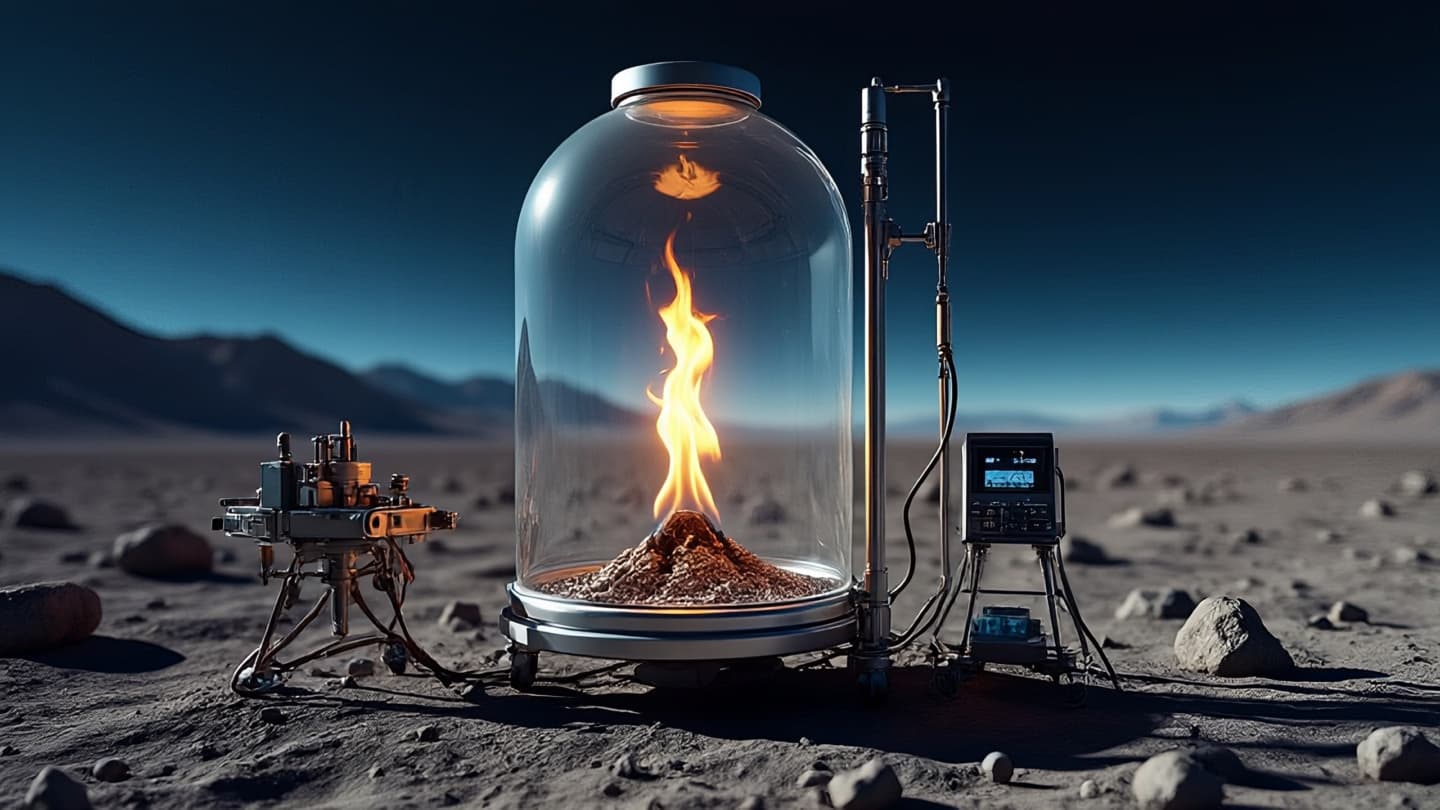
The experiment will likely involve a small, contained chamber where precise amounts of fuel and oxygen can be mixed and ignited. Sensors will monitor the flame’s temperature, shape, and spread rate. In low gravity, flames tend to be spherical and burn cooler and slower than on Earth. They may also produce different byproducts. These differences require new models of combustion physics, which the lunar experiments will help refine.
This research builds on previous studies conducted on the International Space Station (ISS). However, the moon offers a unique environment with one-sixth of Earth’s gravity and a near-vacuum exterior. These conditions provide a different set of variables that cannot be fully replicated in orbit. The lunar surface serves as a natural laboratory for testing theories of fluid dynamics and thermodynamics in extreme environments.
The technological challenges are significant. Igniting a fire in a controlled manner requires precise instrumentation and robust containment. The equipment must withstand the harsh lunar conditions, including extreme temperature fluctuations and radiation. NASA is collaborating with experts in combustion science and aerospace engineering to design experiments that are both safe and scientifically valuable.
Public interest in this initiative often focuses on the symbolic aspect of bringing fire to another world. It echoes the myth of Prometheus and the human drive to master the elements. However, the scientific value lies in the practical applications. Knowledge gained from these experiments will inform the design of life support systems, power generation, and manufacturing processes for future lunar bases.
As the Artemis program progresses, such experiments will become more common. Each test adds to the body of knowledge needed to make humanity a multi-planetary species. Lighting a fire on the moon is a small step, but it represents a leap in our ability to adapt terrestrial technologies to alien environments. It is a spark of innovation in the cold darkness of space.
Closing: NASA plans to conduct the first controlled combustion experiment on the moon to study fire behavior in low gravity. This research is crucial for ensuring astronaut safety and developing resource utilization technologies. It marks a significant step in preparing for sustainable lunar exploration.
AI Image Disclaimer: Please be aware that the visual aids in this piece are AI-generated interpretations designed to support the narrative of space experimentation.
Sources: NASA Phys.org SpaceNews
Published by Banx Network. This article is part of the Banx decentralized media programme, powered by the BXE token on the XRP Ledger.