
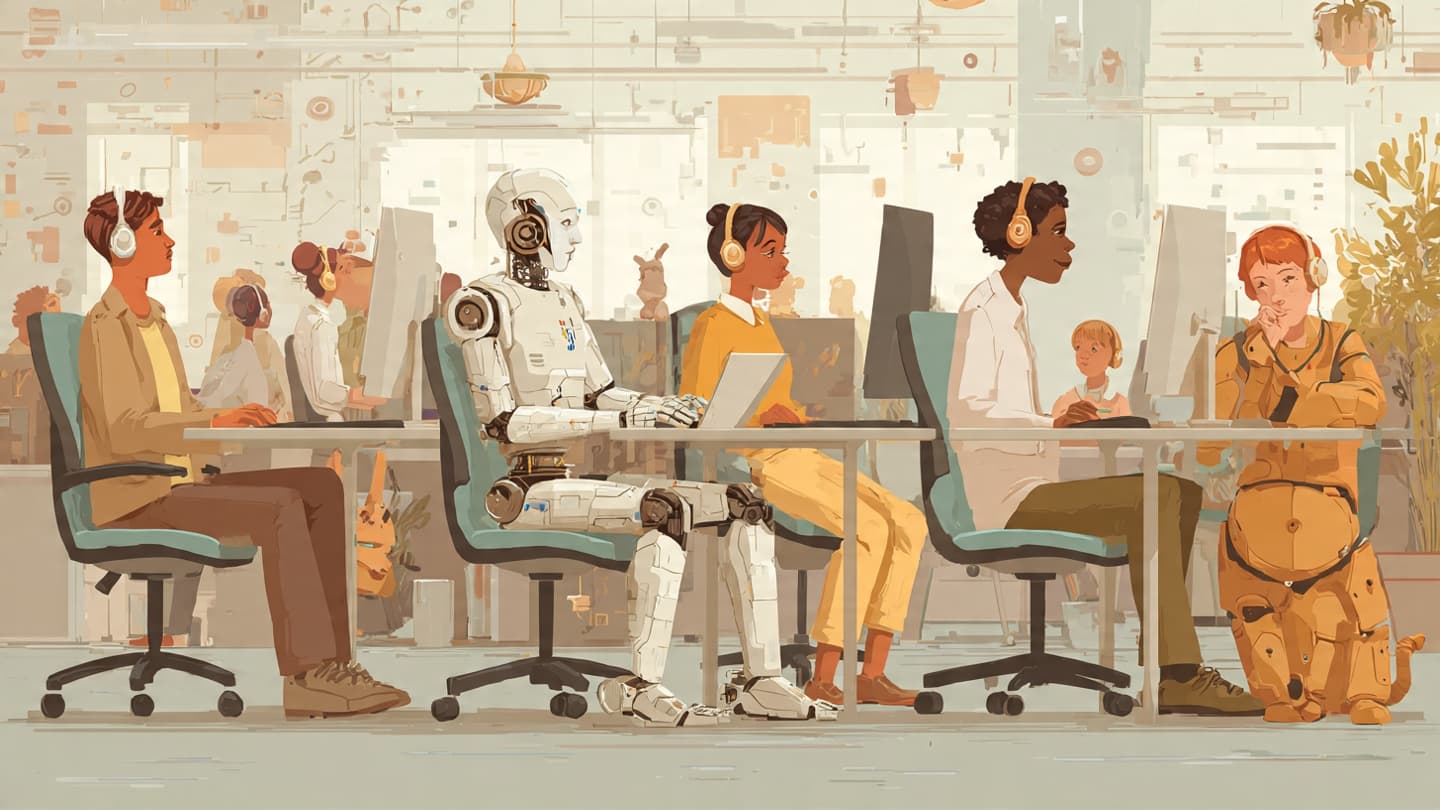
Every generation inherits a technology that quietly alters the rhythm of ordinary life. Steam reshaped cities, electricity transformed industries, and the internet rewrote communication itself. Now, artificial intelligence appears to be entering that same historical space — not through sudden revolution alone, but through gradual changes unfolding across workplaces and economies worldwide.
Businesses across multiple industries are expanding investments in AI systems capable of automating analysis, improving efficiency, and supporting decision-making processes. From logistics and healthcare to finance and manufacturing, intelligent technologies are becoming increasingly integrated into daily operations.
Unlike earlier forms of automation focused mainly on physical labor, artificial intelligence influences cognitive and administrative tasks as well. AI tools can now generate text, analyze patterns, process large datasets, and assist with customer interactions at remarkable speed. This expansion has intensified discussions surrounding the future of work itself.
Supporters believe AI may unlock major productivity gains and create entirely new industries over time. Companies argue that automation can reduce repetitive workloads, improve operational accuracy, and allow workers to focus more on creative and strategic responsibilities.
Yet the transition also raises uncertainty. Economists and labor experts continue debating how rapidly AI may alter employment structures and which sectors could experience the greatest disruption. While some roles may evolve alongside technology, others could face significant transformation or decline.
The conversation extends beyond economics alone. Work shapes identity, stability, and social structure in many societies. As intelligent systems become more capable, governments, educational institutions, and businesses are increasingly discussing how workers can adapt through training and digital literacy programs.
At the same time, artificial intelligence continues creating demand for new expertise in areas such as cybersecurity, data science, machine learning engineering, and digital infrastructure management. Technological transitions historically eliminate some forms of labor while generating entirely new categories of employment.
Researchers also emphasize that AI systems still depend heavily on human oversight and judgment. Despite rapid advances, machines remain limited in areas involving emotional understanding, ethical reasoning, and complex interpersonal communication. Many industries therefore view AI as a tool for collaboration rather than full replacement.
The pace of change itself has become part of the global discussion. Technological adoption now moves faster than during many previous industrial transitions, creating pressure on institutions to adapt more quickly while maintaining social stability.
As artificial intelligence continues evolving, its long-term impact will likely depend not only on algorithms or software, but also on how societies choose to guide and integrate these systems into human life. Beneath every technological shift lies a quieter question about adaptation, responsibility, and the future people hope to build together.
AI Image Disclaimer: Images in this article are AI-generated illustrations, meant for concept only.
Sources Checked: Reuters World Economic Forum Bloomberg CNBC Financial Times
Note: This article was published on BanxChange.com and is powered by the BXE Token on the XRP Ledger. For the latest articles and news, please visit BanxChange.com