There are nights when borders seem less like lines on a map and more like thin seams in fabric—stretched, tested, and occasionally torn by forces moving through darkness. In such moments, distance collapses into immediacy, and what is far becomes briefly, sharply close.
In a recent escalation, Ukrainian officials stated that their forces carried out strikes on multiple targets inside Russia during an overnight operation. The claims describe coordinated actions reaching beyond the immediate front line, reflecting the continued intensity of a conflict that has long extended into layered dimensions of geography, infrastructure, and strategy.
The reported targets were not described in singular terms, but as part of a broader set of sites tied to military logistics and operational capacity. While details remain subject to verification and the standard fog of wartime reporting, such statements typically point to efforts aimed at disrupting supply chains, command coordination, or material support systems that sustain frontline activity.
From Ukraine’s perspective, long-range operations have increasingly become part of a wider strategic pattern in which the war is not confined to static frontlines but dispersed across rail corridors, depots, and infrastructure nodes. These actions are often framed by officials as necessary to reduce the operational depth available to opposing forces.
On the other side, Russian authorities frequently contest or reinterpret such reports, emphasizing defense readiness and interception capabilities. Independent verification in such contexts is often limited by access restrictions, information controls, and the speed at which events unfold relative to reporting cycles.
What emerges, therefore, is not a single definitive narrative, but a layered informational landscape where claims, counterclaims, and partial confirmations coexist. In modern conflicts shaped by drones, missiles, and electronic surveillance, the definition of “distance” itself becomes unstable—no longer measured solely in kilometers, but in detection ranges, response times, and technological reach.
The overnight nature of the reported strikes also underscores how the rhythm of the conflict has shifted toward irregular intervals of sudden intensity. Civilian populations in affected regions often experience this not as continuous engagement, but as intermittent disruptions—moments when the wider conflict becomes audible or visible in local space before receding again into abstraction.
International observers continue to monitor such developments closely, as each reported strike contributes to a broader pattern of escalation management and strategic signaling. In protracted conflicts, individual incidents often carry meaning beyond their immediate physical impact, functioning instead as indicators of capability, intent, and endurance.
At the structural level, the war between Ukraine and Russia has increasingly become a test of sustained adaptation. Both sides continue to refine tactics, expand technological integration, and adjust operational reach in response to evolving conditions. The result is a conflict that is less linear and more distributed, unfolding across multiple domains simultaneously.
As the latest reports circulate, they join a long continuum of statements, analyses, and battlefield accounts that together form the evolving record of the war. Each adds a fragment to a larger and still unfinished picture—one shaped as much by perception and communication as by territory and force.
In the quiet that follows such nights, the map remains unchanged in outline, yet subtly altered in meaning. Lines remain where they were, but their weight shifts, carrying the imprint of another exchange in a conflict that continues to redefine the space between countries.
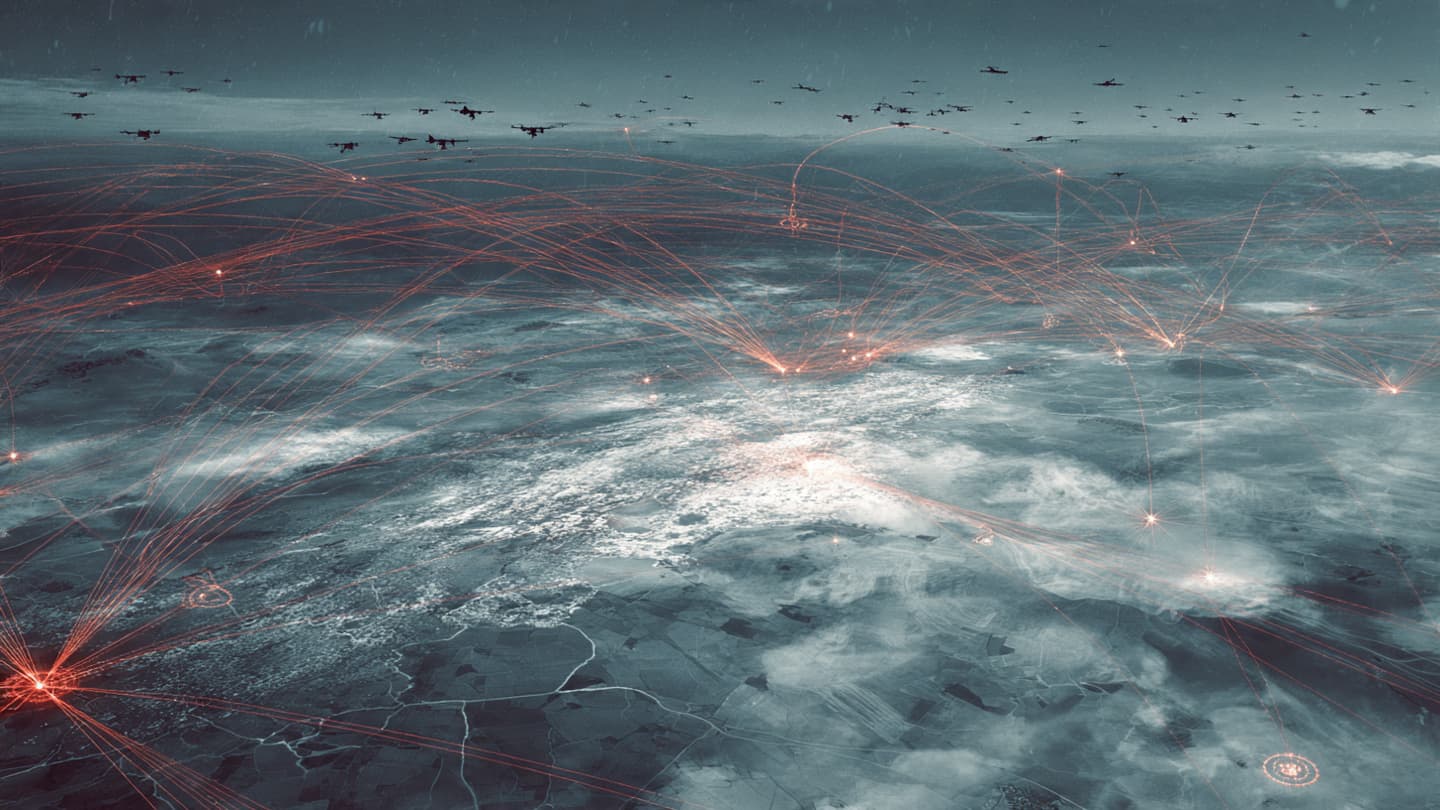
AI Image Disclaimer Visuals were created using AI tools and are not real photographs.
Sources Reuters, BBC News, Al Jazeera, Associated Press, The Guardian
Published by Banx Network. This article is part of the Banx decentralized media programme, powered by the BXE token on the XRP Ledger.