
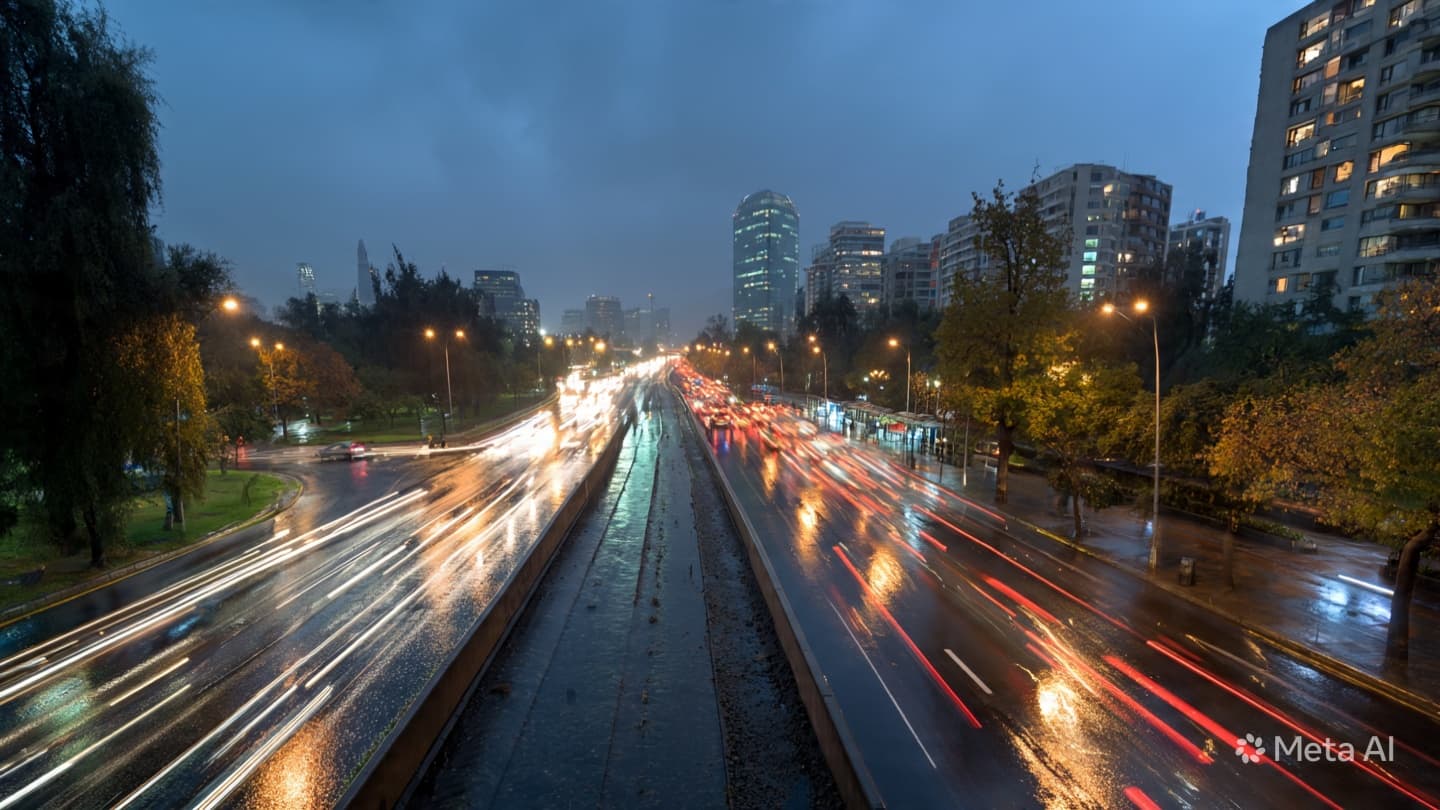
The major transit arteries of Santiago are the lifeblood of the city, a relentless, rushing network of vehicles that carry millions of lives through the sprawling metropolitan grid. To move through this space is to participate in a high-stakes choreography of speed, distance, and metal. The pedestrian, when navigating these pathways, enters into a particularly vulnerable dialogue with the flow of the city—a delicate, daily negotiation between the human stride and the mechanical momentum that defines our modern, urban existence.
When a pedestrian is struck on one of these thoroughfares, the suddenness of the event creates an immediate, profound disruption in the city's rhythm. It is a collision of worlds—the soft, fragile reality of the individual and the hardened, unyielding momentum of the vehicle. The confirmation of a fatality brings a heavy, chilling silence to the roar of the artery, a momentary pause where the machine’s dominance is sharply, painfully challenged by the cost of its necessity. It is a reminder that the efficiency of our transport systems is built upon a foundation of risk that we often, in our haste, choose to overlook.
The emergency responders who arrive at the scene of such a collision move with a practiced, heavy efficiency, their work a somber testament to the necessity of order in the wake of the accidental. They navigate the traffic and the debris with a focused, quiet intensity, ensuring that the scene is managed and that the dignity of the lost is preserved. There is a profound, quiet grace in this work, a total commitment to the human aspect of the event that operates far below the surface of the headlines, in the middle of the city’s busiest, most indifferent corridors.
Investigation into the incident will involve a meticulous analysis of the sightlines, the signals, and the speed—the technical variables that the city uses to reconstruct the event and, hopefully, to prevent its recurrence. This process is essential, a way of turning the tragedy into knowledge, a method for the city to learn from its own motion. Yet, for those who witness the event, and for the family left to process the loss, the data can never fully capture the absence that now marks the spot where a life was interrupted.
Santiago is a city that prides itself on its connectivity and its forward-looking growth, yet the tragedy of the pedestrian serves as a stinging, necessary rebuke to the rush. It is a moment that prompts us to rethink the design of our streets, the priority we give to the human versus the mechanical, and the safety we owe to those who traverse our city on foot. Every crosswalk, every signal, and every sidewalk is a reflection of this shared commitment to preservation—a statement about the kind of urban environment we choose to inhabit.
As the arterial traffic begins to flow again, the memory of the fatality lingers in the air, a silent, mournful note in the symphony of the city. The families will carry their grief, the investigators will process their findings, and the city will continue to pulse, an indifferent, necessary force of progress. It is a cycle that repeats, a constant, underlying tension beneath the surface of our daily lives. The event is not just a statistic; it is a reflection of the profound, often invisible risks we all assume the moment we step onto the road.
Ultimately, the tragedy in Santiago is a meditation on the nature of our journey through the modern urban space. We travel, we strive, and we connect, always mindful of the inherent volatility of the paths we take. The loss is a reminder of our smallness, a moment that prompts us to pause, to look around, and to reflect on the value of each moment and each traveler. We continue because we must, but we do so with a deeper, more profound awareness of the fragility that defines our shared, moving reality.
As the city continues its relentless, upward expansion, the lesson of the collision becomes a silent part of the skyline. It is a reminder that safety is not a static condition, but an ongoing, active negotiation between the people and the infrastructure they inhabit. Every transit update and every street improvement is a reflection of this shared commitment to preservation. We move through our days in this towering, complex structure with an assumption of security that is sustained by a vast, often invisible, network of vigilance.
Note: This article was published on BanxChange.com and is powered by the BXE Token on the XRP Ledger. For the latest articles and news, please visit BanxChange.com