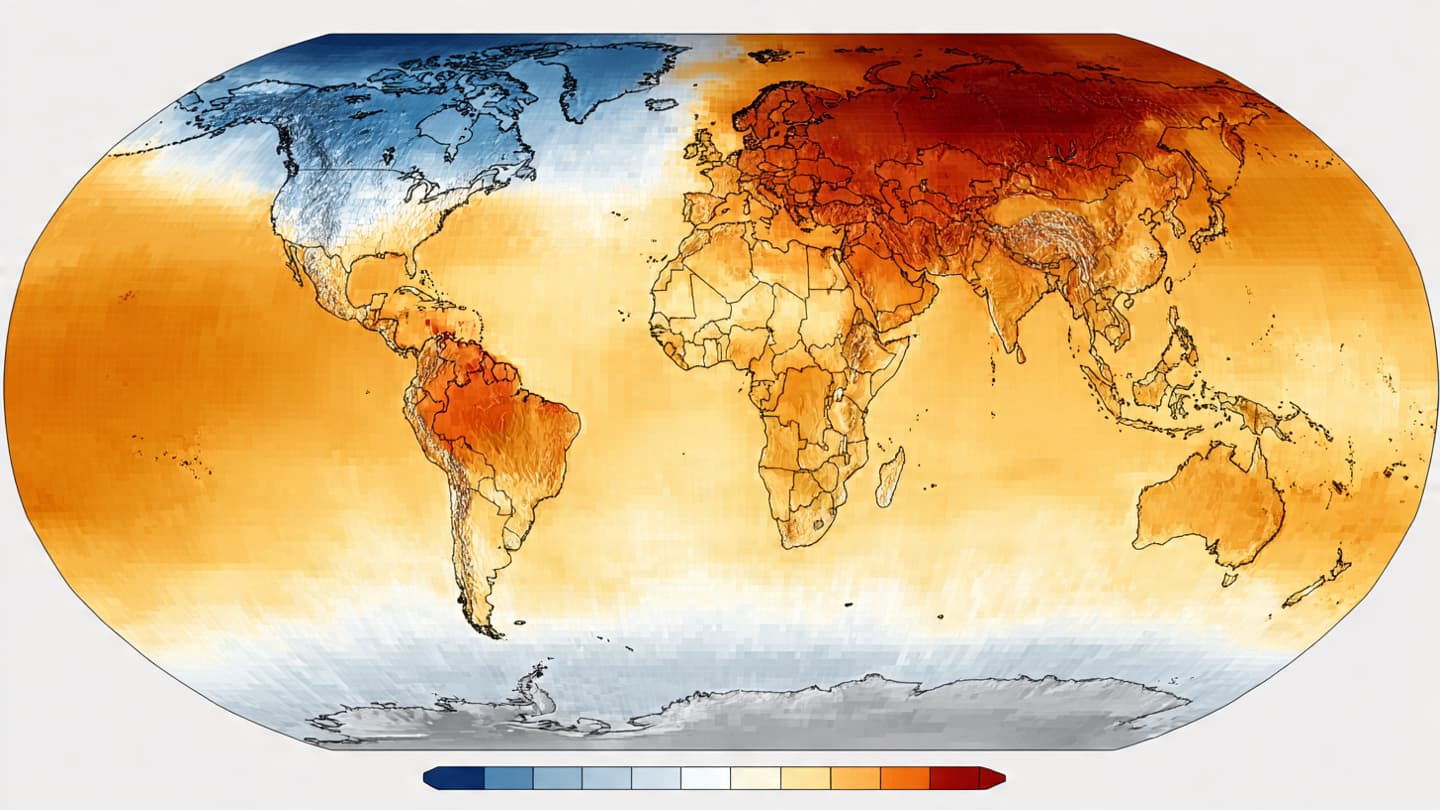
Each year adds another page to Earth's climate record, and in recent decades those pages have increasingly carried signs of change. Scientists now suggest that 2026 could bring additional temperature records as the combined effects of long-term global warming and El Niño continue to influence the planet.
Recent climate analyses indicate that global average temperatures remain at historically elevated levels. Researchers from international climate institutions have reported that several previous years already rank among the warmest ever measured.
The prospect of new records does not arise from a single factor alone. Scientists point to the interaction between human-driven greenhouse gas emissions and naturally occurring climate patterns, including El Niño, as key contributors to rising temperatures.
Higher global temperatures can influence a wide range of environmental systems. Heatwaves, altered rainfall patterns, glacier retreat, and changing ocean conditions are among the phenomena closely monitored by researchers.
Climate experts emphasize that individual weather events cannot always be directly attributed to climate change. However, long-term datasets reveal clear warming trends that continue to shape the probability and intensity of certain extreme events.
Researchers also stress the importance of adaptation strategies. Governments worldwide are investing in infrastructure improvements, disaster preparedness programs, and emission reduction initiatives designed to strengthen resilience.
Scientific organizations continue to refine climate models in order to better understand future scenarios. Improved forecasting tools allow policymakers and communities to prepare more effectively for potential risks.
Despite concerns surrounding record temperatures, researchers maintain that future outcomes are influenced by decisions made today regarding energy systems, land use, and environmental management.
As 2026 unfolds, scientists will continue tracking climate indicators carefully. The evolving data will not only document the state of the planet but also inform efforts aimed at responding to a changing climate.
AI Image Disclaimer: Certain visual elements accompanying this article are AI-generated illustrations prepared for editorial purposes.
Sources: Eos, NOAA, World Meteorological Organization, Phys.org
Published by Banx Network. This article is part of the Banx decentralized media programme, powered by the BXE token on the XRP Ledger.