The oceans rarely announce their changes with sudden noise. Instead, they move through slow and powerful rhythms that influence weather, marine ecosystems, and climate across continents. Beneath the familiar tides lies an immense circulation system that has operated for thousands of years. A new scientific study now suggests that one of its most important components may be changing more rapidly than researchers previously believed.
Scientists have published new findings indicating that the Atlantic Meridional Overturning Circulation (AMOC), a major system of ocean currents in the Atlantic Ocean, could weaken faster than earlier projections under certain climate scenarios. The research contributes to an ongoing scientific discussion about how global warming may influence long-term ocean circulation.
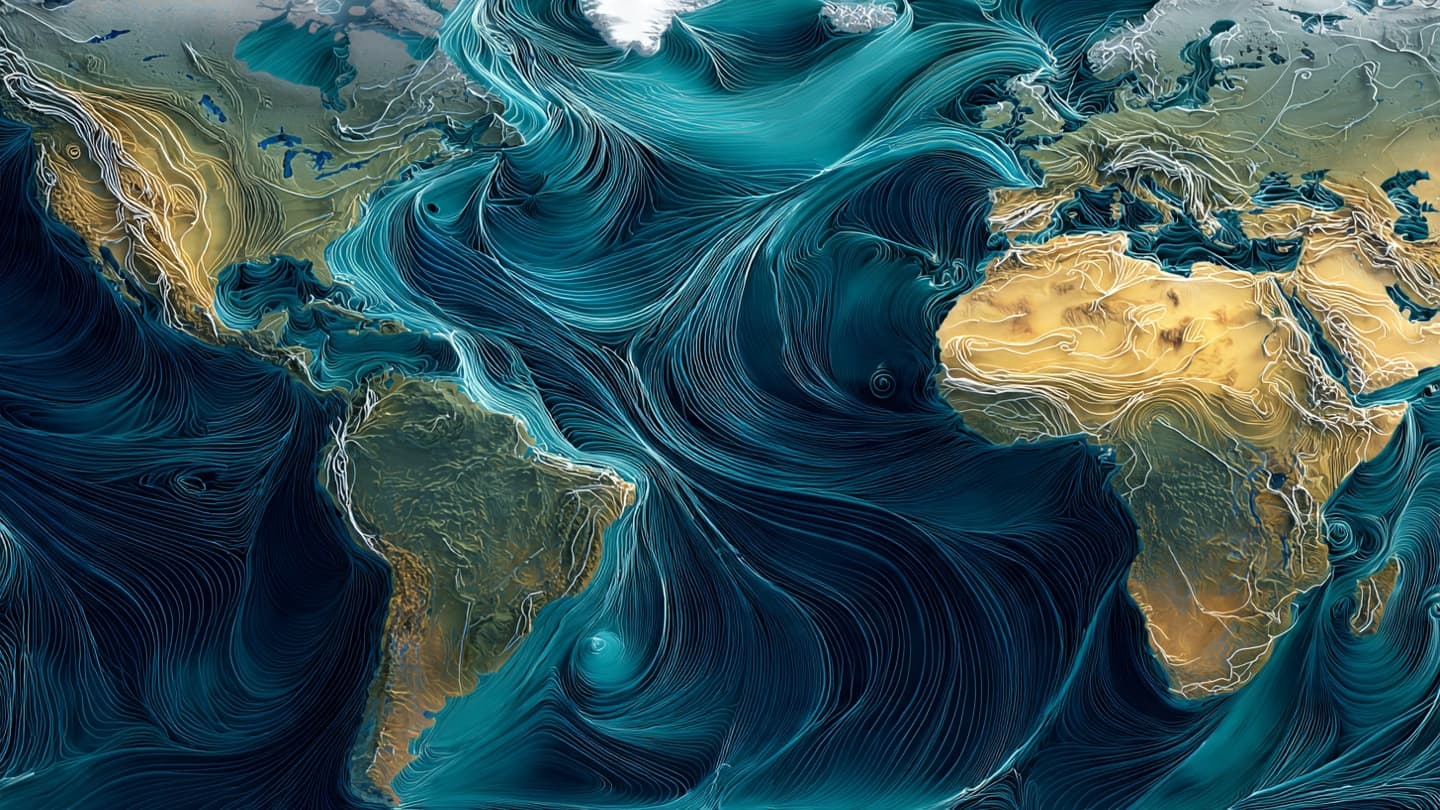
The AMOC plays an important role in transporting warm water from tropical regions toward the North Atlantic while moving colder water southward at greater depths. This circulation helps regulate regional temperatures, rainfall patterns, and marine ecosystems across Europe, North America, and other surrounding regions.
Researchers developed advanced climate simulations using updated observational data and improved computer models. While uncertainties remain, the study suggests that continued warming could accelerate changes within the circulation system if greenhouse gas emissions remain elevated over extended periods.
Scientists emphasize that the findings do not indicate an immediate shutdown of the AMOC. Instead, the study highlights the importance of continued observation, additional research, and careful interpretation of long-term climate trends. Ocean systems are highly complex, and multiple environmental factors influence their behavior.
Climate researchers around the world continue monitoring the Atlantic through satellites, research vessels, underwater sensors, and long-term observational programs. These measurements help improve understanding of how ocean circulation responds to changing atmospheric and oceanic conditions.
Experts also note that scientific studies often present different estimates depending on modeling approaches and available data. Continued peer review and independent research will remain essential for refining projections and improving confidence in future climate assessments.
The latest research adds another valuable piece to a much larger scientific puzzle. As knowledge of Earth's climate system continues to expand, ongoing international collaboration remains critical for understanding how the world's oceans may evolve during the decades ahead.
AI Image Disclaimer: This article includes an AI-generated illustration intended solely to visualize the scientific topic and should not be interpreted as an actual satellite or ocean photograph.
Source Verification Check: Science Advances, Nature Climate Change, National Oceanic and Atmospheric Administration (NOAA), Reuters
Published by Banx Network. This article is part of the Banx decentralized media programme, powered by the BXE token on the XRP Ledger.