
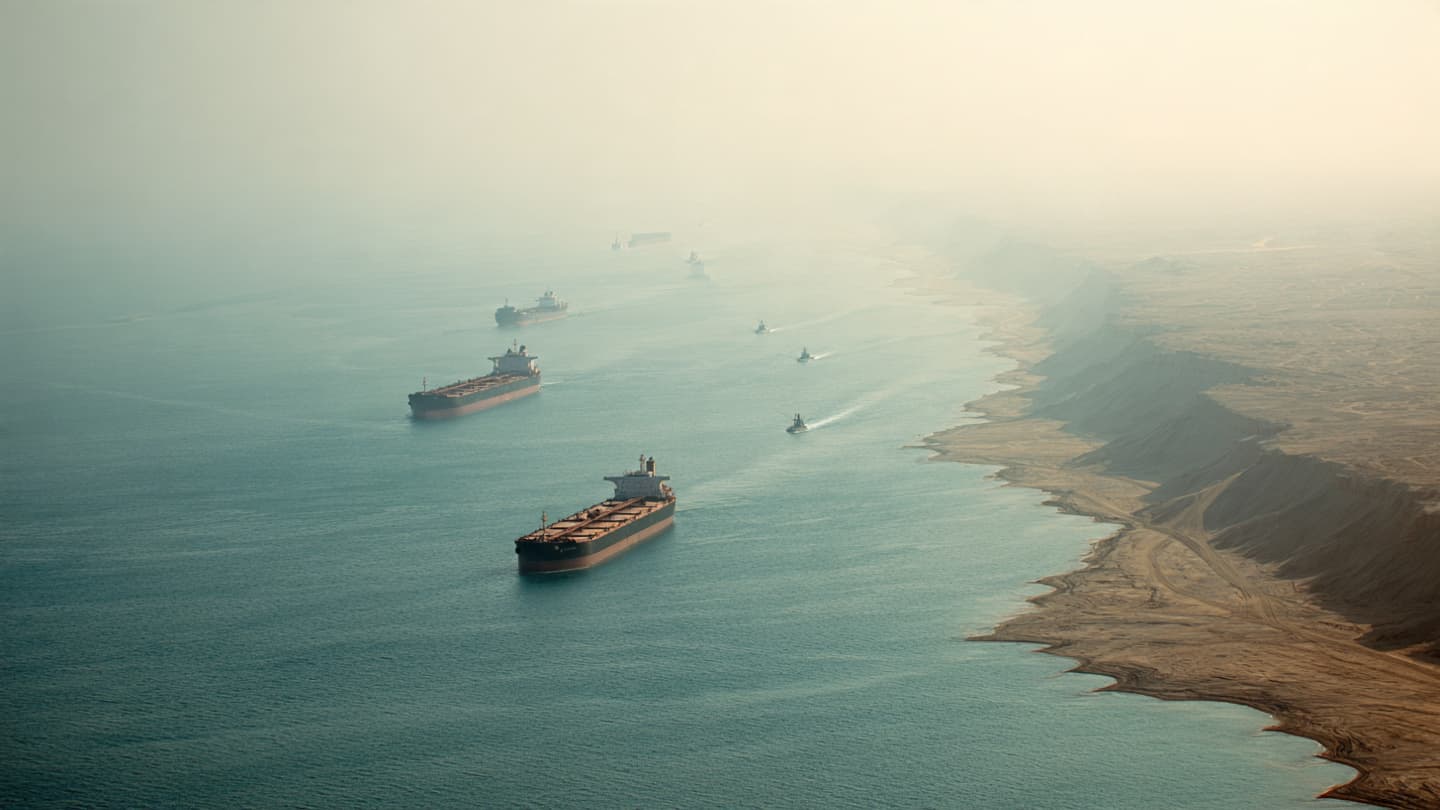
The waters surrounding the Strait of Hormuz have long resembled a narrow corridor carrying the weight of distant economies and quiet anxieties alike. Tankers glide across the channel as though tracing a fragile thread between continents, while governments observe each movement with careful attention. In recent weeks, Iran’s renewed assertions over the strategic waterway have again drawn the gaze of the international community toward one of the world’s most sensitive maritime passages.
Iranian officials have increasingly emphasized their authority and influence over the Strait of Hormuz, a narrow channel connecting the Persian Gulf to the Gulf of Oman. The route is widely recognized as one of the most critical arteries for global energy shipments, with substantial volumes of oil and liquefied natural gas passing through its waters each day. The latest remarks from Tehran have emerged amid broader regional tensions and ongoing diplomatic friction with Western nations.
Military exercises and public statements from Iran’s leadership have accompanied these claims, reinforcing the message that the country views the strait as deeply tied to its national security interests. Iranian naval units have periodically expanded patrols in nearby waters, while officials continue to warn against what they describe as foreign interference in the region. Although such rhetoric has surfaced before, observers note that the timing reflects growing geopolitical strain across the Middle East.
For neighboring Gulf states, the Strait of Hormuz remains more than a geographic feature. It functions as an economic lifeline that sustains exports, shipping industries, and state revenues. Even subtle increases in regional instability can affect energy prices, insurance costs, and shipping schedules. Markets often react quickly to uncertainty surrounding the strait, underscoring how deeply interconnected maritime stability has become with the rhythms of the global economy.
The United States and several allied nations have continued maritime security operations in surrounding waters, arguing that freedom of navigation must remain protected under international law. Naval coalitions have maintained patrols designed to deter disruptions and reassure commercial shipping operators. At the same time, diplomats from multiple countries have urged restraint, emphasizing dialogue over confrontation.
Analysts suggest Iran’s renewed posture may also be intended for domestic audiences, projecting resilience at a moment when the country faces economic pressure and complex regional dynamics. Political messaging surrounding sovereignty and strategic strength has historically played an important role within Iran’s broader state narrative. Such declarations can carry both symbolic and diplomatic weight, even when immediate policy shifts do not follow.
The Strait of Hormuz itself has often stood as a reminder of how geography can shape international relations. Though narrow in width, its significance stretches across continents, influencing fuel prices, trade routes, and security discussions far beyond the Middle East. Each statement surrounding the waterway tends to ripple outward, much like waves spreading quietly across an otherwise calm sea.
International observers continue monitoring developments closely, while energy markets remain attentive to any sign of escalation. For now, shipping traffic continues through the corridor, even as diplomatic caution deepens around one of the world’s most strategically important waterways.
AI Image Disclaimer: Visual illustrations accompanying this article were generated using artificial intelligence for representational purposes.
Sources: Reuters, Associated Press, Al Jazeera, Bloomberg, BBC News
Note: This article was published on BanxChange.com and is powered by the BXE Token on the XRP Ledger. For the latest articles and news, please visit BanxChange.com