The night sky has a way of returning familiar sights while making them feel new. A full moon rises as it has for countless generations, yet certain evenings carry a small sense of rarity. People pause, look upward, and find themselves briefly connected to a rhythm far older than calendars or clocks.
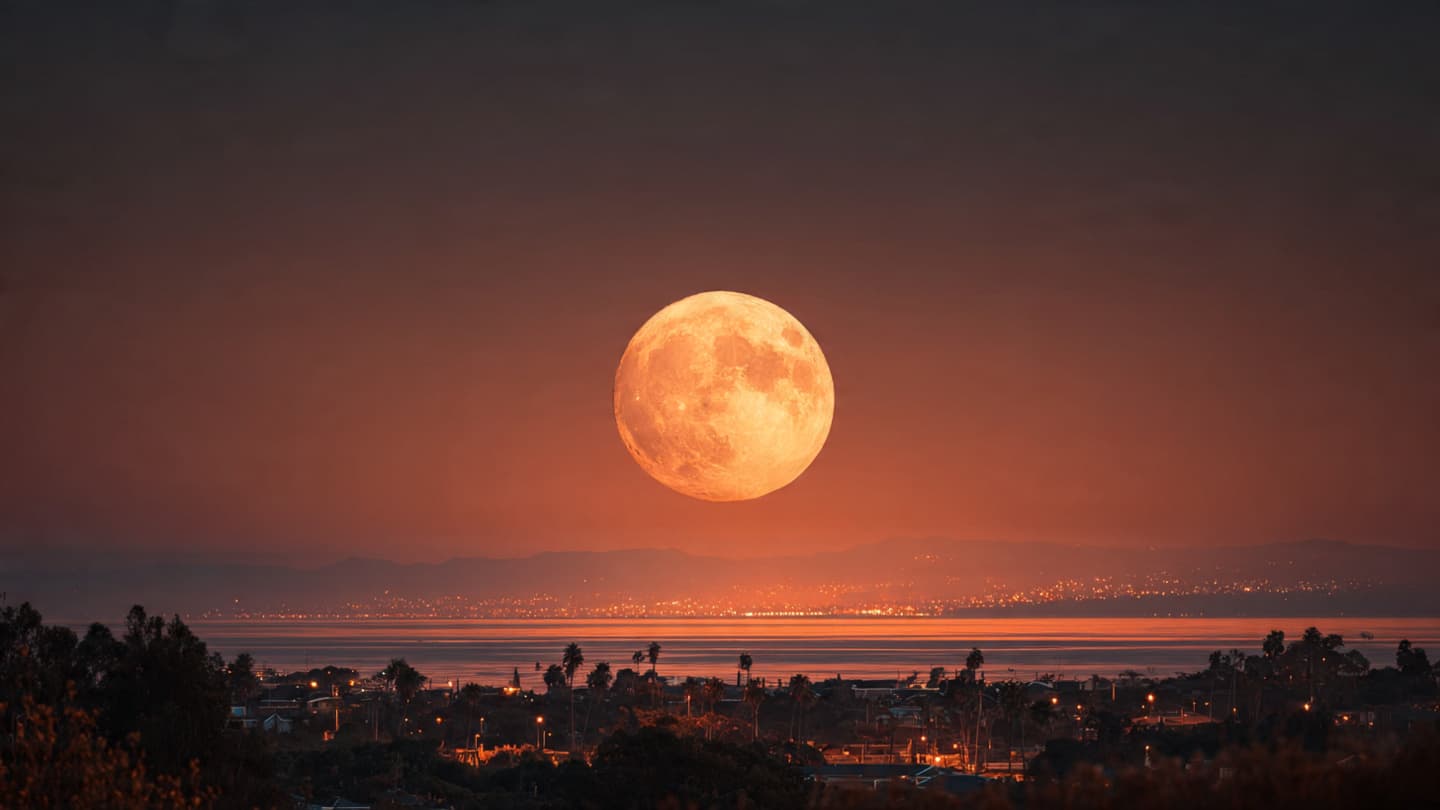
Skywatchers around the world are preparing for the appearance of the only Blue Moon of 2026, which reaches peak illumination on May 31. Despite its name, the moon will not actually appear blue. Instead, the term refers to the second full moon occurring within a single calendar month.
The first full moon of May, traditionally known as the Flower Moon, occurred on May 1. Because the lunar cycle lasts approximately 29.5 days, a second full moon has fit into the same month, creating the rare Blue Moon event.
Astronomers say the best viewing opportunity will come around sunset as the moon rises above the eastern horizon. Peak illumination is expected at approximately 4:45 a.m. EDT on May 31.
This year’s Blue Moon also carries another distinction. It is classified as a micromoon because it occurs near the point in the moon’s orbit farthest from Earth. As a result, it may appear slightly smaller and dimmer than an average full moon.
Observers may notice the moon taking on warm orange or reddish tones near the horizon. These colors are caused by Earth’s atmosphere scattering light, similar to the effect seen during sunsets.
Astronomy enthusiasts are also expected to see the Blue Moon near Antares, the bright red star in the constellation Scorpius. In some locations, planets including Venus and Jupiter may also be visible nearby.
Blue Moons occur only once every two to three years on average, making them relatively uncommon compared with ordinary full moons. Their rarity has helped preserve a sense of curiosity around an event that remains rooted in the natural cycle of the lunar calendar.
For those planning to watch, astronomers recommend finding an open view of the eastern horizon shortly after sunset, where the moon’s rise can be observed most clearly.
AI-generated images are used as artistic visualizations and do not represent actual astronomical photographs.
Sources: Space.com, Live Science, BBC Sky at Night Magazine, NASA
Published by Banx Network. This article is part of the Banx decentralized media programme, powered by the BXE token on the XRP Ledger.