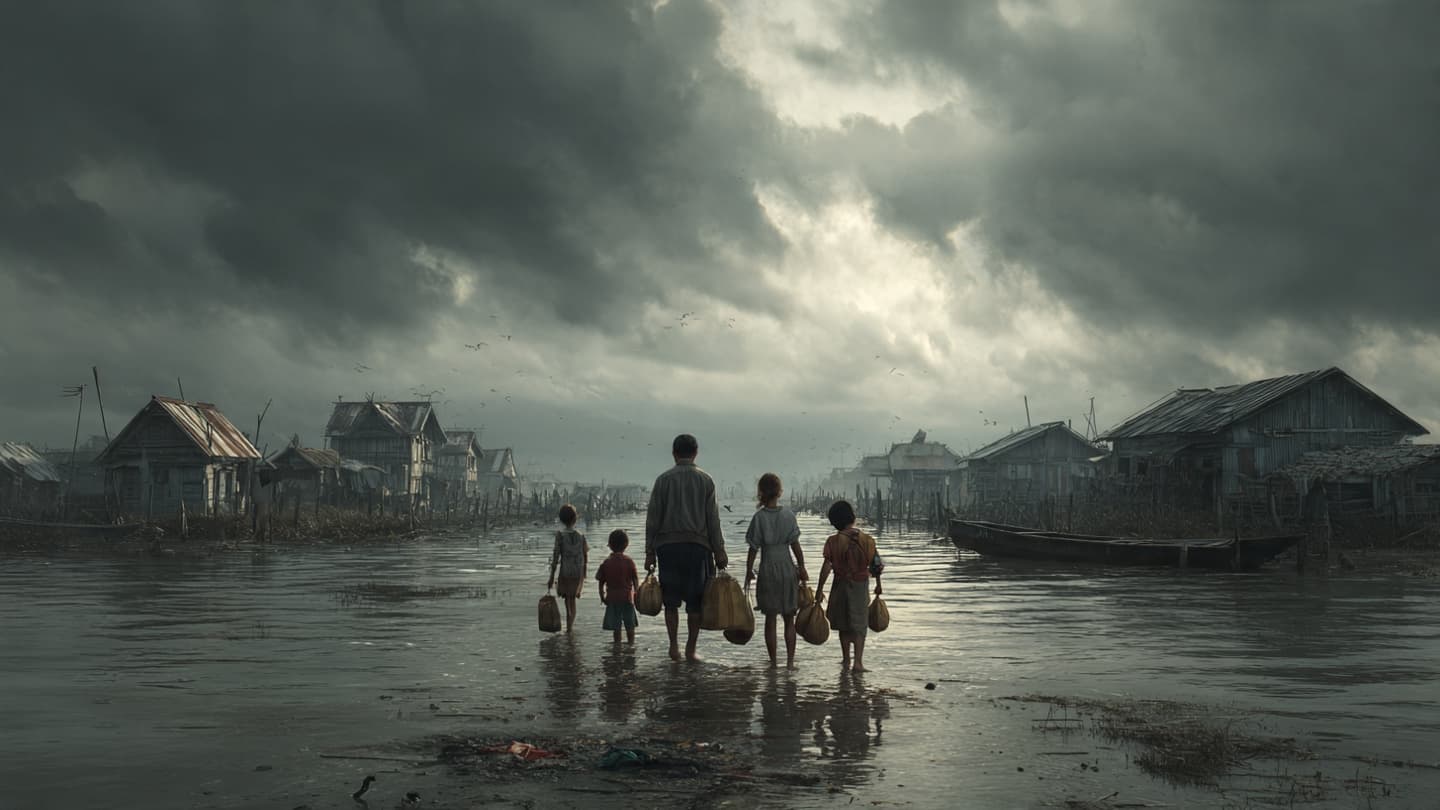
Migration has always been a part of human history, driven by war, persecution, and economic opportunity. But a new, powerful driver is emerging: climate change. Rising sea levels, extreme weather events, and prolonged droughts are rendering entire regions uninhabitable, forcing millions to leave their homes. This "climate migration" is reshaping demographics, straining resources, and challenging international legal frameworks. As the planet warms, the movement of people is becoming one of the most pressing humanitarian and geopolitical issues of our time.
Small island nations in the Pacific and Caribbean are on the front lines. For countries like Tuvalu and the Maldives, rising seas threaten existential extinction. Residents face the loss of land, fresh water, and livelihoods. Some communities are already planning managed retreats, moving inland or to other countries. This is not a choice but a necessity for survival. The emotional and cultural toll of losing one’s homeland is profound, creating a sense of grief and displacement that transcends physical relocation.
In other regions, such as Sub-Saharan Africa and South Asia, changing rainfall patterns and desertification are devastating agriculture. Farmers who have relied on the land for generations find their crops failing and their livestock dying. Without income or food security, they are forced to migrate to cities or across borders. This rural-to-urban shift puts pressure on infrastructure and services in receiving areas, often leading to overcrowding and social tension.
The legal status of climate migrants is ambiguous. Current international refugee laws do not recognize climate change as a valid reason for asylum. This leaves millions of displaced people in a legal limbo, without protection or rights. Advocates are calling for new legal categories or expansions of existing ones to address this gap. Recognizing climate displacement is a step toward justice and responsibility.
Wealthier nations, which have contributed most to global emissions, face moral and political pressure to assist. This includes providing financial aid for adaptation, accepting refugees, and supporting sustainable development in vulnerable regions. However, anti-immigrant sentiment in many countries complicates these efforts. Political debates often frame migration as a security threat rather than a humanitarian crisis. Balancing national interests with global responsibility is a delicate diplomatic challenge.
Urban planning in destination cities must adapt. Infrastructure needs to be resilient and inclusive, accommodating growing populations. Social services, housing, and job training are essential to integrate newcomers successfully. Failure to do so can lead to marginalization and conflict. Proactive policies are needed to turn migration into an opportunity for growth and diversity.
As we look to the future, the scale of climate migration will increase. Estimates suggest hundreds of millions could be displaced by 2050. Preparing for this reality requires global cooperation, innovative solutions, and empathy. We must view migrants not as burdens, but as survivors adapting to a changing world.
In the end, climate migration is a mirror of our collective actions. It reflects the consequences of environmental neglect. By addressing the root causes of climate change and supporting those affected, we can build a more just and resilient world. The movement of people is a testament to human resilience, but it should not be a testament to our failure.
Published by Banx Network. This article is part of the Banx decentralized media programme, powered by the BXE token on the XRP Ledger.