
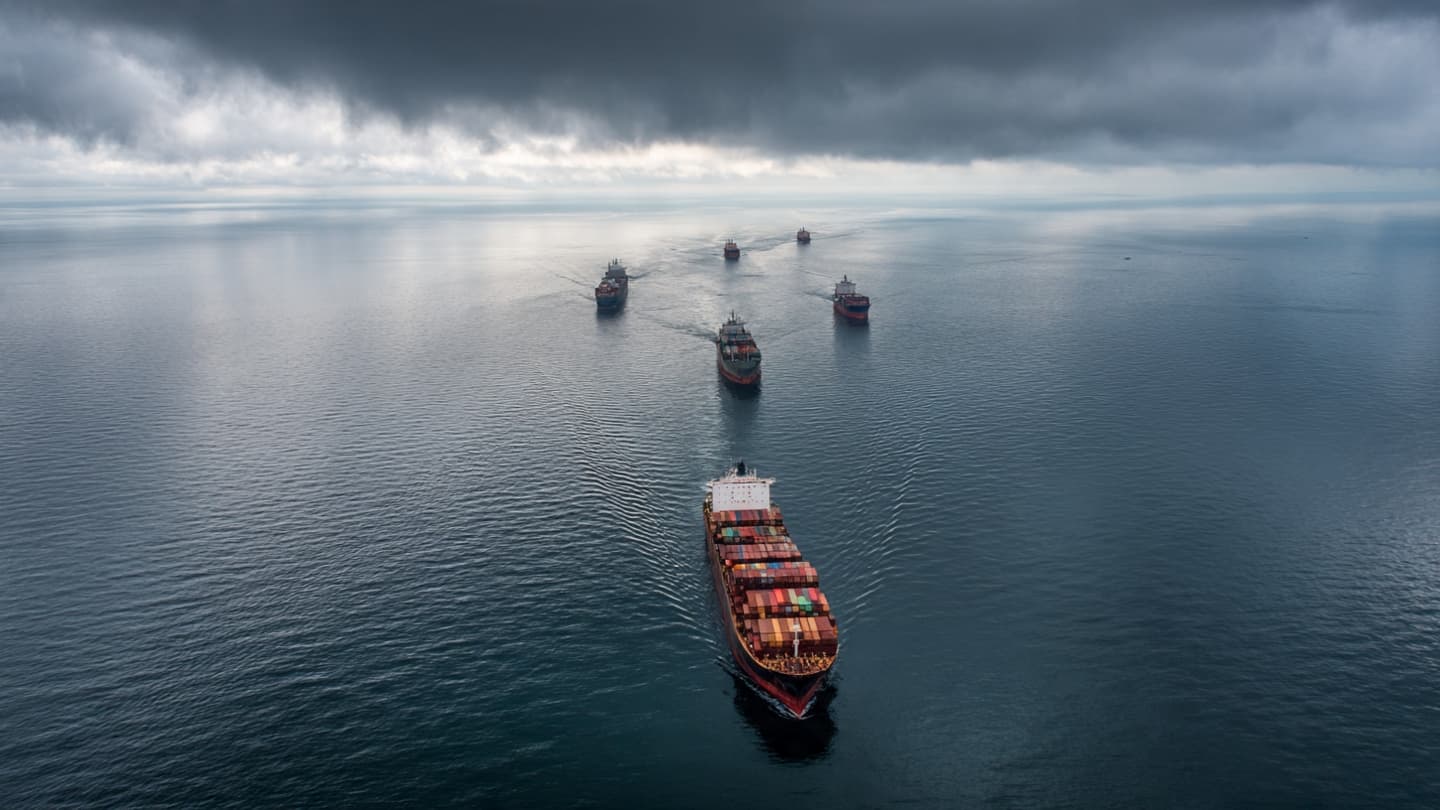
The sea has always been a silent witness to the movement of the world’s lifeblood—energy, goods, and ambition. Yet in recent days, that same vast waterway seems to carry a different weight, as if every wave is holding the tension of distant decisions. Global oil routes, once predictable like steady breathing, are now facing uncertainty that ripples far beyond the horizon.
At the center of this shift is the disruption of key maritime corridors tied to global energy transport. Shipping companies, once confident in their schedules, are now recalibrating routes and timelines with caution. It is not just a matter of distance anymore, but of risk assessment at every turn of the map.
Insurance costs for maritime transport have reportedly climbed, reflecting a growing sense of unpredictability. For many logistics operators, this is not just a financial adjustment but a structural change in how global trade is planned. Every container now carries not only goods but also the cost of uncertainty.
Energy markets, deeply sensitive to supply stability, have responded with volatility. Oil prices fluctuate not only based on production levels but also on perceived security of transport routes. The market, in this sense, becomes a mirror of geopolitical tension without ever naming it directly.
Shipping firms are also diversifying routes, avoiding high-risk zones where possible. This shift, while protective, adds longer travel times and increased fuel consumption. The irony is subtle but significant: avoiding risk creates new forms of inefficiency.
Meanwhile, industries dependent on timely imports—manufacturing, aviation, and retail—begin to feel the indirect pressure. Delays in supply chains ripple outward like stones dropped into a still lake, affecting production cycles and pricing structures across continents.
Governments and maritime authorities are increasing monitoring systems and patrol coordination in key sea lanes. These measures aim to restore confidence, though confidence itself is harder to measure than cargo weight or shipping speed.
As global trade adapts, one truth becomes clear: the world economy is not only shaped by what is produced, but by how safely it can move. And in that movement, the ocean remains both a pathway and a reminder of how interconnected fragility can be.
AI Image Disclaimer Visuals are created with AI tools and are not real photographs.
Source Check Reuters, BBC News, Associated Press, Bloomberg, Al Jazeera
Note: This article was published on BanxChange.com and is powered by the BXE Token on the XRP Ledger. For the latest articles and news, please visit BanxChange.com