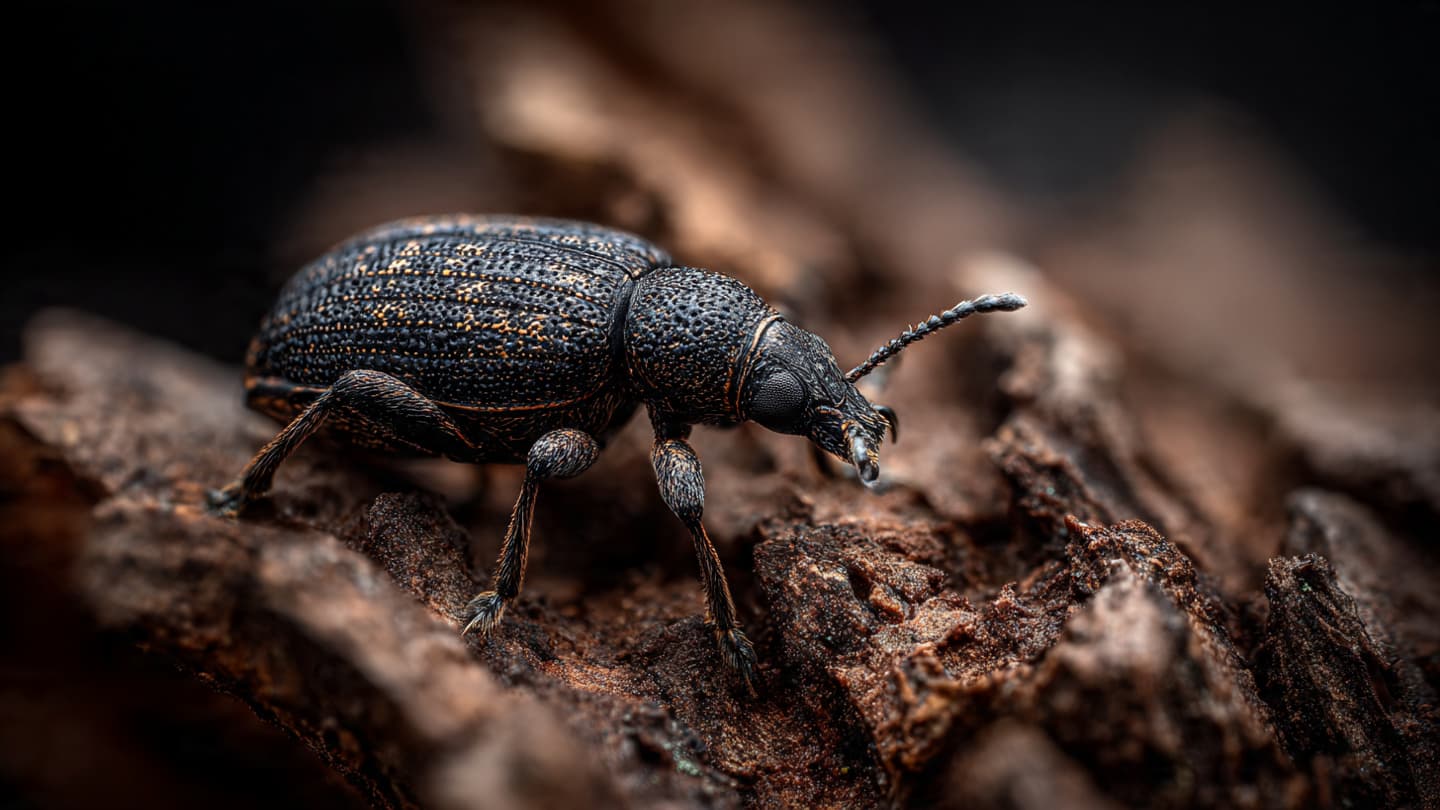
In the quiet, subterranean life of our native forests and the structured rows of our orchards, a complex narrative of movement and survival is currently being written. It is a story driven by some of the smallest inhabitants of our ecosystem: the bark and ambrosia beetles. These tiny insects, often overlooked as they tunnel through wood, have revealed themselves to be unintentional architects of ecological change. They act as "tiny taxis," carrying microscopic fungal passengers across the landscape, effectively mapping the hidden pathways of forest health and potential disease.
The relationship between these beetles and their fungal cargo is ancient and deeply intertwined. While the beetles seek out the structural security of wood—both in native timber and introduced plantation species—the fungi they carry engage in a more profound manipulation of their host. Some fungi are mere companions, neutral in their impact, while others possess the ability to alter the internal chemistry of a tree, blocking the vital flow of water and nutrients. It is this potential for disruption that has prompted a wide-ranging scientific investigation into the identity and habits of these microscopic passengers.
Researchers across the country, from the verdant forests of Rotorua to the orchards of the north, have mobilized to trap and analyze these beetles. Their work is a deliberate effort to decode the biological commerce taking place within the bark. By identifying which beetle carries which fungus, the scientific community is building a clearer picture of the risks facing our ecosystems. It is a form of forensic ecology, where every specimen caught in a trap provides a new data point in a national effort to protect the resilience of our natural and commercial estates.
The urgency of this work lies in the volatility of the beetle-fungal system. These insects are prolific breeders, capable of increasing their populations with startling speed when environmental conditions align. As our climate shifts and as new stresses—such as drought or the demands of intensive harvesting—weaken the defenses of our trees, the partnership between these beetles and their fungi may become increasingly aggressive. The research is not merely observational; it is predictive, aiming to understand the tipping points where a common association might turn into a significant threat to forest health.
What makes this investigation particularly compelling is the collaborative nature of the effort. With funding from organizations focused on border security and agricultural sustainability, teams have pooled their expertise to ensure no pathway is left unmonitored. This is a reflection of a modern, integrated approach to biosecurity, where the safety of our native bush is linked directly to the security of our export markets. By understanding the "taxis" that move through our forests, we are better equipped to intercept potential invaders before they can settle into the landscape.
The classification of these beetles as "taxis" serves as a fitting metaphor for their role in the environment. They are not the primary cause of harm in every instance, but they are the essential transport mechanism for the organisms that are. By focusing on the beetle, scientists are essentially studying the transit routes of the fungal world. This clarity allows for more precise surveillance, helping to direct limited resources toward the areas of greatest risk, whether that be in a protected botanical collection or a vital plantation forest.
Ultimately, this work underscores the interconnectedness of all life within our forests, where the smallest actor can hold the key to the health of the whole. It is a humbling reminder that our control over these ecosystems is more tenuous than we often assume. Our forests are living, breathing entities, constantly being shaped by invisible biological networks that operate largely beyond our perception. The goal of this research is not to eradicate the movement of these organisms—which would be both impossible and counterproductive—but to manage our relationship with them.
As the project continues to unfold, it adds a new layer to our understanding of forest ecology. We are learning to listen to the silent signals of our trees, to look for the signs of insect activity, and to respect the delicate balance that keeps our native landscape thriving. It is a patient, long-term endeavor, one that relies on the dedication of scientists and the vigilance of the public. Through their eyes, the forest becomes not just a collection of trees, but a complex, bustling network of life that requires our most careful and informed stewardship.
Published by Banx Network. This article is part of the Banx decentralized media programme, powered by the BXE token on the XRP Ledger.