
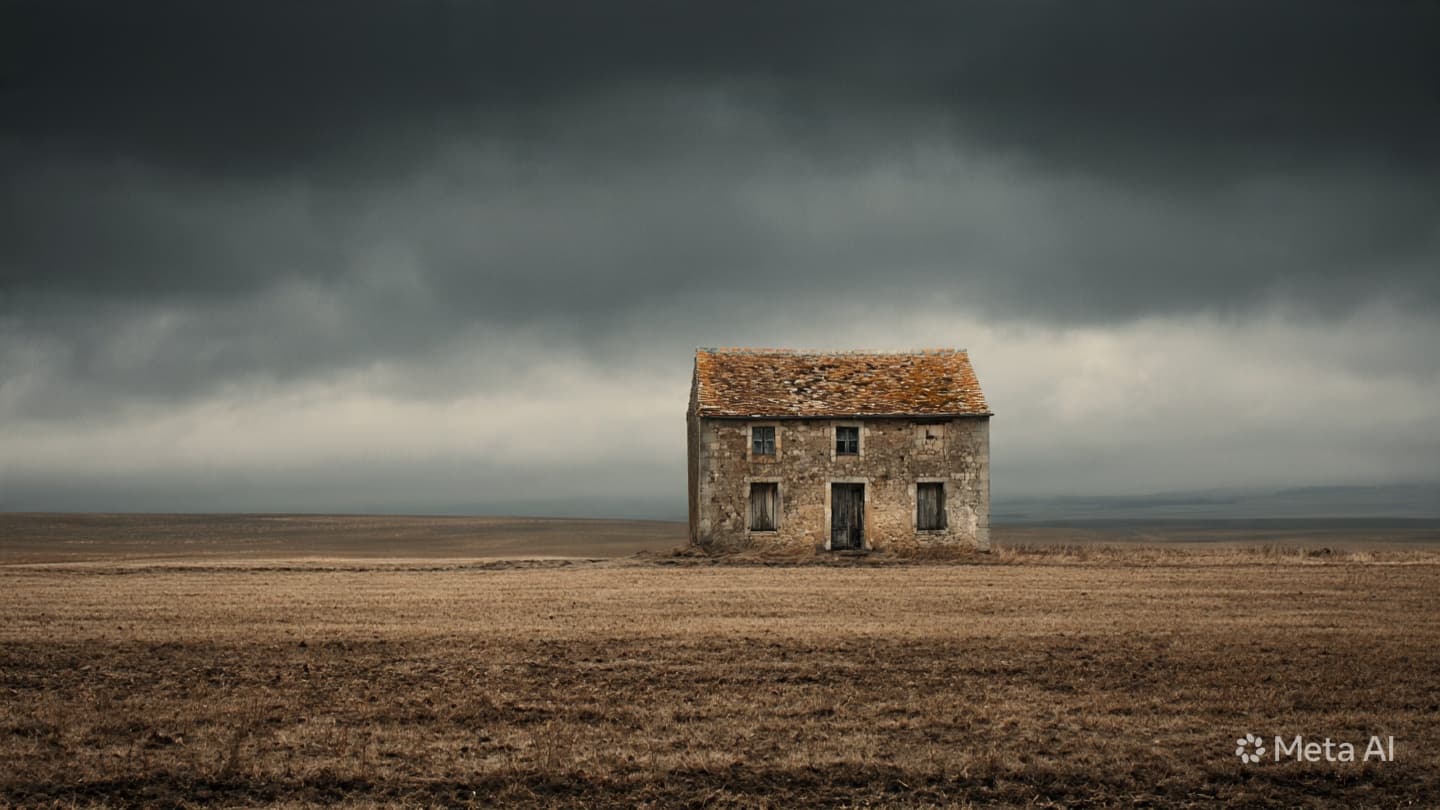
The rural outskirts of Sombor are defined by an expansive stillness, a flat landscape where the horizon stretches indefinitely under a heavy, overcast sky. Here, life is tethered to the predictable shifts of the soil and the generational boundaries of family homesteads. The houses stand at a distance from one another, separated by rows of dormant crops and skeletal trees that rattle softly in the northern wind. In these tightly knit clusters of rural life, privacy is highly valued, a silent agreement among neighbors to let each home manage its own interior world without undue curiosity from the outside.
It is against this backdrop of quiet independence that an internal fracturing can occur with devastating secrecy, contained entirely within the four walls of a family home. The tensions that build within a domestic space do not always announce themselves to the village; they often linger in the shadows of daily routine, masked by the ordinary noises of a working farm. When those hidden currents finally boil over into physical violence, the disruption strikes the community like a sudden frost in late spring. It is a violation not just of statutory law, but of the fundamental sanctuary that the home is supposed to represent.
The arrival of emergency sirens in the dead of night shatters the rural peace, their flashing red and blue lights reflecting off the whitewashed walls of the old farmhouse. Neighbors watch from their darkened windows, a collective chill settling over the lane as the scale of the tragedy becomes apparent. To learn that a dispute between brothers has ended with one dead and another fighting for survival is a grief that defies easy categorization. It forces the community to look at a familiar family through a fractured lens, searching their memories for signs of a rift they might have missed.
Forensic investigators move through the domestic space with a somber, quiet reverence, highly aware that they are documenting the total collapse of a family structure. They photograph the overturned furniture, the discarded tools, and the physical markers of a struggle that occurred in a space once reserved for shared meals and childhood memories. This process is intensely clinical, an intentional effort to separate the raw, human horror of fratricide from the objective gathering of legal proof. The kitchen floor, once a center of domestic life, is transformed into a highly restricted coordinate within a criminal dossier.
As the sun rises over the fields, casting a cold, gray light across the property, the local prosecutor arrives to oversee the initial inquiry. The atmosphere is thick with a heavy, unexpressed sorrow that seems to cling to the very dirt of the yard. There are no political statements to be made here, no grand ideological battles; there is only the quiet, systematic work of trying to understand how a shared history could dissolve into such absolute violence. The authorities move between the house and their vehicles, their breath misting in the cold air as they confer in hushed tones.
The village itself enters a period of quiet mourning, the conversations at the local market subdued and halting. In a small community, a tragedy of this nature is felt collectively, as if a piece of the common foundation has been abruptly chipped away. People do not speak of the brothers with anger, but with a profound, bewildered sadness, remembering them as boys who once played in the very fields where the police tape now flutters. It is a reminder of the fragile nature of human relationships, even those bound by blood and decades of shared survival.
In the days ahead, the legal machinery will begin its formal proceedings in the district court, seeking to establish a clear timeline of the altercation. Documents will be filed, statements will be read, and medical reports will detail the precise nature of the injuries sustained by the surviving brother. Yet, for those left behind in the valley, these legal definitions will offer little true resolution. The farmhouse will likely stand empty for a time, a quiet monument to a night when the protective boundaries of family completely failed.
The earth continues its slow rotation, indifferent to the small, intense tragedies that unfold across its surface, as the winter wheat begins to show its first green shoots through the dark soil. The investigation will eventually close, the tape will be removed, and the lane will return to its original silence, leaving the community to slowly absorb the memory into its local history.
The Public Prosecutor's Office in Sombor confirmed that a formal investigation has been launched into a fatal domestic altercation that occurred late Tuesday evening at a rural property. One male resident was pronounced dead at the scene from severe trauma, while his biological brother remains in critical condition under police guard at the regional hospital.
Note: This article was published on BanxChange.com and is powered by the BXE Token on the XRP Ledger. For the latest articles and news, please visit BanxChange.com