It is said that the earth speaks in languages we rarely understand until the moment of the rupture. In the pre-dawn silence of the Xinjiang region, the conversation turned violent, a 7.1 magnitude tremor that rippled outward from the heart of the Tian Shan. There is a profound, quiet weight to a morning that begins with the foundation of the world moving beneath you, a moment where the reliable physics of the domestic sphere are replaced by the unpredictable logic of the tectonic.
For the inhabitants of Uchturpan, the early hours were marked by the sudden transition from deep sleep to an urgent, frantic search for the open air. The experience of a major seismic event is not merely a physical shaking; it is a profound psychological pivot, a sudden loss of the internal compass that tells us where we stand in relation to the world. Furniture shifted, walls groaned, and for a few, the transition resulted in the immediate, sharp reality of injury, a human toll exacted by the sudden, sweeping movement of stone and timber.
The regional statistics—six people injured, a tally that feels both specific and haunting—do not fully capture the atmosphere of the event. To be awakened by the earth itself is to be reminded, with startling clarity, of our fragility. In the aftermath, the air in the valleys was thick with the dust of collapsed structures, a particulate fog that blurred the lines between the remnants of the past and the uncertainty of the immediate future.
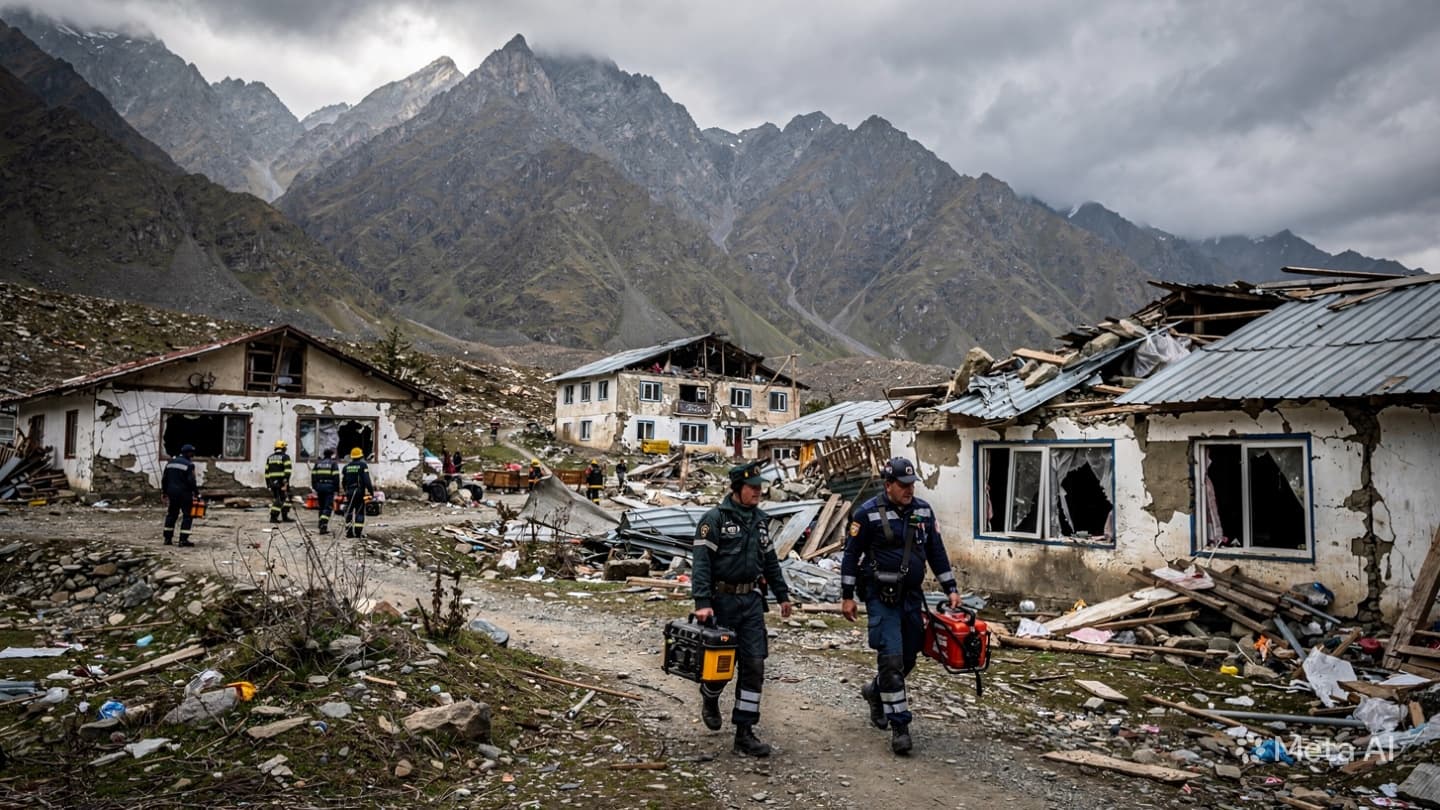
Rescue personnel navigated this landscape with a practiced, somber diligence, their arrival a signal that the chaos of the night was being met with the organizational weight of the state. They combed through the debris of the forty-seven collapsed homes, their work a quiet, repetitive motion against the massive, silent scale of the mountain range. There is an inherent humanity in the way searchers look for life amidst the ruins, a refusal to let the event remain a story of destruction alone.
Tremors, by their nature, are inclusive; they cross borders and bypass political barriers, moving through the earth without concern for the maps we draw. The vibrations felt in the region, and even as far as Kyrgyzstan and Kazakhstan, served as a vast, interconnected reminder of our shared geological fate. The shockwaves that startled residents in far-off cities into the streets in the freezing cold were the same forces that brought the walls down in Wushi.
As the morning light solidified, the scale of the damage became clearer, a mosaic of broken roofs and scattered belongings. The resilience of a community often manifests in these quiet, post-event moments, as neighbors begin the slow, methodical process of clearing paths and checking on one another. The official response, centered on relief and medical care, focused on stabilizing the human element, ensuring that those caught in the fallout were given the resources to endure the following days.
The logistics of an event of this size are immense, requiring the redirection of power, the suspension of transit, and the rapid deployment of shelter. Yet, the narrative of the morning remained focused on the individual experience—the pet shop owner sensing the shift, the student fleeing into the night, the family gathered in the cold. These stories, woven together, create a tapestry of a region that is both vulnerable to the earth’s temperament and determined to hold its ground.
By midday, the seismic activity had begun to subside, though the memory of the motion remained etched in the consciousness of the residents. The disaster was contained, the injured treated, and the long, slow work of evaluation began. The Tian Shan mountains, indifferent to the structures they had shaken, continued to stand in their ancient silence, a stark backdrop to a morning of human effort, sorrow, and the quiet, persistent drive toward the next chapter.
Published by Banx Network. This article is part of the Banx decentralized media programme, powered by the BXE token on the XRP Ledger.