
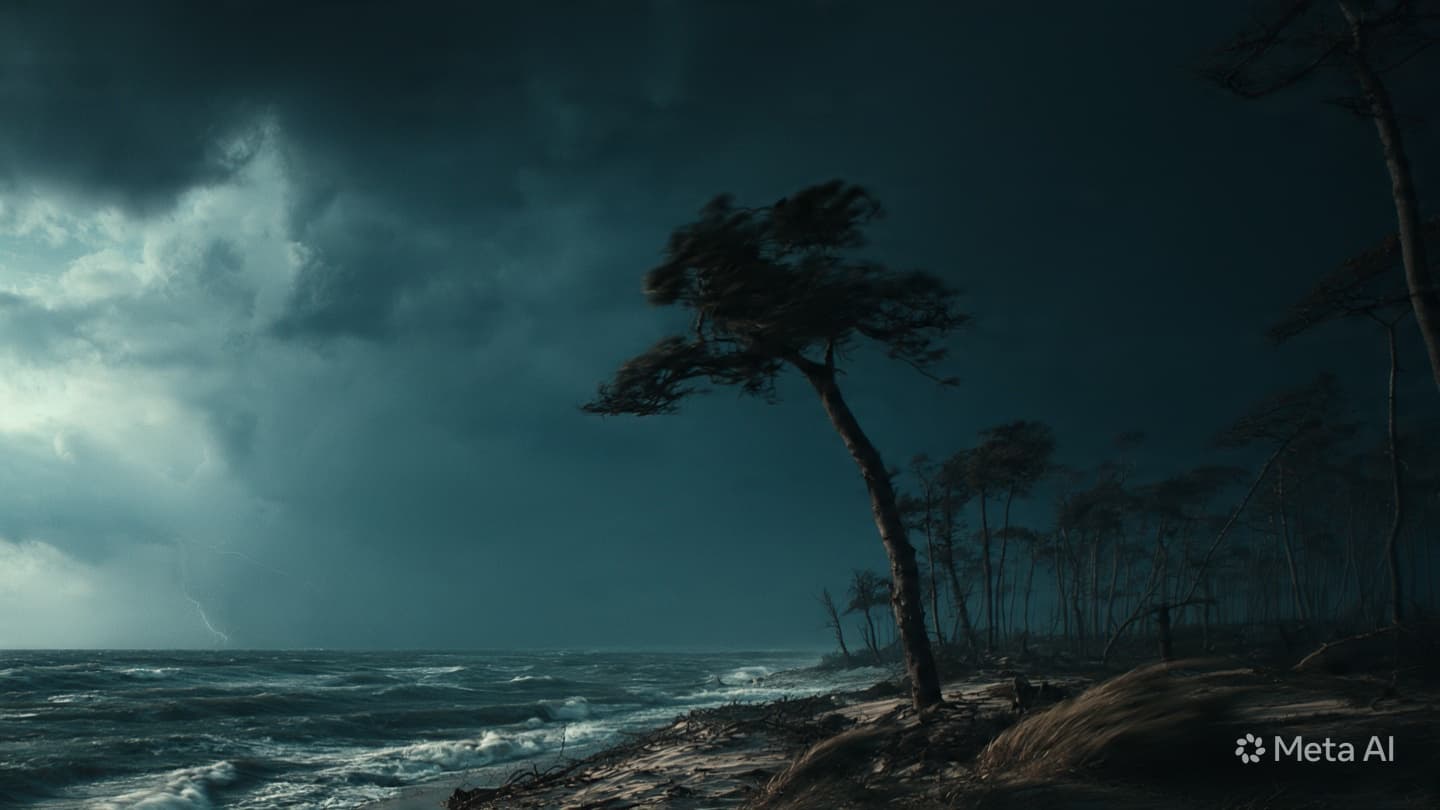
The coast of Canelones is a place of profound beauty, where the land meets the Atlantic in a rhythmic dance of tide and light. But this environment, governed by the moods of the southern ocean, can turn in an instant. When the extratropical cyclone made landfall, it arrived with a power that defied the usual preparations, transforming the quiet shoreline into a place of uprooted trees, scattered debris, and the sharp, piercing sound of a world under duress.
For the driver who lost their life when a tree succumbed to the winds, the journey was a mundane act, a simple traversal of the coastal road. In the grip of such an intense weather event, the familiar landmarks—the trees that line the route, the signs that guide the way—become active threats. The tragedy serves as a brutal reminder that, in the face of nature’s most violent expressions, our human infrastructure and our plans are remarkably, and sometimes tragically, fragile.
The aftermath is a scene of stark, elemental transformation. The cyclone has reshaped the landscape, scouring the greenery and leaving behind a trail of timber and twisted wires that feels alien to those who knew the coastal paths before. Emergency crews navigate this unstable topography with caution, their movements measured against the persistent sound of distant thunder, a reminder that the environment remains in a state of precarious equilibrium even after the peak of the storm has passed.
As the families of the victim process their loss, the tragedy has prompted a broader conversation about the increasing intensity of these weather events. The phenomenon of extratropical cyclones, amplified by shifting oceanic temperatures, is becoming a more pressing reality for coastal residents. This is not merely a matter of environmental statistics; it is a reality being felt in the loss of lives and the fundamental change in how we must approach our coastal existence.
Local communities, long adapted to the nuances of the wind and wave, are observing these changes with a mix of anxiety and resilience. The storm has acted as a catalyst, focusing attention on the need for better tree maintenance, more robust power infrastructure, and the development of early warning systems that can account for the rapid onset of these cyclones. The desire for safety is clear, yet the complexity of the coastal environment ensures that any solution will be as challenging as the weather itself.
For the regional residents, the incident is a sobering event that necessitates a reevaluation of traditional safety expectations. The allure of the coast remains, but it is now tempered by a more profound understanding of the risks inherent in an increasingly unpredictable environment. As the region begins the process of recovery, the memory of the driver serves as a poignant reminder of the necessity of respect for the forces that shape our world.
The loss of this life is felt deeply, not only by their family but by the entire coastal community. In the quiet halls of local councils, there is a shared sense of gravity, a recognition that the environment we love is also one we must approach with the utmost caution. As the wind subsides, the silence of the coast returns, but it is now a silence marked by the recognition of the power that continues to dwell in the sea and sky.
Ultimately, the cyclone in Canelones is a story of our relationship with a natural world that is becoming increasingly volatile. It is a call to pay closer attention, to respect the changing dynamics of our coast, and to accept that we are subject to forces that operate on a scale far beyond our own. The coast remains, as it always has, a place of beauty and danger, a testament to the cycles of the earth that continue long after we have departed.
Official authorities have confirmed the identification of the deceased and have initiated recovery efforts across the affected coastal districts. Environmental consultants from the regional university are working alongside disaster management agencies to assess the structural stability of public areas. A formal alert remains in place for coastal transit, with officials advising the avoidance of tree-lined routes until all storm-damaged hazards have been cleared and secured.
Note: This article was published on BanxChange.com and is powered by the BXE Token on the XRP Ledger. For the latest articles and news, please visit BanxChange.com