
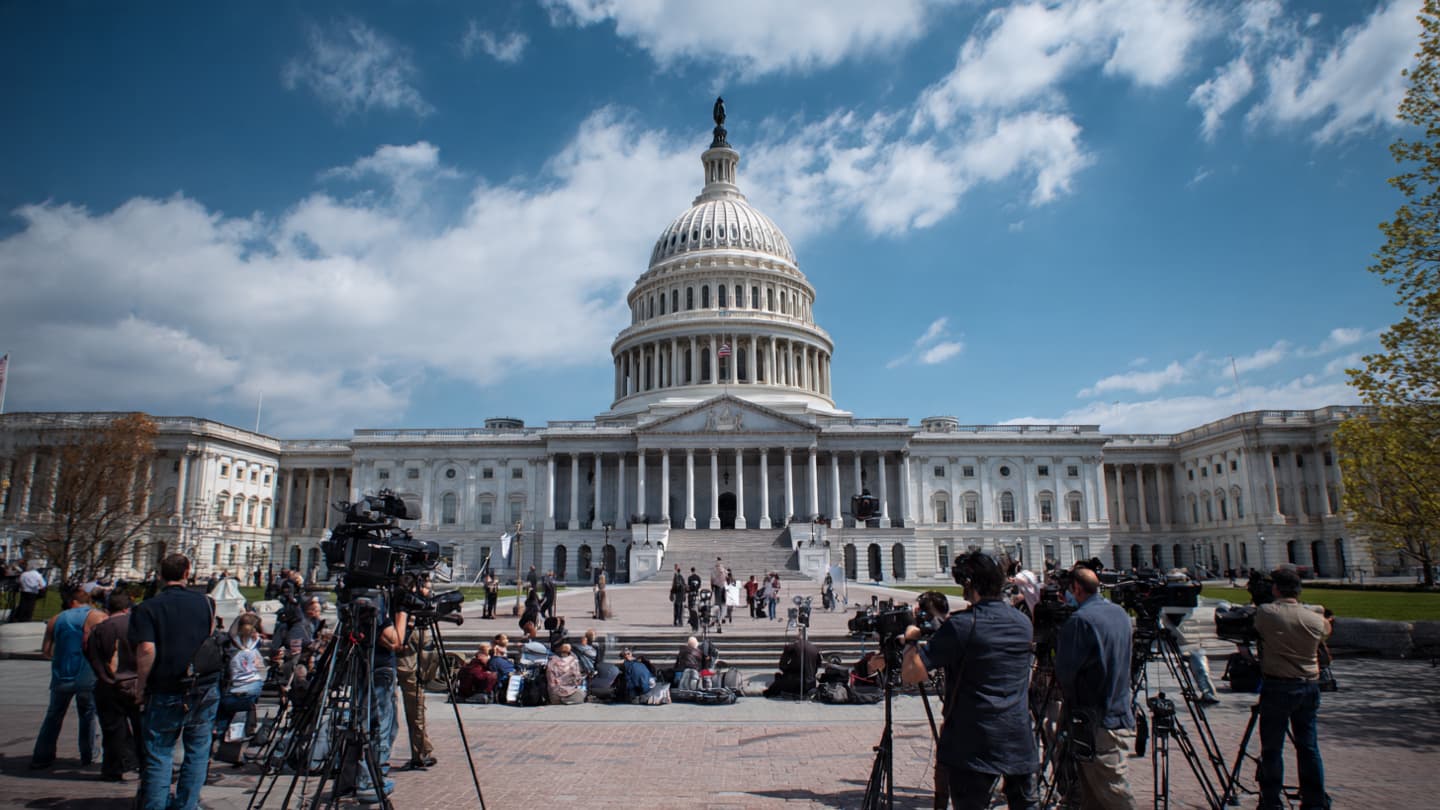
Political debates often resemble long rivers, carrying past events into present discussions. Even years after a historic moment has passed, its consequences continue to surface in new forms. In Washington, conversations surrounding the January 6 Capitol attack have once again moved to the forefront through a dispute involving a proposed federal compensation fund.
During a televised interview, President Donald Trump declined to completely rule out the possibility that individuals involved in the January 6, 2021 attack on the U.S. Capitol could receive payments from a proposed “anti-weaponization” fund. His comments immediately drew attention because some of those defendants had been convicted of assaulting police officers during the attack.
Trump stated that he would not be inclined to support payments for those who harmed law enforcement officers, but he also indicated that any decisions would depend on individual circumstances. The remarks came amid continuing legal and political disputes surrounding the proposed fund.
The fund, valued at roughly $1.8 billion, was originally described as a mechanism to compensate people who claim they were unfairly targeted by government actions. Critics, however, have argued that the program could benefit participants in the Capitol riot who later received presidential pardons.
Questions surrounding the proposal have already led to legal challenges. Several police officers who defended the Capitol during the January 6 attack have filed lawsuits seeking to block the fund, arguing that taxpayer money should not be used in a way that could benefit those involved in the assault on Congress.
The issue carries particular sensitivity because more than 140 law enforcement officers were injured during the events of January 6. For many observers, any discussion involving compensation for participants in the attack remains closely connected to the experiences of those officers.
Meanwhile, the future of the fund remains uncertain. Court challenges and congressional scrutiny have complicated implementation, and Justice Department officials have indicated that the proposal is not currently moving forward.
Supporters of the fund argue it should be available to people who believe they were subjected to politically motivated investigations. Opponents maintain that the program raises constitutional, ethical, and financial concerns that require closer examination.
For now, the debate continues in courts, Congress, and public forums. Whether the fund ultimately proceeds or remains stalled, the discussion reflects how the legacy of January 6 continues to influence American political life years after the attack.
AI Image Disclaimer: This article includes an AI-generated illustration intended to visually represent the political issue discussed.
Sources Verified: The Guardian, Reuters, The Wall Street Journal, Associated Press
Note: This article was published on BanxChange.com and is powered by the BXE Token on the XRP Ledger. For the latest articles and news, please visit BanxChange.com