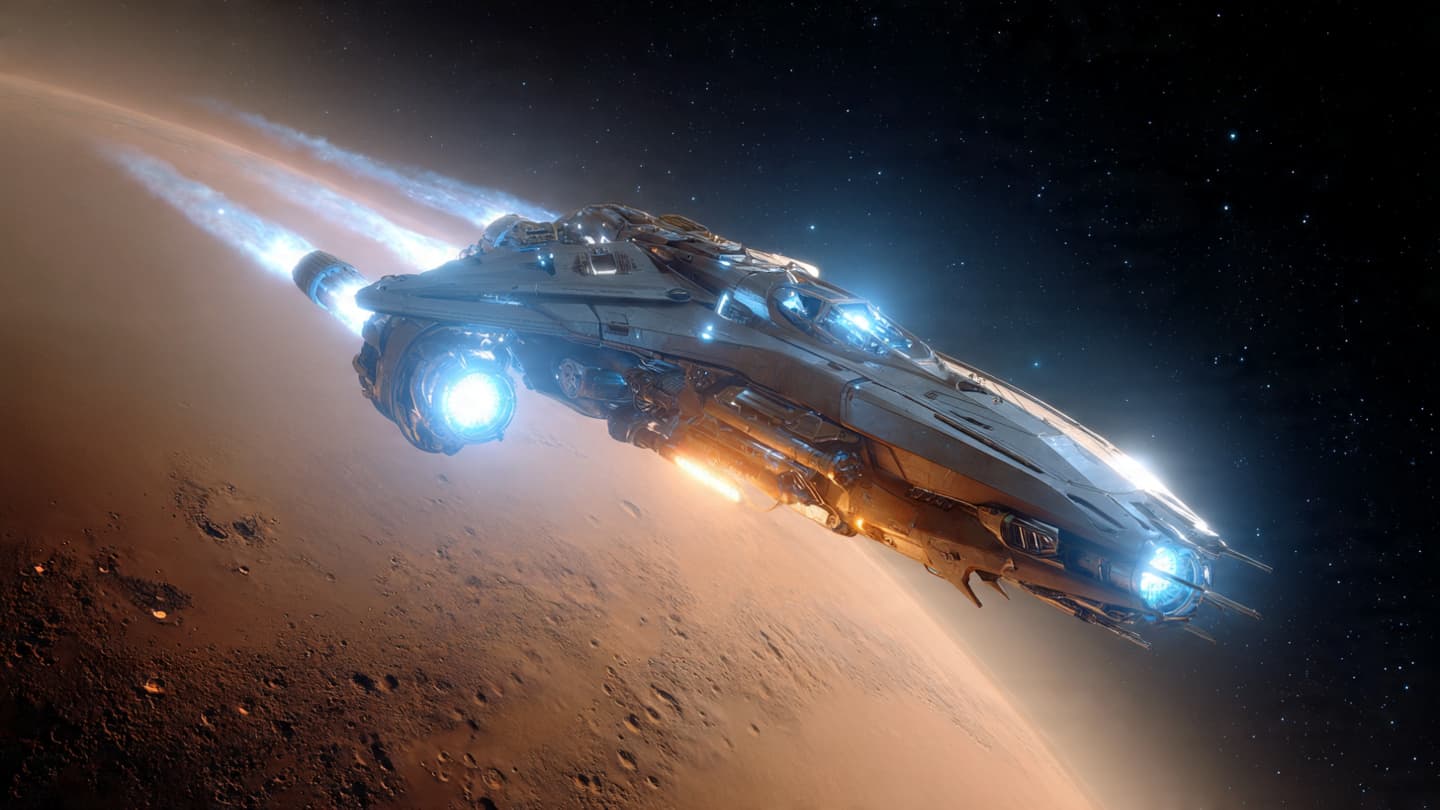
For generations, Mars has existed in human imagination as both a scientific destination and a symbol of exploration itself. The red planet appears close in the night sky, yet reaching it requires extraordinary patience, engineering, and endurance. This week, NASA announced new tests involving an experimental electromagnetic thruster that may help shorten future journeys to Mars.
The propulsion system reportedly uses electromagnetic forces rather than relying solely on traditional chemical combustion. Scientists believe such technology could eventually provide more efficient long-duration thrust, allowing spacecraft to travel farther while using fuel more effectively during deep-space missions.
Current missions to Mars typically require several months of travel depending on orbital positioning. For human crews, these long transit periods create significant challenges involving radiation exposure, physical health, psychological stress, and life-support limitations inside spacecraft.
NASA engineers described the latest trials as an important technical milestone rather than an immediate operational breakthrough. Space propulsion systems require years of testing before they can safely support crewed missions. Nevertheless, researchers say the early performance data appears encouraging.
Electromagnetic propulsion has long attracted scientific interest because of its theoretical advantages in deep-space exploration. Unlike conventional rockets that burn fuel rapidly for short bursts of acceleration, advanced thrusters can potentially provide continuous low-force propulsion over extended periods.
The project also reflects growing international competition and cooperation in space exploration. Alongside NASA, countries such as China and members of the European Space Agency continue investing heavily in technologies aimed at supporting future lunar and Martian missions.
Private aerospace companies have similarly accelerated development efforts related to reusable spacecraft, orbital infrastructure, and long-distance travel systems. The combination of public and private investment has contributed to a renewed global focus on deep-space exploration after decades centered primarily on low Earth orbit.
Scientists hope that faster and more efficient propulsion could eventually support not only Mars missions, but also broader exploration throughout the solar system. Future robotic spacecraft may travel deeper into space while carrying more advanced scientific instruments over longer operational lifetimes.
For now, the experimental thruster remains part of a much longer scientific journey. Yet every successful test adds another small step toward ambitions that once seemed impossible. In laboratories and research facilities far from the launchpad, humanity continues slowly building the technology needed to travel beyond the boundaries of Earth.
AI Image Disclaimer: Some visuals accompanying this report are AI-generated artistic interpretations inspired by aerospace engineering concepts.
Sources NASA ScienceDaily Reuters Space.com
Published by Banx Network. This article is part of the Banx decentralized media programme, powered by the BXE token on the XRP Ledger.