
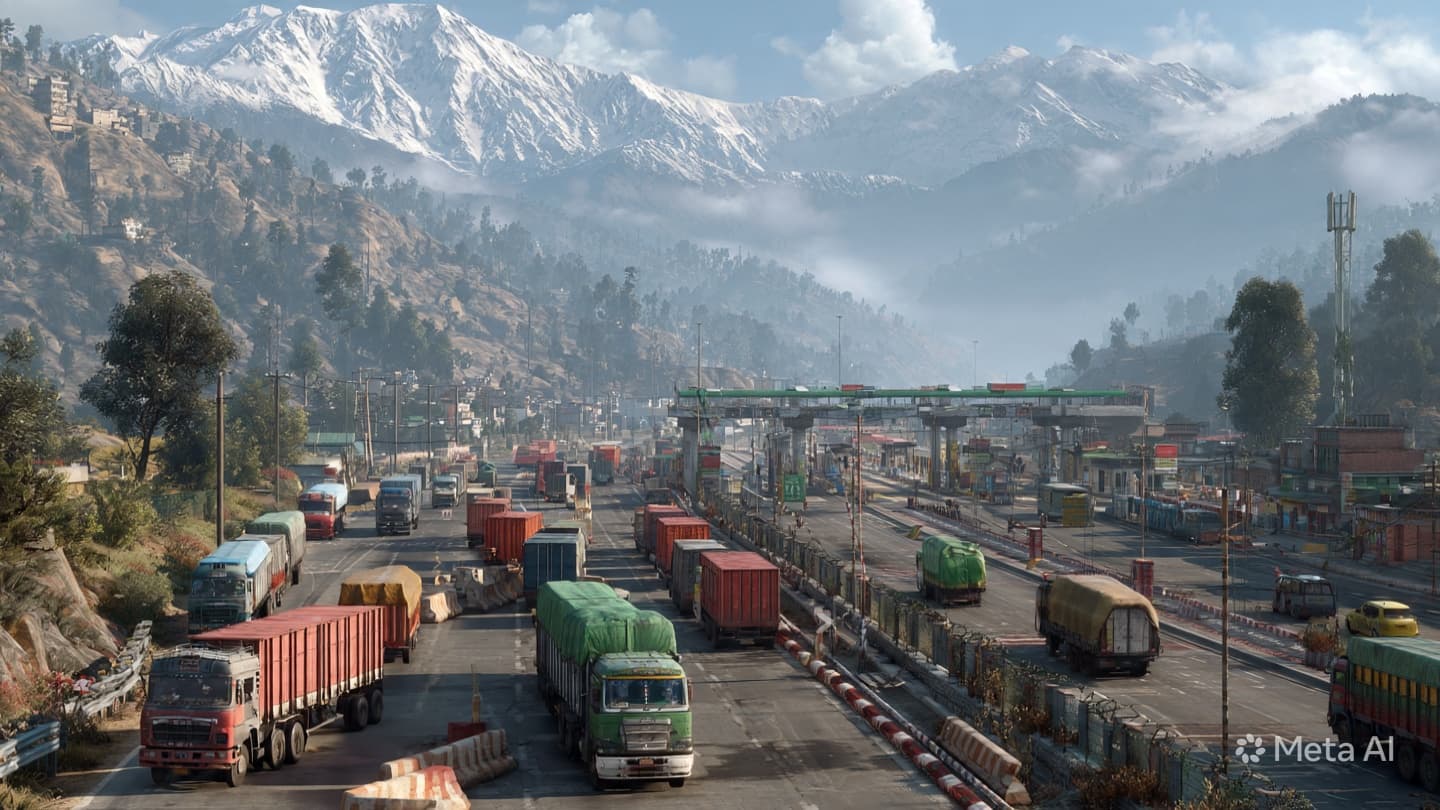
The transit routes that weave through the landscape of Nepal are more than just physical paths; they are the arteries of a nation that sits at the nexus of South Asian trade. Yet, in the quietude of these mountain passes and bustling border crossings, there is an increasing awareness that these same routes are being scrutinized for their role in the region's broader security challenges. As the focus of anti-smuggling talks intensifies, these passages have moved to the center of a regional dialogue, reflecting a growing need to balance the traditional openness of these corridors with the modern necessity of rigorous oversight.
The attention currently directed toward Nepal’s transit routes is not a sign of alarm, but a reflection of a strategic, collaborative maturity. Those who study the movement of goods and people across the Indo-Nepal frontier and beyond are aware that these areas are uniquely vulnerable to the exploitation of criminal networks. The discussions now taking place involve a pragmatic assessment of how to maintain the vital, life-giving flow of legitimate trade while simultaneously closing the gaps that allow for the smuggling of contraband and the movement of illicit materials.
There is a contemplative weight to these conversations. They involve the harmonization of border management policies, the strengthening of inter-agency cooperation, and the introduction of technological tools that can help identify high-risk anomalies without disrupting the daily lives of those who rely on these routes for their livelihoods. It is a work of immense responsibility, where the objective is to create a secure, orderly transit environment that fosters national prosperity rather than leaving it to the whims of criminal enterprise.
International support, provided by agencies like the UNODC, is providing the essential framework for these discussions. By facilitating the exchange of best practices and supporting the technical development of border forces, these partnerships allow Nepal to align its transit management with global standards. This is a collaborative journey, one that recognizes that the challenge of securing these routes is a transnational one, and that the only effective response is a unified, regional strategy that treats the border as a shared zone of responsibility.
The human element remains central to this story. Those who manage the transit routes—from the customs officials to the border security personnel—are the quiet custodians of regional stability. Their presence, when combined with a sophisticated intelligence-led strategy, creates a deterrent effect that is essential for the long-term security of the region. It is a work of dedication, performed away from the public gaze, aimed at protecting the integrity of the border and the future of the communities that depend on its stability.
As the talks continue, the focus is shifting toward the sustainability of these improvements. The goal is to embed these new monitoring and interdiction capabilities into the standard operating procedures of the national security forces. It is a process of continuous learning and refinement, where every successful initiative serves as a model for the future. It is a long-term commitment to the integrity of the nation, a testament to the importance of a secure border to the future of Nepal’s prosperity and peace.
Looking ahead, there is a sense of deepening resolve. The path ahead is undoubtedly complex, filled with the challenges of balancing national policy with regional requirements. Yet, the current momentum suggests that a more secure, protected environment for the people of Nepal is within reach. Through persistent, principled, and cooperative action, the authorities are working to ensure that their transit routes remain conduits of opportunity, rather than vectors for the movement of harm.
In the final analysis, the attention being given to Nepal’s transit routes is about the preservation of a future defined by order rather than risk. By working to stem the proliferation of smuggling, the authorities are protecting the very foundation of the society they serve. It is a necessary, albeit complex, evolution in the management of the borders—a shift toward a future where the transit passages of Nepal serve as a bridge for opportunity, rather than a loophole for the illicit trade that has for too long gone unchecked.
Nepal’s transit routes have become a focal point of recent regional anti-smuggling discussions, with officials emphasizing the need for enhanced border oversight and inter-agency coordination. Supported by the UNODC, these talks focus on modernizing the management of critical border crossings—such as the international airport in Kathmandu and key land routes—to better detect and intercept illicit shipments. The initiative seeks to balance the region's traditional commitment to the open movement of people and trade with new, data-driven security measures aimed at neutralizing organized smuggling threats and enhancing institutional capacity.
Note: This article was published on BanxChange.com and is powered by the BXE Token on the XRP Ledger. For the latest articles and news, please visit BanxChange.com