The solar system is often imagined as a stable and predictable place, with planets and smaller bodies following familiar paths around the Sun. Yet many celestial objects exist in a delicate balance, shaped by forces that can gradually alter their behavior over time. Recent research involving Comet 41P/Tuttle-Giacobini-Kresák suggests that one such object may be moving toward what scientists describe as a "death spiral."
The term does not imply a sudden catastrophe but rather a gradual process driven by the comet's own activity. Researchers studying the object observed dramatic changes in its rotation caused by jets of gas and dust escaping from its surface as it approaches the Sun.
Comets are often described as cosmic time capsules because they contain material left over from the formation of the solar system billions of years ago. As sunlight heats their icy surfaces, frozen gases vaporize and create the characteristic tails that make comets visible from Earth.
In the case of Comet 41P, scientists discovered that these outgassing processes have significantly altered the object's spin rate. At one point, the comet's rotation slowed dramatically, surprising researchers who had not previously observed such rapid changes in a comet of its size.
The phenomenon occurs because escaping gas acts like tiny thrusters. Over time, these forces can modify a comet's rotation, potentially causing it to spin faster, slower, or even reverse direction. Such changes can place stress on the comet's structure and influence its long-term evolution.
Researchers suggest that continued rotational changes could eventually destabilize the comet. If internal stresses become too great, portions of the object might fracture or break apart, gradually reducing it to smaller fragments over astronomical timescales.
Understanding these processes provides valuable insights into the life cycles of comets. Scientists study such objects not only because they are visually spectacular but also because they preserve clues about conditions that existed during the solar system's earliest history.
The findings also highlight the dynamic nature of seemingly small celestial bodies. While planets often dominate public attention, comets continue to reveal complex physical behaviors that challenge scientific assumptions and expand understanding of planetary science.
As observations continue, Comet 41P may offer researchers a rare opportunity to witness important stages in a comet's evolution. Its story serves as a reminder that even the oldest objects in the solar system remain active participants in an ever-changing cosmic environment.
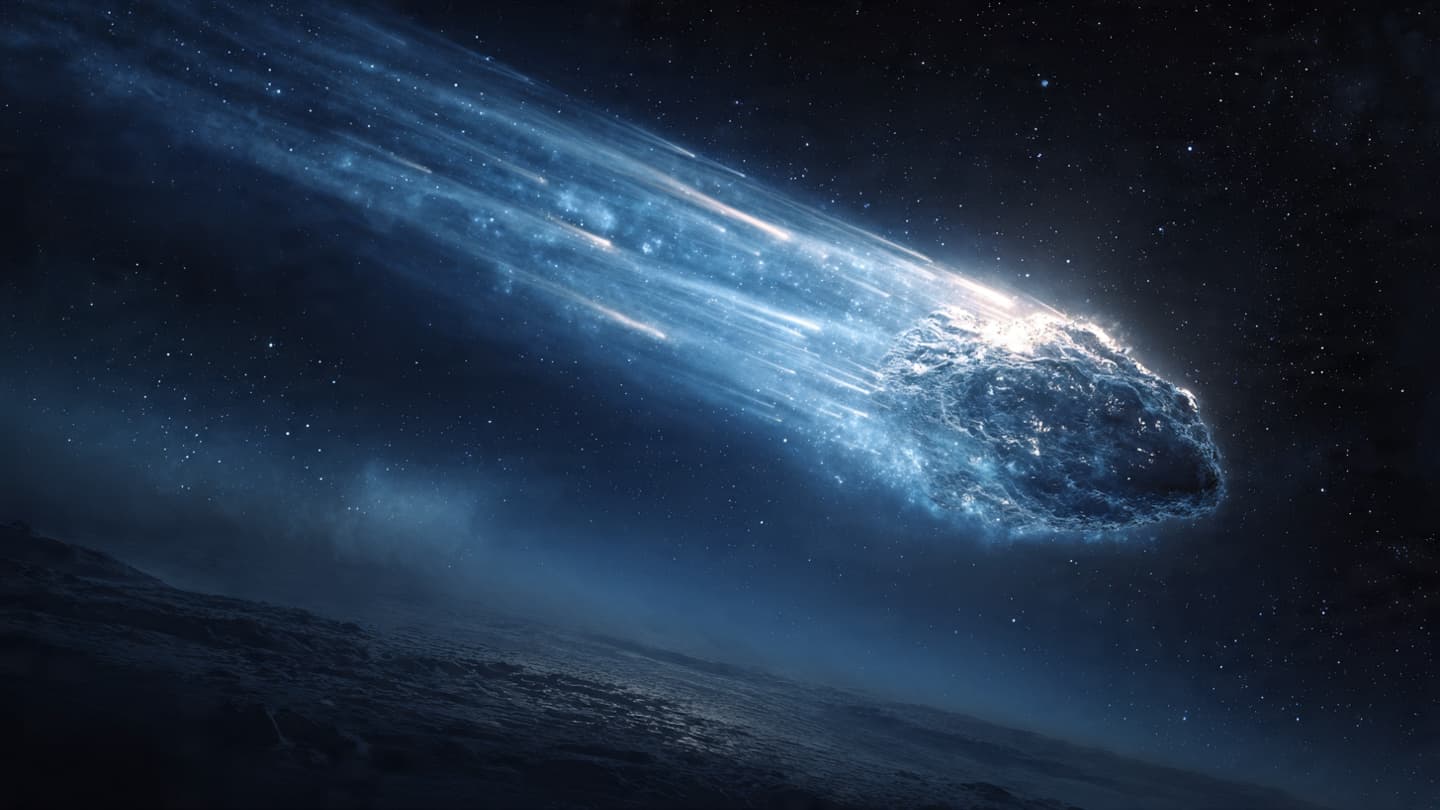
AI Image Disclaimer: The visual accompanying this article is AI-generated and intended to illustrate scientific concepts described in the report.
Source Verification Check: Science News, NASA, EarthSky, Planetary Science Research Publications
Published by Banx Network. This article is part of the Banx decentralized media programme, powered by the BXE token on the XRP Ledger.