
In classrooms where curiosity is still forming its earliest shape, new technologies often arrive like uninvited weather—changing the atmosphere before anyone fully understands the forecast. Artificial intelligence, in particular, has entered elementary education with both promise and uncertainty.
A major teachers union has called on elementary schools to reconsider or pause the use of AI tools for young students, expressing concern about developmental readiness, data privacy, and the role of human guidance in early learning environments.
The use of AI in education has expanded rapidly, with tools designed to assist reading, writing, tutoring, and classroom management. Supporters argue these systems can personalize learning and provide additional resources for teachers managing large classrooms.
However, educators and researchers have raised questions about how young children interact with AI systems that may generate answers, guide tasks, or simulate conversation without fully transparent reasoning processes.
Teachers’ organizations often emphasize that early education is not only about information delivery but also about social development, emotional learning, and the cultivation of foundational thinking skills.
Concerns around data privacy have also become part of the discussion, particularly regarding how student interactions with AI platforms may be stored, analyzed, or used for model training.
Education policy in many regions is still adapting to the rapid integration of digital tools, and guidelines for AI use in classrooms remain uneven across districts and states.
As schools continue to navigate these changes, discussions between educators, technology providers, and policymakers are expected to shape how AI is introduced to younger students.
The union’s appeal reflects a broader effort to balance innovation with caution in spaces where learning is still forming its earliest and most sensitive foundations.
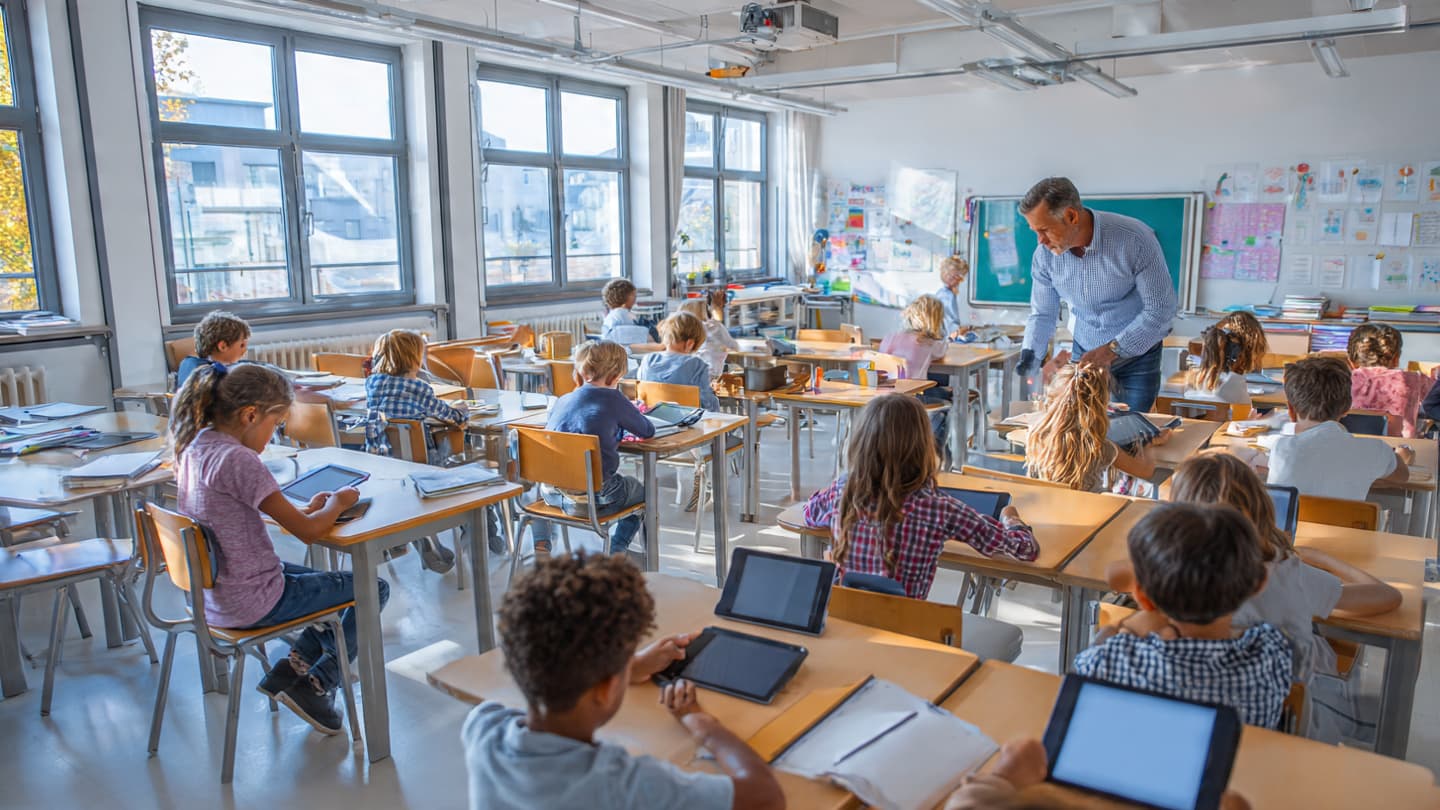
AI Image Disclaimer: The images in this article are AI-generated illustrations representing classroom environments and educational technology and do not depict real students or schools.
Sources (Verification Check):
Associated Press Reuters National Education Association (NEA) UNESCO Education Reports EdWeek
Note: This article was published on BanxChange.com and is powered by the BXE Token on the XRP Ledger. For the latest articles and news, please visit BanxChange.com