
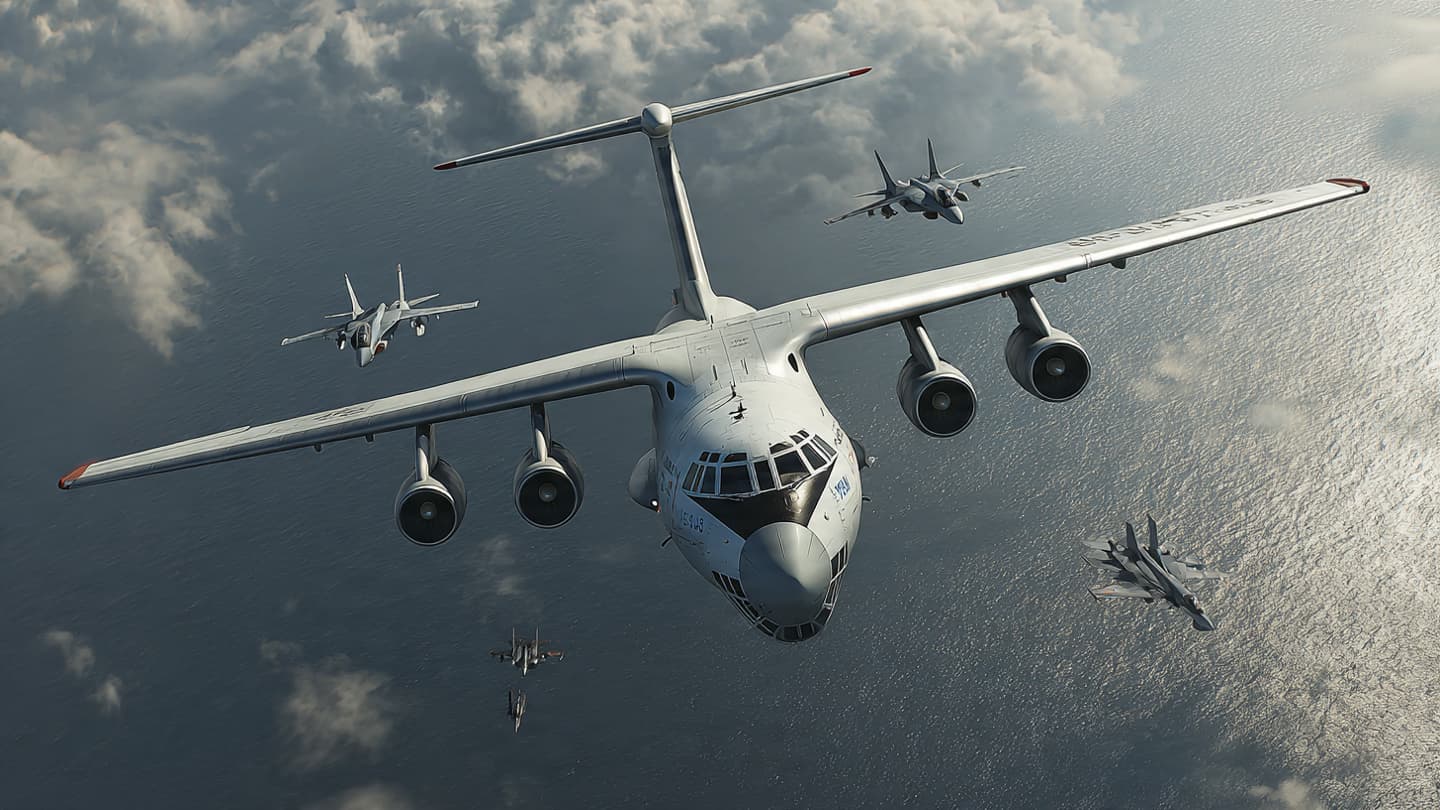
Across the Black Sea, the sky has increasingly become a corridor of caution rather than openness. Aircraft move through contested airspace with careful calculation, while military crews navigate not only geography but also fragile political tensions lingering between East and West. In such an atmosphere, even brief encounters between aircraft can quickly become symbols of wider geopolitical strain.
The United Kingdom’s Ministry of Defence stated that a British surveillance aircraft was “dangerously intercepted” by Russian military jets while operating over the Black Sea. According to British officials, the encounter involved Russian aircraft flying in close proximity to the U.K. plane during what London described as a routine mission conducted in international airspace.
British authorities said the surveillance aircraft was carrying out operations consistent with NATO-related monitoring activities in the region. The ministry emphasized that the aircraft remained within international legal boundaries and that the conduct of the Russian jets created unnecessary risk for flight crews involved in the operation.
Russian officials have not always publicly acknowledged such encounters in detail, though Moscow has repeatedly argued that increased NATO activity near Russian territory contributes to rising military tension. Encounters between Russian and Western military aircraft have become more frequent since the broader deterioration of relations following the war in Ukraine.
Defense analysts noted that aerial interceptions are not unusual in contested regions, but the language used by governments often signals the seriousness of a particular incident. Terms such as “unsafe” or “dangerous” generally suggest that aircraft may have maneuvered at close range or behaved unpredictably during the interaction.
The Black Sea has remained strategically significant throughout the conflict in Ukraine, serving as a focal point for military surveillance, naval activity, and regional security operations. NATO members continue to monitor developments closely, while Russia has maintained heightened military readiness across nearby territories.
For pilots operating in these conditions, professionalism and precision become essential safeguards. Military aviation experts frequently warn that moments of miscalculation in crowded air corridors can carry consequences far beyond a single encounter, particularly when rival powers are involved.
Diplomatic tensions between Russia and Western nations have already expanded into energy policy, sanctions, defense coordination, and cyber security concerns. Incidents involving aircraft interceptions now form part of a broader pattern of strategic signaling between Moscow and NATO-aligned countries.
The British government said it would continue lawful operations in international airspace, while reiterating calls for military conduct that reduces the risk of escalation or accidental confrontation in sensitive regions.
AI-generated image disclaimer: Certain visual illustrations accompanying this article may be AI-generated representations of military aviation scenarios.
Sources: CBS News, Reuters, ITV News, Al Jazeera, U.K. Ministry of Defence reporting
Note: This article was published on BanxChange.com and is powered by the BXE Token on the XRP Ledger. For the latest articles and news, please visit BanxChange.com