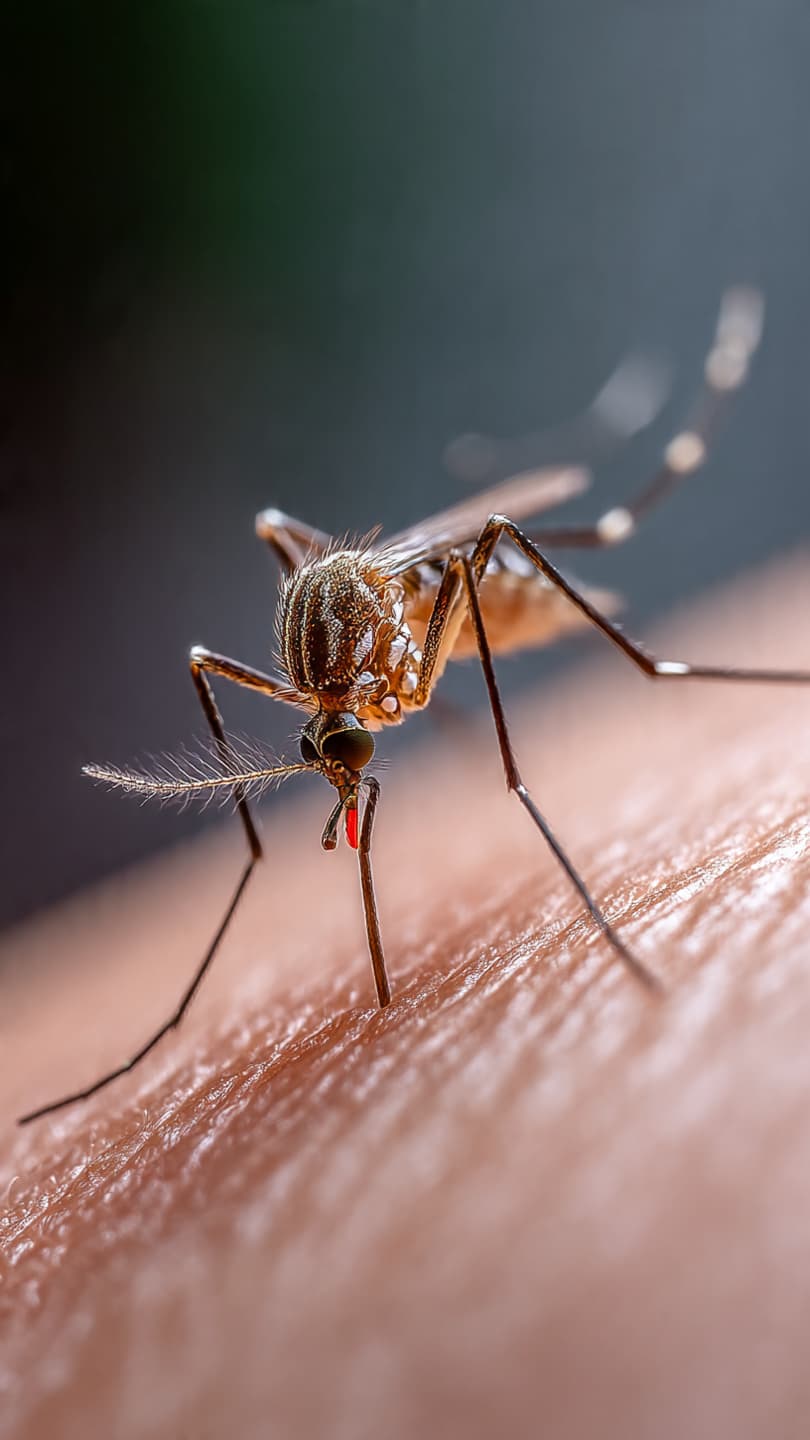
For decades, insect repellent has carried a quiet promise into humid evenings and tropical nights — a thin invisible barrier between human skin and the persistent hum of mosquitoes. Yet science, like nature itself, often unfolds in layers rather than absolutes. What once seemed straightforward can gradually reveal subtler patterns beneath the surface.
A recent study published in the Journal of Experimental Biology suggests mosquitoes may, under certain conditions, learn to associate the insect repellent DEET with the presence of a blood meal. Researchers observed that mosquitoes exposed to DEET while feeding could later respond differently to the chemical, appearing less repelled and in some cases even attracted to it.
The findings emerged through laboratory experiments involving Aedes aegypti, the mosquito species linked to diseases such as dengue, Zika, and yellow fever. Scientists used a form of Pavlovian conditioning, exposing mosquitoes to DEET at the same time they were allowed to feed. Later, some insects displayed feeding behavior when presented with DEET alone.
Researchers emphasized that the study does not mean repellents have suddenly become ineffective. DEET remains one of the most widely recommended and scientifically supported mosquito repellents in the world. Public health experts continue to advise its use, especially in regions where mosquito-borne illnesses remain a major concern.
Still, the research offers a reminder that insects are not entirely driven by rigid instinct alone. Even creatures with tiny nervous systems can adapt to repeated experiences in ways scientists are still trying to fully understand. Mosquitoes, long viewed as simple biological machines, may possess more flexible behavioral responses than previously believed.
The study also contributes to a broader scientific effort to understand how repellents function. While DEET has been used for generations, researchers continue debating exactly how it disrupts mosquito behavior. Some evidence suggests it interferes with odor detection, while other theories propose that it affects taste receptors or sensory processing.
Outside the laboratory, however, experts caution against overstating the implications. Real-world environments contain countless competing smells, temperatures, and environmental signals that may prevent mosquitoes from forming such associations consistently. The controlled conditions of experimental research do not always translate directly into daily human experience.
There is something quietly familiar in the discovery itself. Nature rarely remains static under observation. The closer science looks, the more living systems reveal themselves as dynamic, adaptable, and shaped by interaction rather than fixed certainty. Even the smallest insects can complicate assumptions once considered settled.
Researchers and health agencies continue recommending DEET-based repellents as an effective defense against mosquito bites and mosquito-borne disease. Scientists say the findings are intended to improve understanding of insect behavior rather than discourage current protective measures.
AI Image Disclaimer: Some visual illustrations in this article were generated with AI assistance to represent scientific concepts and mosquito behavior.
Sources: The Guardian, Journal of Experimental Biology, Science News, Virginia Tech
Published by Banx Network. This article is part of the Banx decentralized media programme, powered by the BXE token on the XRP Ledger.