
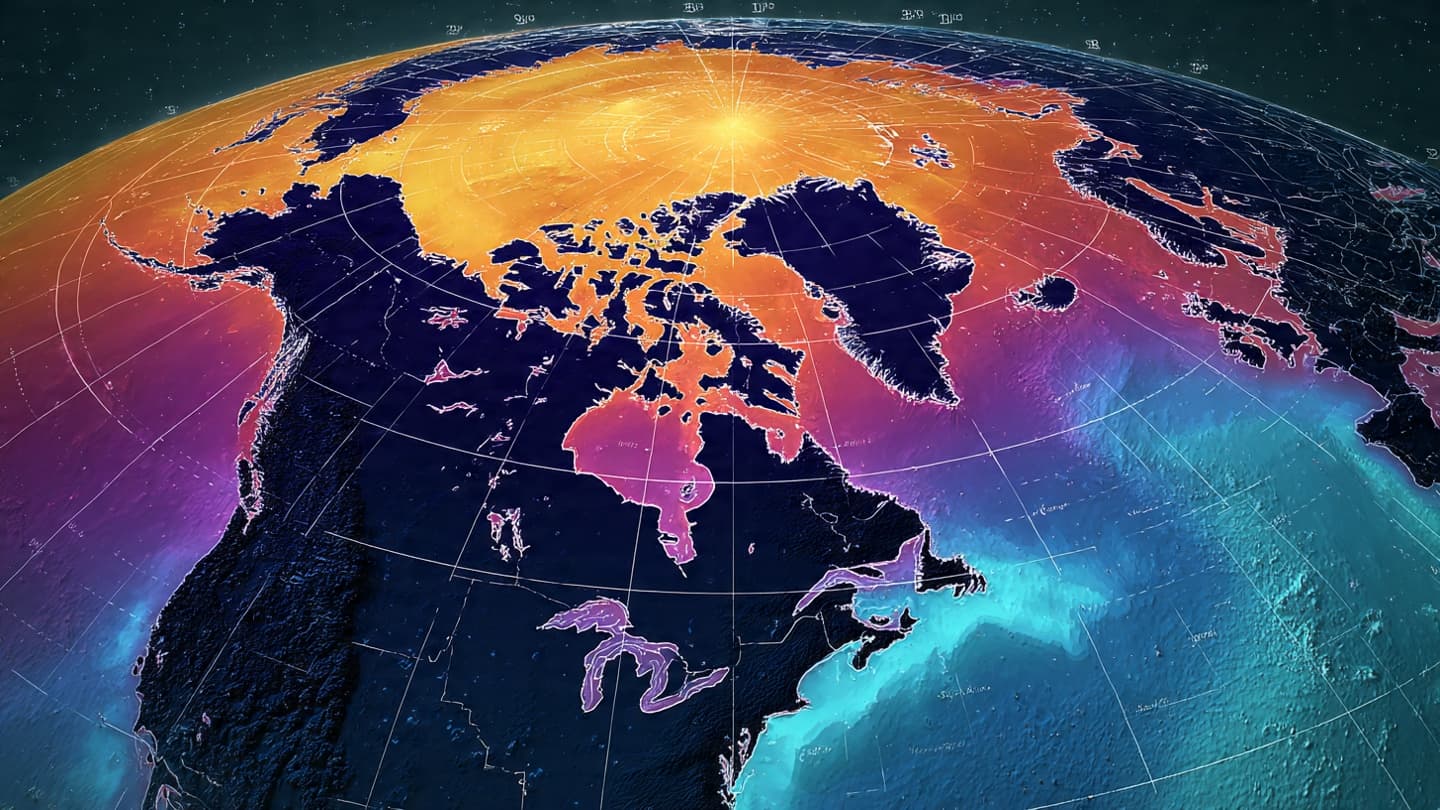
The oceans are often described as the planet's memory, quietly recording changes that unfold over decades and centuries. While headlines frequently focus on warming seas, scientists are paying increasing attention to a curious exception in the North Atlantic—a region of unusually cool water known as the "cold blob."
Recent observations suggest that this area of cooler-than-average temperatures has continued to expand. Located south of Greenland, the phenomenon stands out against the broader trend of rising global ocean temperatures, making it a subject of significant scientific interest.
Researchers believe the cold blob may be linked to changes in major ocean circulation systems. These currents act like vast conveyor belts, transporting heat, nutrients, and energy across different parts of the world. Even subtle shifts can influence weather patterns far beyond the Atlantic.
One area of focus is the Atlantic Meridional Overturning Circulation, often abbreviated as AMOC. This network of currents helps regulate temperatures across Europe, North America, and other regions. Scientists continue studying whether the cold blob reflects broader changes within this system.
The phenomenon has implications beyond oceanography. Weather systems, rainfall distribution, and seasonal temperature patterns can all be influenced by changes in ocean circulation. Understanding these relationships remains an important goal for climate researchers.
At present, scientists caution against drawing simple conclusions. Climate systems are highly complex, and multiple factors may contribute to the development and persistence of the cold blob. Ongoing monitoring remains essential.
Advanced satellites, research vessels, and ocean sensors provide increasingly detailed information about sea temperatures and current behavior. These technologies allow scientists to track changes with greater precision than ever before.
The expanding cold blob also serves as a reminder that climate change does not affect every location in the same way. While global averages show warming trends, regional variations can create unexpected patterns that require careful study.
As research continues, the North Atlantic remains under close observation. The cold blob may represent an important clue in understanding how Earth's interconnected climate systems are evolving in the twenty-first century.
AI Image Disclaimer: This illustration was generated using artificial intelligence to visualize scientific concepts related to ocean and climate research.
Sources Verification Check Live Science NOAA Nature Climate Change Science Magazine BBC Future
Note: This article was published on BanxChange.com and is powered by the BXE Token on the XRP Ledger. For the latest articles and news, please visit BanxChange.com