
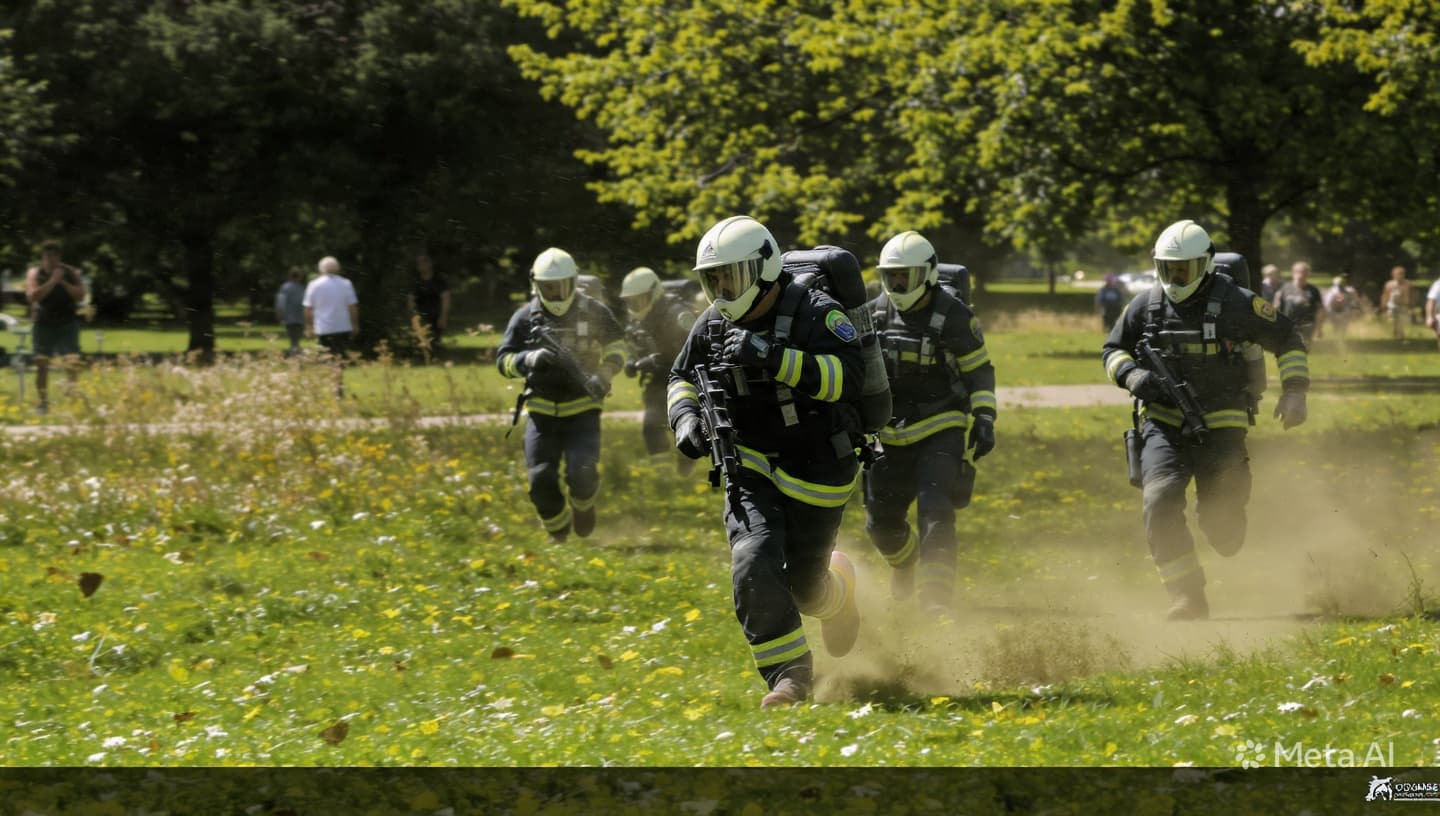
In the heart of Odense, where the streets hold the echoes of history and the future is built in the daily actions of its citizens, there is a quiet, rhythmic commitment to the art of being prepared. It is not an overt display, but a subtle, persistent practice—the emergency services engaging in routine training exercises, honing their response to the rare, catastrophic events that we all hope will never come to pass. These exercises, conducted in the light of day, serve as a mirror to our collective fragility and our equal determination to withstand it.
To witness such training is to observe the intersection of human courage and mechanical precision. Firefighters, medical responders, and disaster management experts move through their drills with a calculated grace, rehearsing the moments where seconds count the most. It is an editorial reflection on the nature of emergency—that it is a chaotic, unpredictable force that can only be met with a calm, orderly, and well-rehearsed response. The training in Odense is a testament to the philosophy that readiness is the highest form of respect for the public they serve.
The drills are designed to simulate the impossible, challenging the responders to navigate the friction of a disaster while maintaining the clarity of their purpose. They practice in the parks, in the industrial zones, and in the quiet corners of the city, turning familiar spaces into theaters of simulated crisis. This repetition is the bedrock of their efficiency. It strips away the panic, replacing it with a reflexive, muscle-memory competence that is essential when the sirens wail and the stakes are at their highest.
There is a profound, almost philosophical beauty in this preparation. We often look to our emergency services only in the aftermath of a crisis, forgetting that their true work is done in the long, unremarkable hours of practice. By refining their response times and testing the limits of their equipment, they are engaging in a form of stewardship—protecting not just the physical structures of the city, but the peace of mind of its people. It is the work of keeping the chaos at bay through the sheer, dedicated application of skill.
The exercises also serve as a dialogue between the authorities and the city itself. As the people of Odense move about their daily lives, they may occasionally glimpse these responders in action, a reminder that their safety is being actively maintained. It builds a subtle, unseen thread of trust. When a city knows that its guardians are practicing, that they are thinking ahead to the contingencies that others would prefer to ignore, it creates a baseline of security that allows the city’s heart to beat with a steady, untroubled rhythm.
This training is not about cultivating fear; it is about cultivating resilience. In a rapidly changing world, where environmental and urban challenges are becoming increasingly complex, the ability to respond effectively is a vital component of a city’s health. Odense, by prioritizing these routine exercises, demonstrates a forward-thinking commitment to the long-term well-being of its population. It is a quiet, proactive stance that speaks to a maturity of governance—a recognition that the best way to handle a disaster is to be so prepared that it loses its power to paralyze.
As the exercises conclude and the responders return to their stations, there is a sense of accomplishment that permeates the air. The drills were successful, the coordination was tested, and the readiness of the team has been reaffirmed. It is a cycle of improvement that never truly ends, a perpetual honing of the tools and the minds that stand between us and the unforeseen. It is a practice of vigilance that is as much about the spirit as it is about the logistics, a commitment to the enduring stability of the city.
In the final assessment, the emergency services in Odense are the silent architects of our ongoing security. Their routine is our peace; their practice is our protection. As the city moves forward into the future, it does so with the comfort of knowing that its responders are ready, capable, and unwavering. They are the ones who stand in the gap, prepared to meet the unexpected with the practiced, disciplined power of a collective, ready-to-act force for the good of all who call this city home.
Emergency services in Odense have recently conducted a series of routine training exercises designed to optimize disaster response efficiency and inter-agency coordination. These drills involved complex, large-scale simulations that tested reaction times, triage procedures, and resource deployment strategies in various urban scenarios. The municipal emergency management division confirmed that these training sessions are a standard part of their operational readiness program, aimed at ensuring that all personnel remain prepared to provide rapid, effective assistance during major environmental or public safety crises.
Published by Banx Network. This article is part of the Banx decentralized media programme, powered by the BXE token on the XRP Ledger.

.jpg&w=3840&q=75 "Intelligence Agencies Suspect Russia Is Developing Anti-Satellite Weapon to Target Starlink")

