
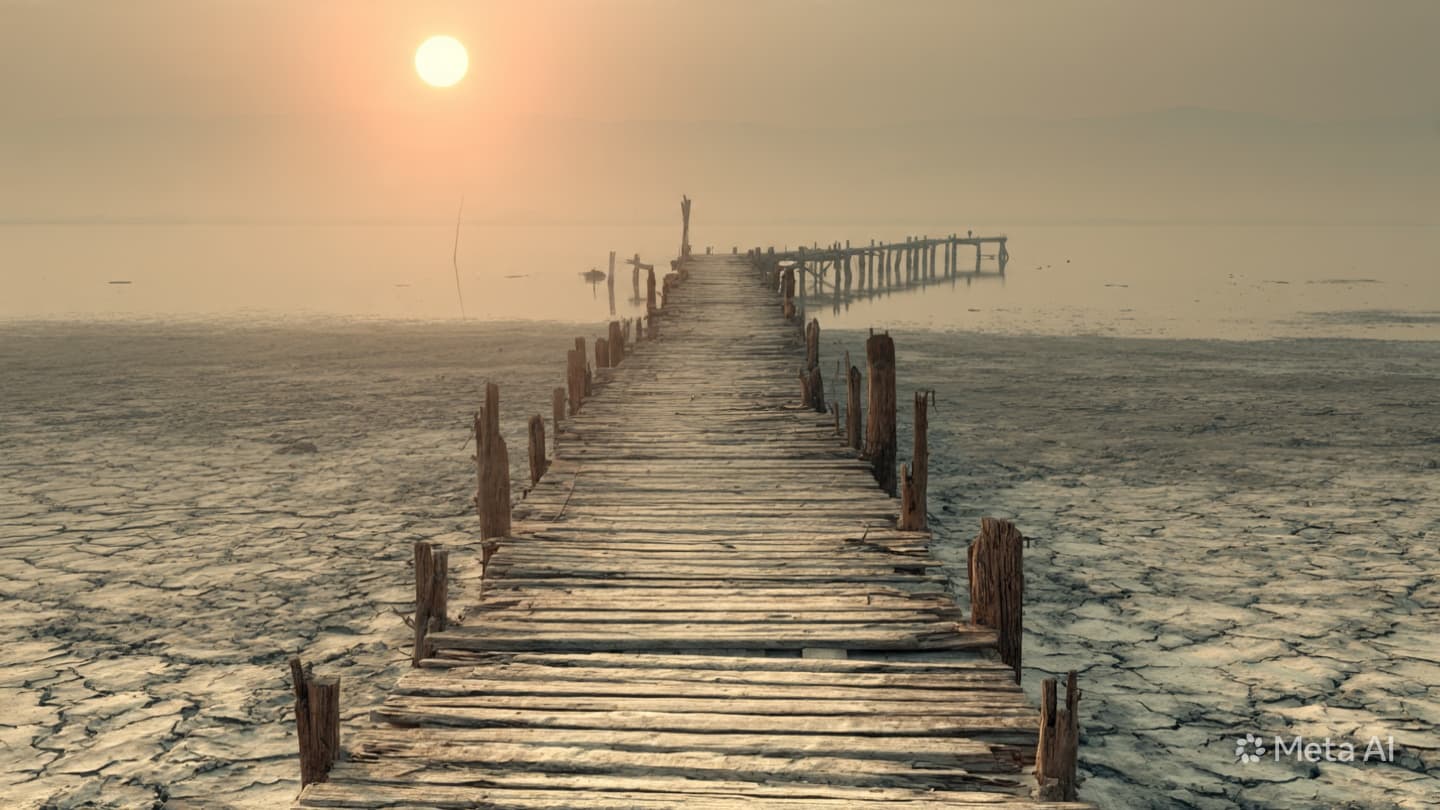
The air at the edge of the terminal lake carries a sharp, saline tang that catches in the throat, a reminder of the mineral wealth left behind by centuries of evaporation. For miles, the shoreline is white with encrusted salt, looking from a distance like an out-of-season snowfall beneath the blazing summer sun. Decades ago, these waters danced with the hulls of recreational boats, and the piers vibrated with the laughter of tourists seeking refuge from the desert heat. Now, those same docks hang suspended in mid-air, overlooking a vast expanse of exposed mud that stretches toward the horizon.
To walk across this newly exposed lakebed is to tread upon a landscape in the midst of a profound identity crisis. The mud, baked dry by consecutive seasons of intense heat, has cracked into intricate geometric patterns that resemble a mosaic of pale stone. Each step releases a faint puff of alkaline dust, a powder so fine that it rises into the air with the slightest breeze and hangs like a shroud over the valley. It is an environment stripped of its moisture, reduced to its barest elemental components by the relentless physics of a changing climate.
The retreat of the water has exposed secrets that were hidden for generations beneath the murky blue waves. Rusted boat anchors, forgotten fishing tackle, and the ancient stumps of submerged cottonwood trees now sit baking in the open air, transformed into eerie sculptures of survival. There is a profound stillness here, a silence so heavy that the cry of a lone gull sounds sharp and discordant against the landscape. The water has moved so far inland that the original shoreline is now marked only by a line of decaying breakwaters and abandoned bait shops.
This drying basin is not merely a local curiosity; it is a critical junction in the vast network of global migratory routes. For thousands of years, millions of eared grebes and phalaropes relied on this salty oasis to rest and feed on brine shrimp during their epic journeys across the hemisphere. As the water volume decreases and the salinity levels spike beyond the tolerance of local life, the food supply is beginning to fail. The birds still arrive, but their numbers are dwindling, their calls echoing over a buffet that is slowly turning to salt and dust.
Public health officials and atmospheric scientists look toward this valley with an increasing sense of urgency and concern. The dust rising from the dry lakebed is not ordinary dirt; it is laced with naturally occurring arsenic, heavy metals, and agricultural runoff that accumulated in the sediment over a century of human activity. When the fierce desert winds sweep through the canyon, they carry this toxic plume toward distant cities, clouding the air and causing respiratory distress in communities miles away. The shrinking lake is transforming from an ecological sanctuary into a source of airborne hazard.
There is a distinct human element tied to this ecological unraveling, found in the quiet communities that line the old highways. The motels with their faded neon signs and the restaurants shaped like ships speak to an era of prosperity that has dissolved along with the water line. The residents who remain are mostly those who lack the means to leave or those whose roots are buried too deeply in the desert soil to be easily pulled up. They watch the lake recede a few feet further each year, their properties losing value as the dust storms become more frequent and severe.
Engineering solutions and water diversion proposals are discussed regularly in the capital, offering various technological fixes for a problem that defies easy resolution. Ideas range from massive pipelines pumping seawater from the coast to strict caps on agricultural consumption upstream. Each proposal carries a staggering price tag and a complex web of political and legal hurdles that delay action for years. Meanwhile, the river that once fed the basin is siphoned off long before it reaches the terminal lake, its water used to sustain alfalfa fields and desert golf courses.
The story of the shrinking lake is a quiet reminder of the delicate balances that govern the natural world. It demonstrates how choices made far upstream, in the quiet boardrooms of water districts and the irrigation channels of distant valleys, can have catastrophic consequences downstream. The landscape does not anger easily, but it records every intervention with an unyielding accuracy, charting our consumption in the rings of dry earth and the rising levels of salt. It is a slow, visible unraveling, taking place in the bright light of day for anyone who cares to look.
The State Department of Environmental Quality recently confirmed that the lake's surface area has decreased by forty-two percent since the turn of the century. Hydrological models indicate that if current diversion rates and evaporation patterns persist, the lower basin will reach total desiccation within the next fifteen years. Dust monitoring stations downwind have recorded a thirty percent increase in particulate matter concentrations during high-wind events over the past three quarters. Regional health networks are currently expanding funding for asthma clinics in adjacent counties to address the rising incidence of respiratory illness.
Note: This article was published on BanxChange.com and is powered by the BXE Token on the XRP Ledger. For the latest articles and news, please visit BanxChange.com