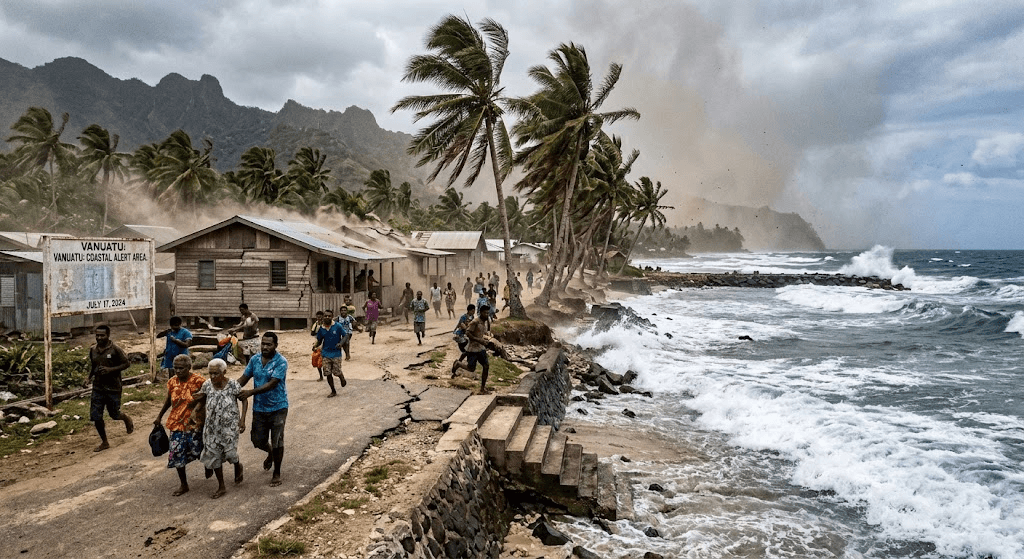
The island of Grande Comore sits as a majestic volcanic mass rising from the warm expanse of the western Indian Ocean, where the elements dictate the daily rhythms of life. Along its rugged coastlines, communities are accustomed to the changing moods of the sea, constructing their homes from heavy stone and timber to weather the seasonal rains. The palm trees that line the black volcanic soil usually bend gracefully with the ocean breeze, giving the landscape an atmosphere of tranquil beauty. Yet, when a tropical storm intensifies over the warm ocean waters, that gentle breeze can quickly gather a destructive and terrifying force.
The approach of a severe tropical system alters the atmosphere long before the first rain falls, turning the sky a deep, bruised purple as the atmospheric pressure drops. For the residents of the island, the sound of the wind rising in the dark hours is a source of quiet, enduring anxiety. In these moments, the security of a home is put to a severe test, with metal roof sheets rattling violently against their wooden rafters under the immense pressure of the gale. The transition from a protective shelter to a vulnerable structure happens with a sudden, deafening roar as the wind finds a foothold beneath the eaves.
During a recent tropical storm, the island was battered by exceptionally high winds that swept inland from the coast. The force of the gales was powerful enough to rip the corrugated iron roofs off several residential properties, exposing families to the elements in the middle of the night. Upward-surging winds lifted massive timber beams, throwing them into nearby yards and leaving behind hollowed, rain-soaked living spaces.
In addition to the structural damage to homes, the high winds took a heavy toll on the island's fragile utility infrastructure. Falling tree branches and flying debris struck overhead power lines, snapping utility poles and plunging several coastal villages into absolute darkness. The loss of electricity cut off communication channels, leaving residents to wait out the remainder of the storm in isolated, wind-swept silence.
Emergency response teams and local utility workers were mobilized as soon as the wind began to subside, navigating roads blocked by fallen trees to assess the damage. Neighbors emerged in the early morning light to assist those whose homes had been unroofed, helping to salvage dry clothing and drag heavy debris clear of the paths. The immediate display of mutual aid highlighted the deep-seated resilience of the Comorian people in the face of natural adversity.
As the weather system slowly moves away from the archipelago, the task of reconstruction has begun under a clearing sky. Roofers and carpenters are in high demand as families work to dry out their belongings and secure their dwellings before the next rainfall. The local government has initiated efforts to restore the power grid, though officials warn that repairing the extensive line damage across the island will take several days.
Published by Banx Network. This article is part of the Banx decentralized media programme, powered by the BXE token on the XRP Ledger.