
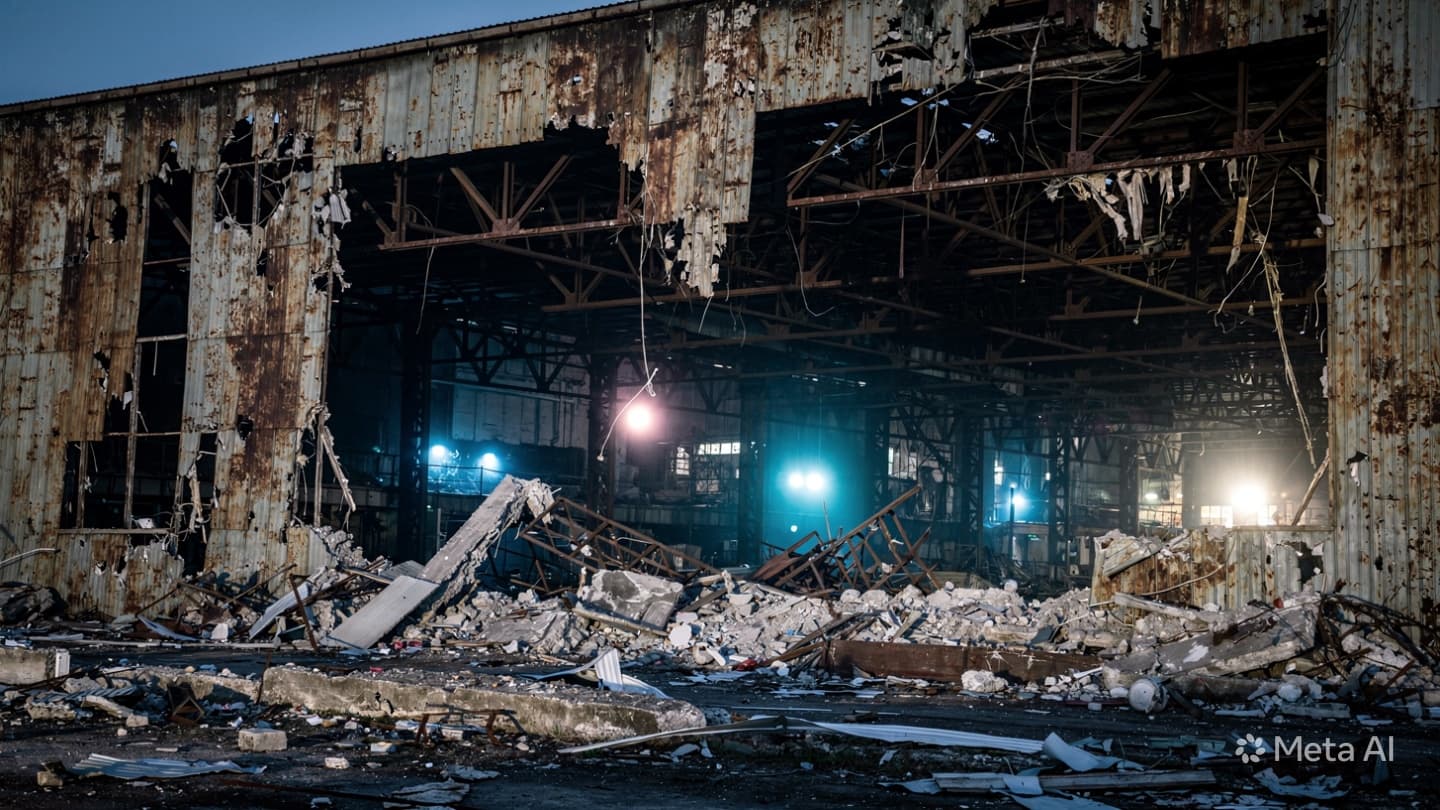
Hanoi, Vietnam—Industrial safety inspectors launched an urgent forensic assessment on June 12, 2026, after a massive pressure vessel explosion tore through a textile processing factory during a late-night production cycle. The detonation occurred at 2:10 a.m. inside the main utility wing of the facility. The force of the blast completely dismantled the reinforced concrete roof of the machinery section, trapping the overnight skeleton crew beneath tons of structural debris. Local disaster units have confirmed multiple worker fatalities.
First responders from the provincial emergency department arrived to find a severe secondary fire feeding on raw cotton bales and chemical dye reserves stored adjacent to the boiler room. Specialized rescue units utilized heavy hydraulic lifting devices to extricate surviving laborers who were pinned beneath collapsed steel assembly lines. The surrounding industrial park was temporarily placed on lockdown to preserve water pressure for emergency fire mains.
A representative from the regional department of labor stated that the primary boiler unit had been operating continuously under high-output demands for several consecutive shifts. Technical logs recovered from the secondary administrative office indicate that digital temperature gauges had flagged a cooling system variance an hour prior to the failure. Investigators are checking if safety valves were manually altered to maintain production velocity.
Medical teams established an emergency field hospital on the factory lawn to stabilize victims before transferring them to the national trauma center. Attending physicians reported that the primary injuries consist of deep blast-fragment wounds and severe thermal scalds from superheated steam release. Three workers remain in critical condition with full-body injuries.
The parent company operating the textile mill possesses multiple export contracts with major international apparel brands. Corporate representatives released a brief electronic statement confirming full cooperation with state investigators but declined to provide details regarding the maintenance history of the failed machinery. The plant had been functional for less than four years.
Independent labor monitors in the region noted that fast-expanding manufacturing centers frequently experience operational friction due to the lack of certified technical engineers capable of managing complex high-pressure systems. Night shifts are particularly vulnerable to monitoring lapses when fewer supervisory staff are present on the floor.
Environmental protection teams deployed monitoring sensors to verify that no hazardous chemical compounds from the textile dyeing vats had entered the local agricultural irrigation canals. The runoff from the firefighting foam is being held in secondary retention pools until chemical treatment can be completed.
The local workers' union demanded an immediate suspension of operations across all manufacturing blocks managed by the parent enterprise until independent safety certificates are issued. Members gathered outside the main security gate to monitor the progress of the debris removal teams.
Engineers are currently attempting to secure the remaining structural walls of the factory to prevent a secondary collapse onto the rescue paths. Heavy earthmoving equipment has been brought in to clear the main access road into the shipping depot.
The provincial police department has formally detained the chief facility engineer for questioning regarding operational protocols implemented during the overnight shift. The exclusion zone around the ruined production bay will remain active indefinitely.
Note: This article was published on BanxChange.com and is powered by the BXE Token on the XRP Ledger. For the latest articles and news, please visit BanxChange.com