
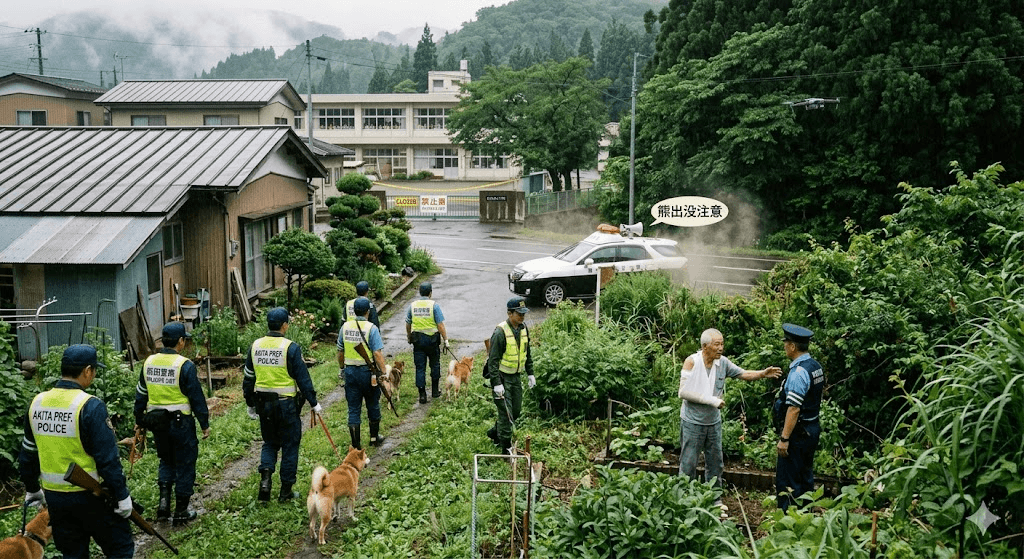
AKITA, JAPAN — A quiet morning turned into a scene of panic yesterday when an aggressive Asian black bear went on a rampage through a residential neighborhood and nearby forested paths in northeastern Japan, leaving at least four people injured.
The incident has forced local school closures and prompted emergency wildlife teams to launch a massive hunt for the animal, highlighting a sharp increase in human-wildlife conflict across the region.
According to the Akita Prefectural Police, the first attack occurred just after 7:30 AM on Tuesday, June 2, 2026. An elderly man working in his garden on the outskirts of Akita City was suddenly blindsided by the bear, which emerged from the thick brush at the edge of his property. The victim sustained deep lacerations to his arms and face before neighbors managed to scare the predator away.
Rather than retreating into the mountains, the bear moved further toward a popular walking trail. Within the span of an hour, three more individuals—including a woman walking her dog and two forestry workers—were attacked.
Local emergency services dispatched multiple ambulances to the scene. All four victims were rushed to a regional hospital; while their injuries are severe, medical officials have confirmed that none are considered life-threatening.
As news of the rampage spread, municipal authorities placed local schools on high alert. Students were kept indoors during the day, and afternoon pick-ups were coordinated via emergency busing and parent carpools to ensure no children were walking home alone.
Municipal vehicles equipped with loudspeakers patrolled the area, broadcasting urgent warnings to residents:
"An aggressive bear remains at large in the vicinity. Please stay indoors, secure all household waste, and do not approach the forested perimeter under any circumstances."
A specialized hunting unit, comprised of local police officers and members of a regional forestry association, was deployed with tracking dogs. However, due to the dense summer foliage and mountainous terrain, the bear has not yet been located.
This latest attack is part of a worrying trend in northeastern Japan, particularly in prefectures like Akita and Iwate. Wildlife experts attribute the spike in aggressive bear encounters to a combination of factors: an unusually poor harvest of wild acorns and beech nuts in the deep mountains, and a shrinking, aging human population in rural areas, which creates a blurred boundary between wilderness and town centers.
Local government officials have urged the public to carry bear bells, travel in groups, and remain hyper-vigilant as wildlife teams continue their search for the animal.
Note: This article was published on BanxChange.com and is powered by the BXE Token on the XRP Ledger. For the latest articles and news, please visit BanxChange.com