

Key Highlights
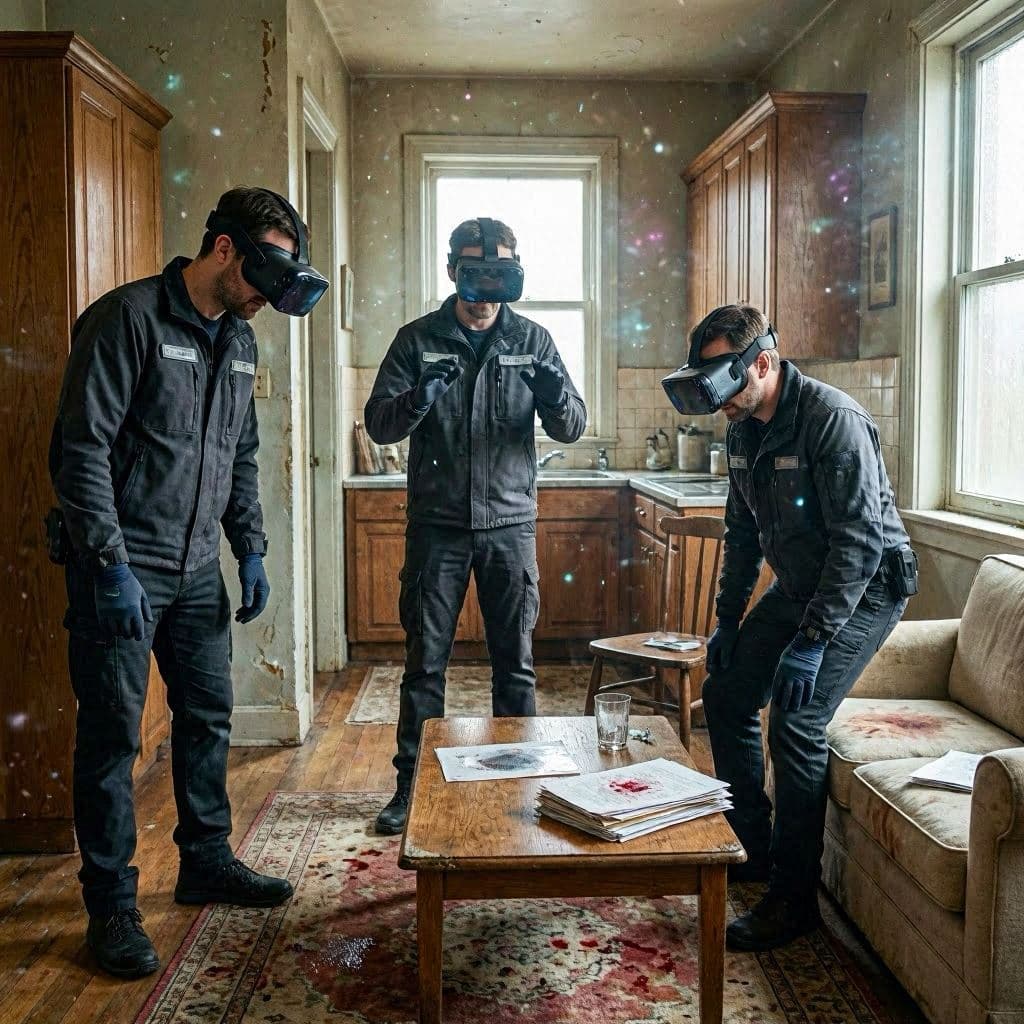
- Virtual Reality:A tool for reconstructing crime scenes in 3D.
- Evidence Analysis:Enhances flexibility in reviewing crime scene details.
- Training Applications:Used in police academies for investigative procedures.
Virtual reality (VR) technology is making significant strides in the field of crime scene investigation, allowing forensic specialists to revisit and analyze crime scenes with unprecedented precision. This innovative approach enables investigators to create three-dimensional digital reconstructions of crime scenes, facilitating a more thorough examination of evidence long after the physical location has been processed.
The process begins with the collection of various forms of data, including photographs, laser scans, and drone imagery. These elements are combined to generate highly detailed digital models that accurately represent the original crime scene. Investigators can manipulate these models to examine room layouts, object positions, and evidence locations from multiple angles, offering a level of flexibility that traditional two-dimensional photographs cannot provide.
In addition to enhancing evidence analysis, VR technology is proving invaluable in training environments. Police academies and forensic institutions are increasingly adopting virtual crime scenes to teach investigative procedures. This method allows trainees to engage with realistic scenarios without needing access to actual crime locations, thereby improving their skills in a controlled setting.
Legal professionals are also beginning to recognize the potential benefits of digital reconstructions in the courtroom. These models can help explain complex evidence to juries and judges, provided they accurately reflect the documented physical conditions of the crime scene. The use of VR in legal settings could transform how evidence is presented and understood, making it more accessible to those without forensic training.
Experts caution, however, that while virtual reality serves as a powerful visualization tool, it should not replace physical evidence. Every digital reconstruction must be grounded in verified measurements and data collected during the original investigation. This ensures that the virtual representation remains a reliable resource for investigators and legal professionals alike.
As technology continues to advance, the realism and accuracy of virtual crime scene reconstructions are expected to improve significantly. Ongoing developments in imaging technology, computing power, and forensic software will likely enhance the capabilities of VR, making it an even more integral part of modern investigative practices.
In conclusion, virtual reality is not just a futuristic concept; it is a practical tool that is already reshaping the landscape of crime scene investigations. By preserving critical details and supporting careful analysis, VR technology is paving the way for a new era in forensic science.
AI-generated image disclaimer: The accompanying illustration was created with AI to demonstrate the technology discussed and is not an actual crime scene.
Published by Banx Network. This article is part of the Banx decentralized media programme, powered by the BXE token on the XRP Ledger.




