
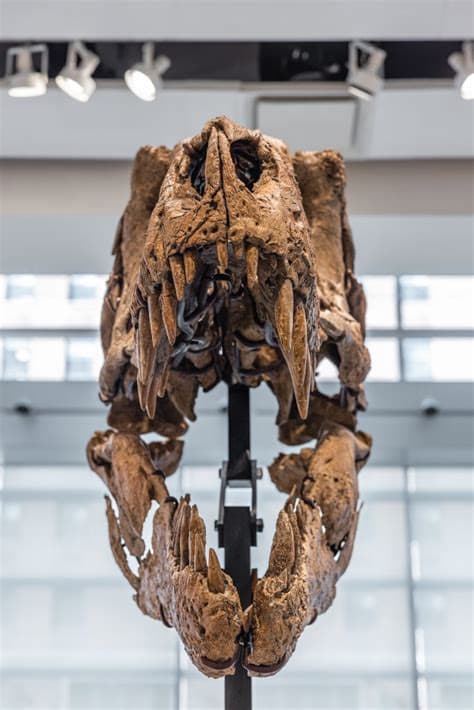
A T. rex fossil named “Gus” is expected to fetch record-breaking money at an upcoming Sotheby’s natural history auction, and may become the most expensive dinosaur ever sold.
Discovered in South Dakota’s Badlands, Gus is being auctioned after years of careful excavation and recovery. The team spent three years excavating the specimen, then spent additional years documenting and reconstructing it in a lab once it was removed from the ground—an extended process required because fossils can rapidly degrade once exposed.
Gus currently has the highest pre-sale valuation at about $30 million. Sotheby’s says the specimen could potentially surpass the existing dinosaur auction record, which was held by a Stegosaurus sold for $44.6 million in 2024, a price experts note exceeded its starting estimate by a large margin.
The article also highlights the broader controversy surrounding fossil auctions. Some museum researchers argue that specimens of major scientific value should be reserved for public institutions so scientists can study them directly, especially for anatomy-based research. They also warn that the growing “collector” market is pushing museums out of reach financially.
Even so, auction proponents argue that fossil hunters should be rewarded for discovering and preserving specimens that might otherwise be lost.
Published by Banx Network. This article is part of the Banx decentralized media programme, powered by the BXE token on the XRP Ledger.


