Key Highlights
- SWIFT has been the dominant system for international banking for decades.
- XRP transactions can settle in as little as 4 seconds, compared to SWIFT's 3–5 business days.
- The debate over XRP's long-term value continues amid speculation and optimism.
The Society for Worldwide Interbank Financial Telecommunication (SWIFT) has long served as the backbone of international banking, facilitating the transfer of trillions of dollars between financial institutions globally. However, as the digital economy evolves, there is increasing pressure on this legacy system to adapt to the demands for faster, cheaper, and more transparent transactions. Critics argue that SWIFT is showing its age, prompting discussions about alternatives like Ripple's XRP.
Recently, a viral post on social media platform X has reignited the debate between SWIFT and XRP, claiming that while SWIFT transactions can take 3 to 5 business days, XRP-powered cross-border payments can settle in as little as 4 seconds. This bold assertion has captured the attention of the crypto community, with some enthusiasts suggesting that if just 10% of SWIFT's global transaction volume were processed through Ripple's XRP Ledger, the price of XRP could skyrocket to $1,000 per token. Such predictions, however, are steeped in speculation and require careful scrutiny.
Ripple has dedicated years to establishing partnerships with banks, payment providers, and financial institutions, aiming to revolutionize the way international transfers are conducted. Its blockchain-based payment technology is designed to reduce settlement times, eliminate unnecessary intermediaries, and lower costs associated with cross-border transactions. Unlike traditional banking systems, which operate on a limited schedule, blockchain networks function continuously, allowing for near-instant settlement regardless of weekends or holidays.
In response to the evolving landscape, SWIFT has recognized the need for modernization. The organization has implemented several upgrades to enhance payment speed and transparency, while also exploring interoperability with blockchain technology. Analysts suggest that rather than being replaced, traditional financial infrastructure and blockchain solutions may coexist for the foreseeable future, each serving distinct roles in the global economy.
The crux of the debate centers around the long-term value of XRP. Proponents argue that widespread institutional adoption would significantly boost demand for XRP as a bridge asset in international transactions. Conversely, skeptics caution that price predictions, such as the potential for XRP to reach $1,000, are highly speculative and would necessitate unprecedented levels of global adoption, regulatory clarity, and liquidity.
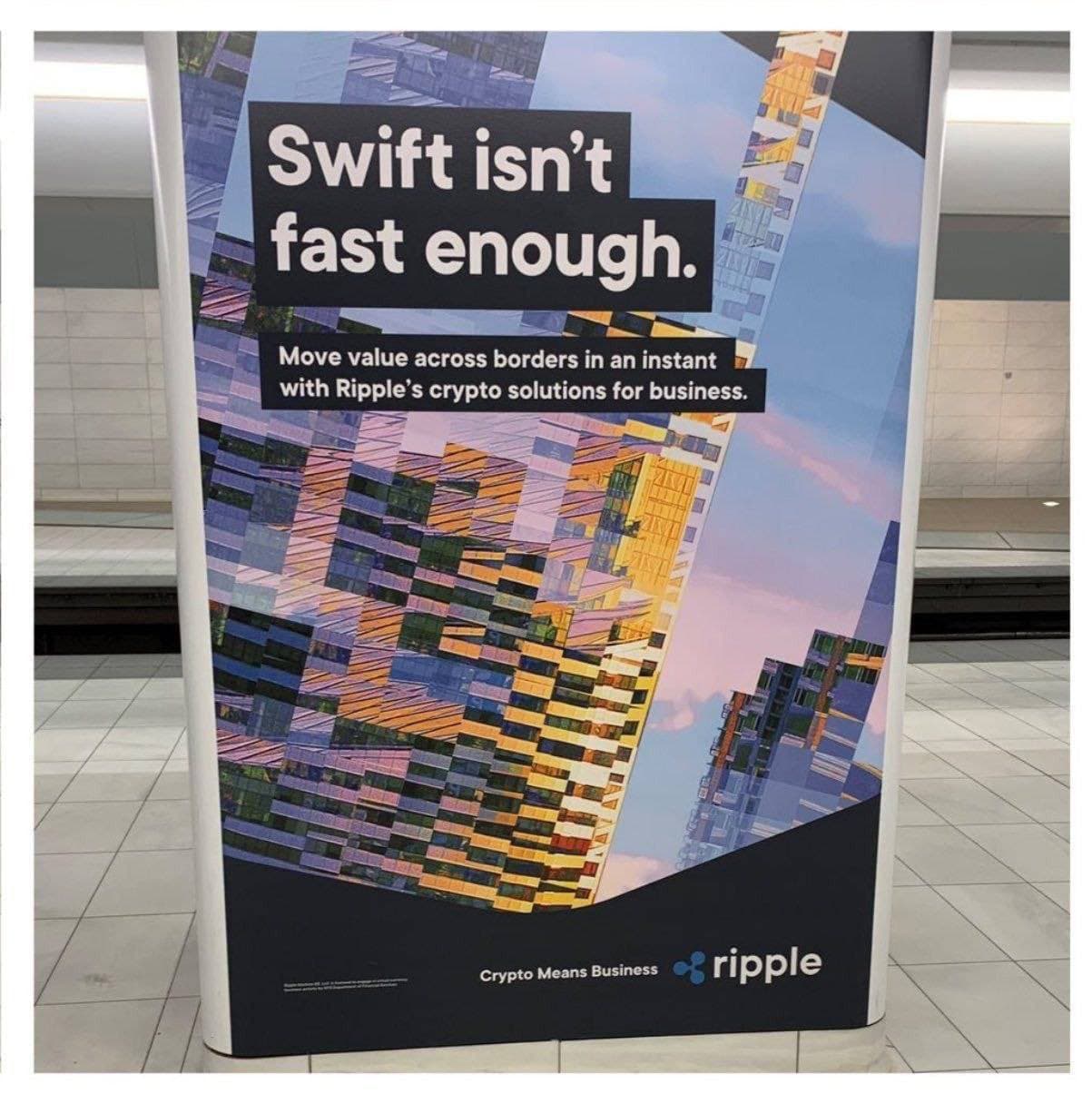
The image accompanying the viral post features Ripple's slogan, "Swift isn't fast enough," which encapsulates the company's vision of providing instant cross-border payments for businesses. This message resonates with many in the crypto community, particularly as financial institutions increasingly explore faster digital payment solutions.
As the race to modernize international payments accelerates, it remains uncertain whether XRP will emerge as a dominant settlement asset or simply one of many players in a broader digital finance ecosystem. What is clear, however, is that the competition to redefine how value moves across borders is intensifying. Governments, banks, fintech companies, and blockchain innovators are all vying to shape the future of money movement.
As crypto adoption continues to grow and tokenization gains traction, the conversation has shifted from whether financial systems will evolve to who will lead that transformation. For now, XRP supporters maintain their optimism, while traditional finance adapts to a rapidly changing landscape. The ongoing battle between legacy banking infrastructure and blockchain innovation is far from over, and the coming years could redefine the future of global payments forever.
Published by Banx Network. This article is part of the Banx decentralized media programme, powered by the BXE token on the XRP Ledger.