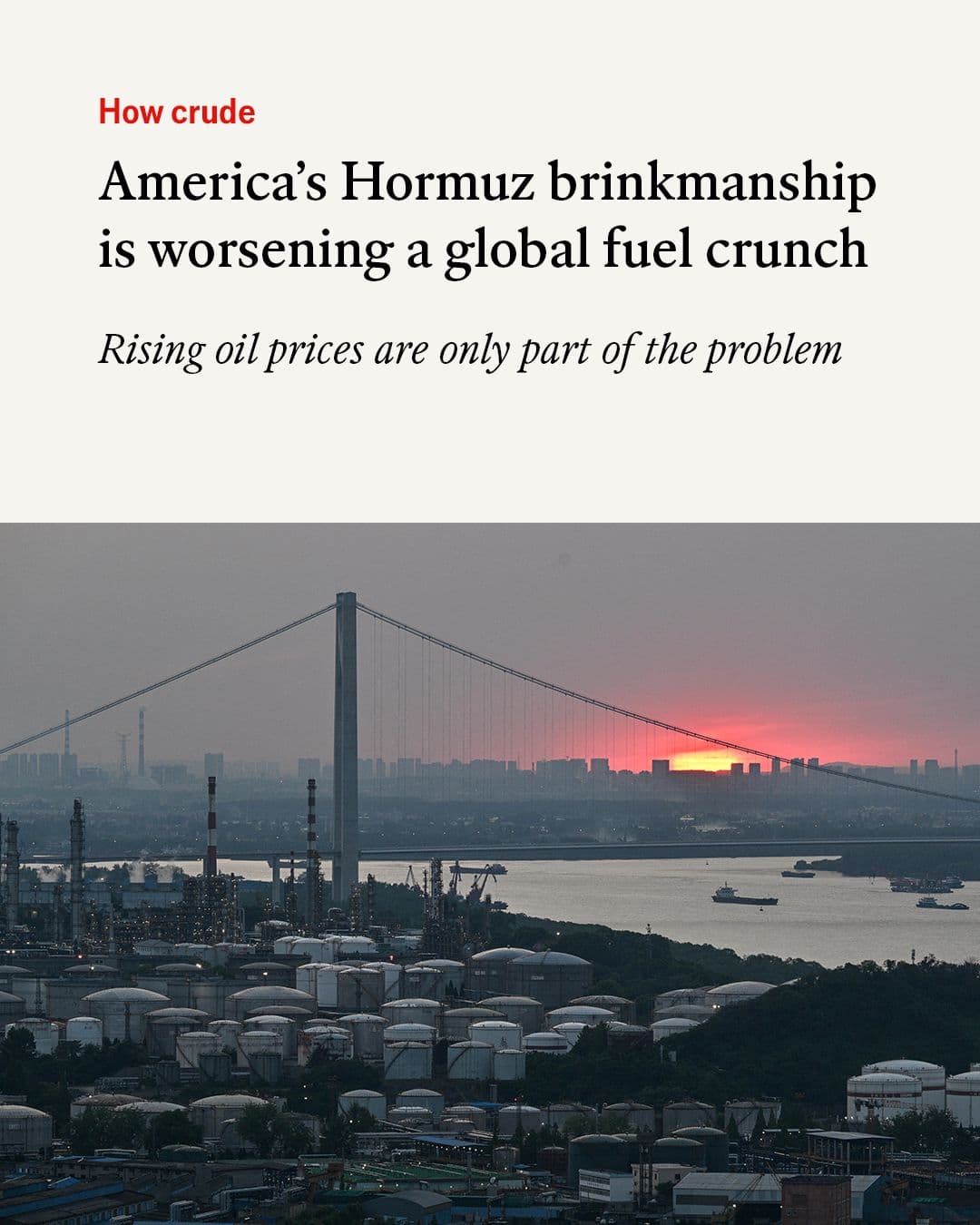
Fresh statements attributed to Iran's Islamic Revolutionary Guard Corps (IRGC) claiming that the Strait of Hormuz would remain closed until "American hostilities end" have renewed concerns about global energy security and regional stability. While the remarks have attracted widespread attention across financial markets and social media, the operational status of the vital shipping corridor remains subject to independent verification. The Strait of Hormuz is one of the world's most strategically important maritime routes, connecting the Persian Gulf to international waters through the Gulf of Oman. Roughly one-fifth of globally traded oil and significant volumes of liquefied natural gas pass through the narrow waterway, making any disruption a major concern for governments, shipping companies, and financial markets. Even the possibility of prolonged restrictions can influence commodity prices, insurance costs, and freight rates as traders assess geopolitical risks. Energy markets have historically reacted sharply whenever tensions escalate in the Gulf region, reflecting the importance of uninterrupted shipping through Hormuz. Analysts warn that uncertainty surrounding the waterway may increase market volatility, particularly if commercial shipping companies alter routes or delay vessel movements as a precaution. Rising transportation costs could eventually affect fuel prices, manufacturing supply chains, and consumer inflation across multiple economies. Regional tensions have intensified following recent military exchanges involving Iran and the United States, prompting heightened security measures throughout the Gulf. Governments continue monitoring developments closely while urging restraint to avoid broader regional escalation. The Strait has long been viewed as a strategic pressure point during periods of geopolitical conflict. Although threats to close the passage have occurred previously, maintaining a sustained closure would present significant operational, economic, and diplomatic challenges affecting numerous countries dependent on Gulf energy exports. Financial markets responded cautiously as investors weighed geopolitical uncertainty against expectations that international naval forces would seek to maintain freedom of navigation. Oil prices and shipping-related assets remain particularly sensitive to developments in the region. Experts emphasize that official announcements made during periods of conflict should be interpreted carefully until confirmed through multiple independent sources. Maritime authorities, governments, and international organizations continue monitoring vessel movements while assessing the practical implications of evolving security conditions. As geopolitical uncertainty persists, energy markets are likely to remain highly responsive to developments involving the Strait of Hormuz. Policymakers, traders, and businesses worldwide will continue watching the situation closely given the waterway's critical role in sustaining global energy supplies and international commerce.
Published by Banx Network. This article is part of the Banx decentralized media programme, powered by the BXE token on the XRP Ledger.