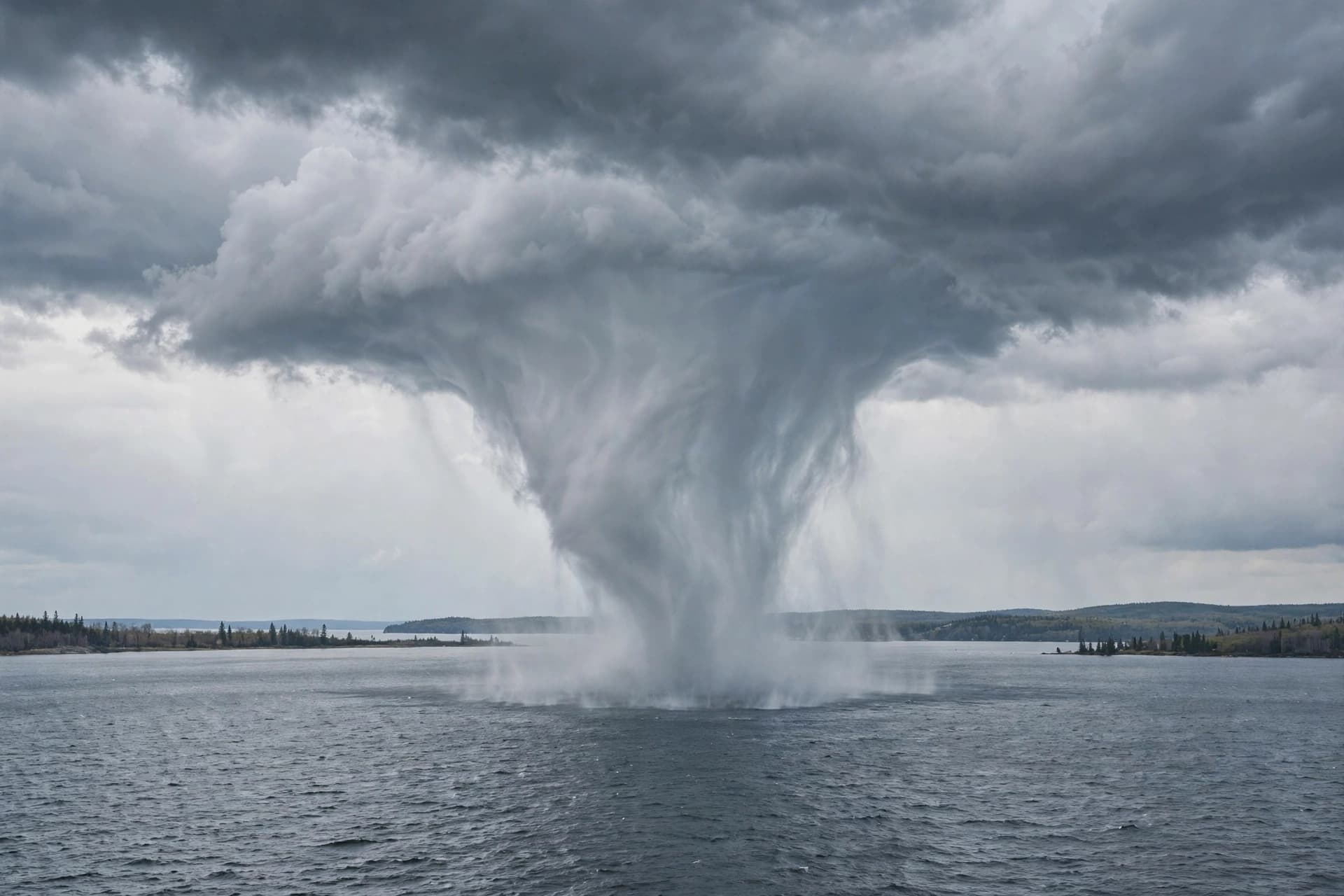
The atmosphere often carries its warnings quietly at first. A darkening cloud above farmland, the sudden stillness before a storm, or the sharp percussion of ice striking rooftops can transform ordinary afternoons into moments of costly disruption. Around the world, hailstorms have increasingly become symbols of weather volatility, leaving insurers, scientists, and communities searching for clearer ways to understand their growing impact.
FM, the commercial property insurer formerly known as FM Global, recently introduced a worldwide hail hazard map designed to help businesses and governments better assess risks associated with severe hail events. The initiative arrives as economic losses tied to extreme weather continue to rise across multiple regions, particularly in North America, Europe, and parts of Asia.
The mapping system combines meteorological records, satellite observations, climate modeling, and regional storm histories to identify areas facing elevated hail exposure. Researchers involved in the project say the goal is not only to estimate present risks but also to help organizations prepare infrastructure and supply chains for increasingly unpredictable weather conditions.
Hailstorms may appear brief when compared with hurricanes or floods, yet their financial impact can be substantial. Large hailstones are capable of damaging roofs, vehicles, solar panels, crops, and industrial facilities within minutes. Insurance analysts have noted that severe convective storms, including hail-producing systems, now represent some of the costliest weather-related events in several countries.
Scientists studying atmospheric dynamics point to warmer temperatures and changing moisture patterns as factors potentially influencing severe storm behavior. While climate relationships remain complex and vary by region, researchers continue examining whether shifting atmospheric conditions may contribute to stronger storm systems capable of producing larger hailstones.
The release of the hazard map also reflects a broader movement toward predictive resilience. Rather than responding only after disasters occur, companies and public agencies are investing in risk forecasting tools to guide construction standards, emergency planning, and insurance strategies. In many ways, modern climate preparation increasingly resembles navigation through uncertain seas, where better maps may help reduce future losses.
Agricultural communities remain especially vulnerable. A single hailstorm can destroy crops nearing harvest, affecting farmers already managing fluctuating temperatures, drought conditions, and market pressures. For some regions, improved forecasting tools may offer valuable time to protect equipment or adjust operational planning during severe weather seasons.
Experts emphasize that no predictive system can eliminate uncertainty entirely. Weather remains shaped by countless interacting forces, many of which still challenge scientific modeling. However, more detailed hazard mapping may help communities better understand where vulnerabilities exist and how infrastructure can adapt over time.
As severe weather patterns continue drawing global attention, FM’s new hail hazard map represents another effort to translate scientific observation into practical preparation. Researchers and insurers alike hope such tools will encourage long-term resilience in a climate increasingly defined by sudden and costly extremes.
AI Image Disclaimer: Some visual elements associated with this article were generated using AI-assisted imagery tools.
Sources: FM Global, Reuters, NOAA, The Weather Channel, Swiss Re Institute
Published by Banx Network. This article is part of the Banx decentralized media programme, powered by the BXE token on the XRP Ledger.