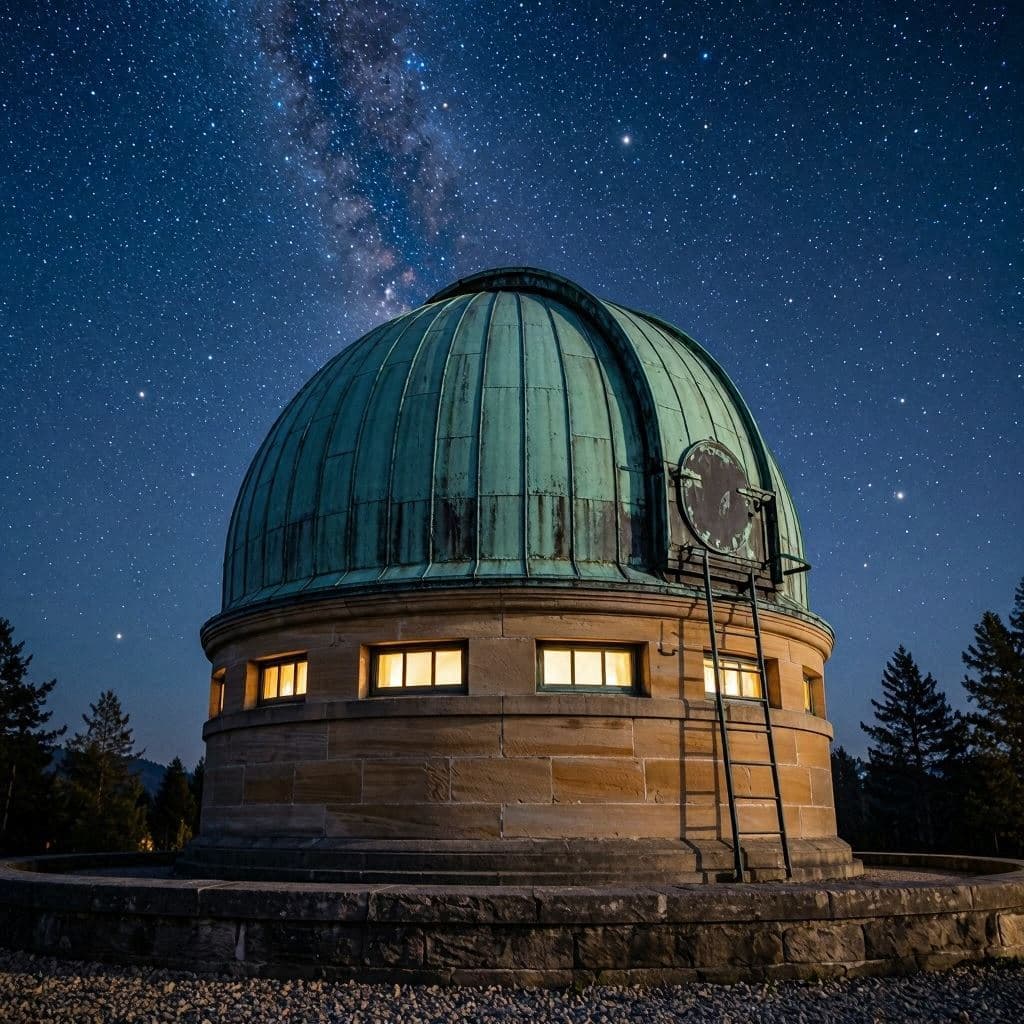
The question of our origins is perhaps the most profound mystery we face. How did life emerge from the inert matter of the early universe? In Armagh, Northern Ireland, researchers at the historic Armagh Observatory are contributing to the answer through cutting-edge space research. By studying the chemical composition of distant stars and interstellar clouds, they are piecing together the cosmic recipe that may have seeded life on Earth. This work is not just about data; it is a journey back to the beginning, inviting reflection on the interconnectedness of stardust and biology.
Body: Armagh Observatory, one of the oldest scientific institutions in the world, has long been a center for astronomical study. Today, its researchers are using advanced spectroscopy to analyze the light from distant galaxies. This technique allows them to identify specific molecules, including complex organic compounds, in the vast spaces between stars. These findings suggest that the building blocks of life are not unique to Earth but are widespread throughout the cosmos.
The focus of this research is on prebiotic chemistry—the processes that occur before life exists. By understanding how simple molecules combine to form more complex structures, scientists can model the conditions that might have led to the first living cells. Armagh’s contributions help to refine these models, providing critical data that supports theories of panspermia or independent abiogenesis. It is a collaborative effort that spans disciplines and borders.
One key area of study is the presence of amino acids and sugars in meteorites and comets. These celestial bodies act as time capsules, preserving materials from the early solar system. By comparing these samples with observational data from space, researchers can trace the history of organic matter. Armagh’s expertise in stellar evolution adds context to this timeline, showing how stars create and distribute these essential elements.
The implications for astrobiology are significant. If the ingredients for life are common, then the emergence of biology may be a natural consequence of cosmic evolution. This perspective shifts the search for extraterrestrial life from a quest for miracles to a systematic exploration of probability. It encourages a broader view of habitability, looking beyond Earth-like planets to diverse environments where chemistry might thrive.
Public engagement is also a vital part of Armagh’s mission. The observatory hosts workshops and lectures to share its findings with the community. Making complex science accessible helps to inspire future generations and fosters a culture of curiosity. It reminds us that scientific discovery is a shared human endeavor, relevant to everyone regardless of background.
Funding and international collaboration are crucial for sustaining this research. Partnerships with space agencies and other universities allow Armagh to access cutting-edge technology and data. This network of support ensures that the work remains at the forefront of astronomical science. It is a testament to the power of cooperation in solving big questions.
As the research continues, each discovery adds a piece to the puzzle. The story of life’s origins is complex and multifaceted, requiring patience and persistence. Armagh’s contributions are helping to write the next chapter, offering hope that we will one day understand our place in the universe.
Closing: In the end, the space research in Armagh is a beacon of inquiry into our deepest origins. It connects the distant stars to our own existence, suggesting that we are made of the same stuff as the cosmos. As we look to the skies, the hope is that we will uncover the secrets of life’s beginning, enriching our understanding of who we are.
AI Image Disclaimer: The visual representations associated with this article are AI-generated artistic interpretations designed to illustrate the themes of astronomy and origins.
Sources: Armagh Observatory BBC News Northern Ireland Royal Astronomical Society
Published by Banx Network. This article is part of the Banx decentralized media programme, powered by the BXE token on the XRP Ledger.