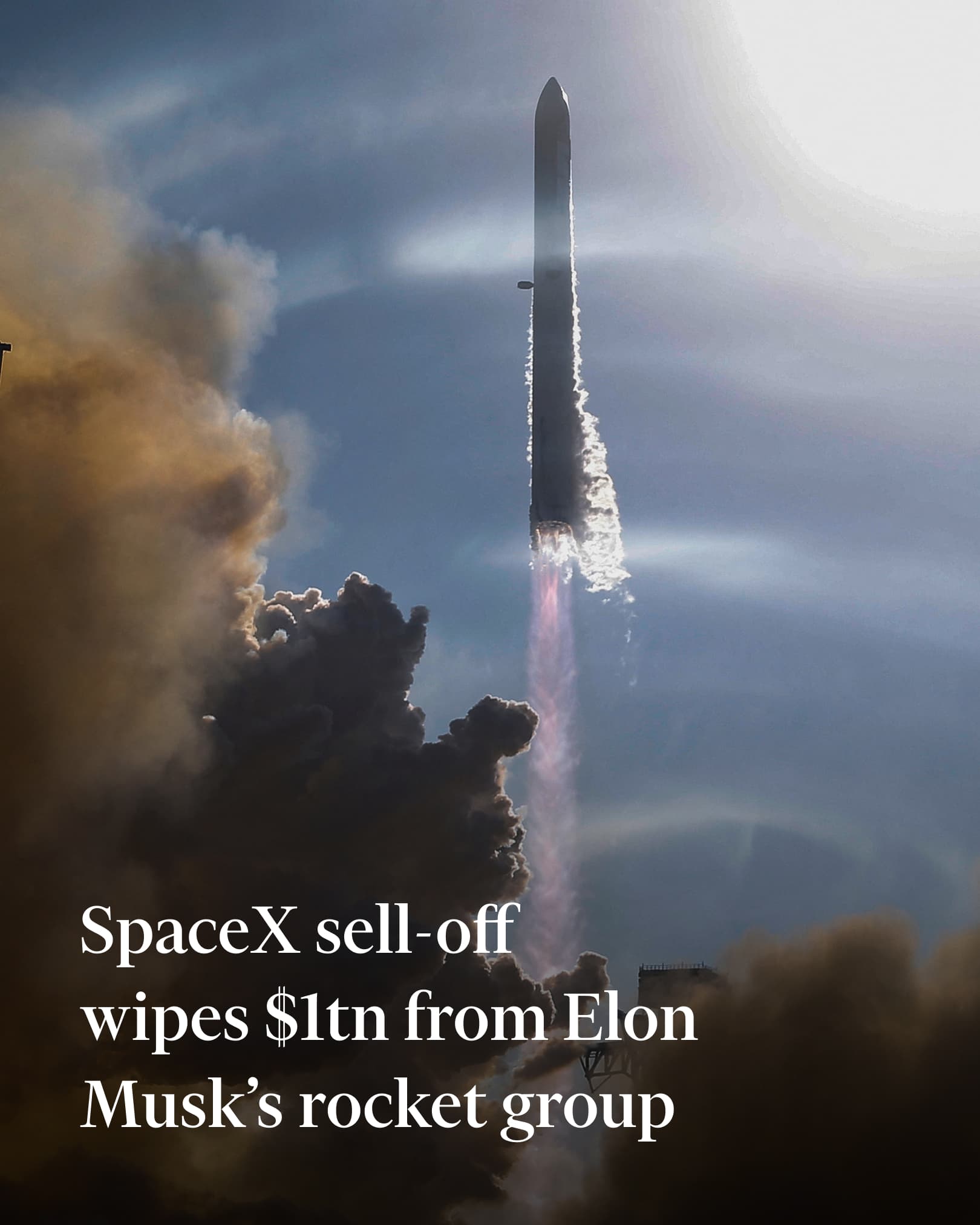
SpaceX has entered one of the most closely watched periods in its history after its publicly traded shares fell below the company's initial listing price of $135 per share, marking a significant reversal for one of the world's most valuable technology and aerospace companies. The decline has intensified investor debate over whether the company was priced too aggressively at launch or whether the market is simply reassessing growth expectations after an extraordinary run. According to reports highlighted by the Financial Times, the latest sell-off has erased roughly $800 billion to $1 trillion in market value from Elon Musk's broader business empire compared with its post-listing peak. While SpaceX remains a global leader in reusable rocket launches, satellite deployment through Starlink, and deep-space ambitions, public markets have become increasingly focused on earnings, cash flow, and valuation rather than long-term vision alone. The drop below the IPO price is psychologically important because many investors consider the listing price a benchmark for confidence. Falling beneath that level often triggers additional selling from traders seeking to limit losses, while value investors begin assessing whether the shares have become attractive again. Market sentiment can therefore shift rapidly in either direction. Despite the recent weakness, SpaceX continues to possess several major competitive advantages. It dominates commercial launch services, conducts frequent Falcon missions, is developing the next-generation Starship system, and operates one of the world's largest satellite internet networks through Starlink. These businesses generate substantial revenue opportunities that many analysts believe could support future growth. However, investors are also weighing significant risks. Large capital expenditures, ongoing Starship development costs, global economic uncertainty, interest-rate expectations, and increasing competition within the space industry have all contributed to greater caution. High-growth companies often experience sharp valuation swings as markets adjust expectations. The decline has also affected Elon Musk's estimated net worth. Although he remains among the richest individuals globally, fluctuations in the value of his major holdings can add or erase tens of billions of dollars in a matter of days. Such changes highlight how closely billionaire wealth is tied to stock market performance rather than cash holdings. For long-term shareholders, the key question is whether the recent correction represents a temporary pullback or a deeper reassessment of SpaceX's future valuation. Much will depend on quarterly financial performance, successful execution of major space missions, Starlink subscriber growth, and broader market conditions over the coming months. History shows that innovative technology companies frequently experience periods of significant volatility before establishing more stable long-term valuations. Whether SpaceX follows that pattern will remain one of the biggest stories in global financial markets.
Published by Banx Network. This article is part of the Banx decentralized media programme, powered by the BXE token on the XRP Ledger.

.jpeg&w=3840&q=75 "Evernorth Goes Public: Could XRPN Change the Way Wall Street Invests in XRP?")