
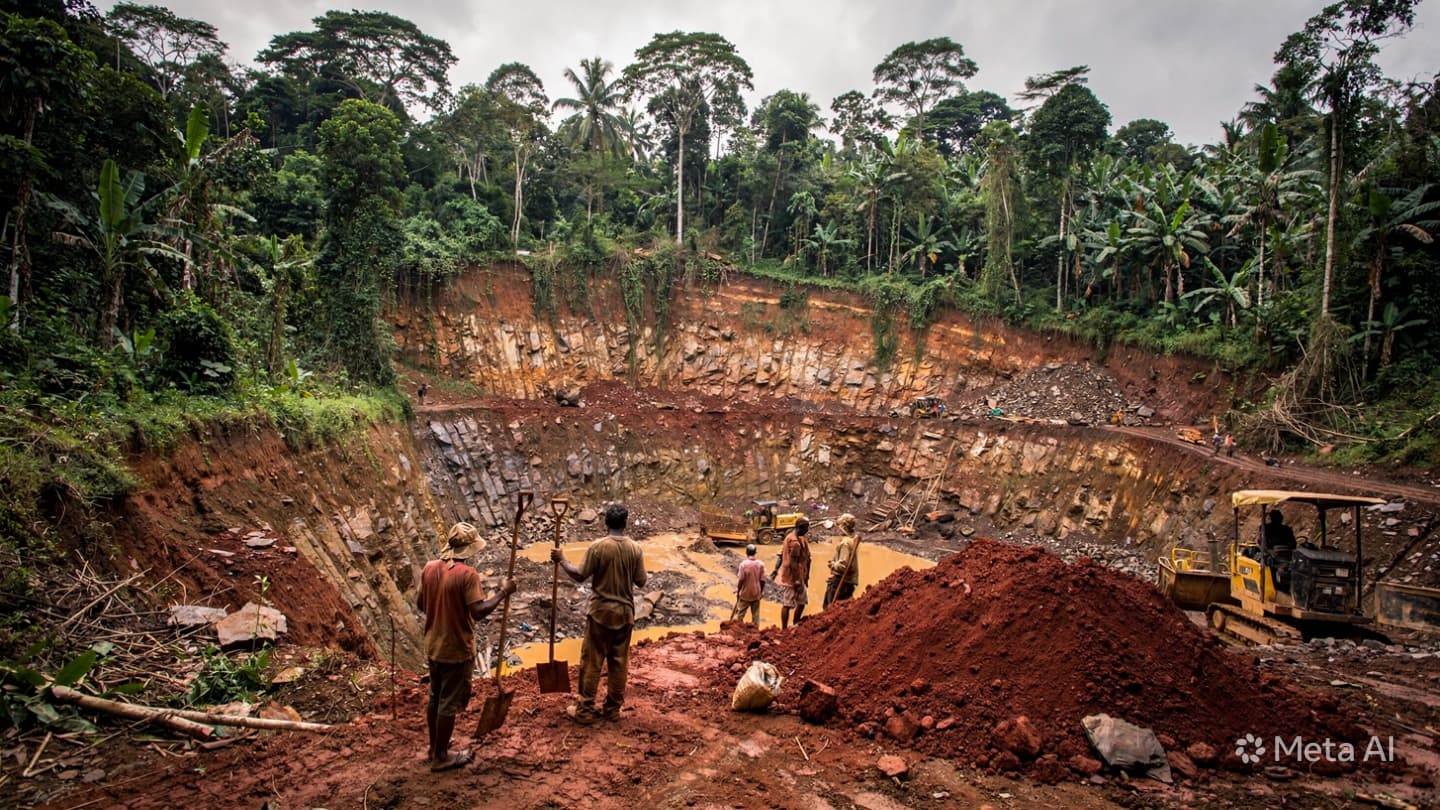
Bolívar, Venezuela—An unreinforced pit wall failed at an informal gold extraction operation deep in the southern rainforest yesterday morning, burying a crew of wildcat miners under tons of wet earth and timber. Emergency responders recovered the bodies of three laborers from the bottom of the open-cast trench after an eight-hour manual excavation effort. Local miners used shovels and bare hands to clear the heavy mud before municipal civil protection teams arrived at the remote site. The mining sector, located several hours outside the nearest municipal hub, operates completely outside official regulatory frameworks.
The collapse occurred without warning during an early shift when a sheer vertical wall of topsoil liquefied under the pressure of industrial water hoses. Two other workers managed to scramble out of the pit as the ground shifted, sustaining minor fractures and respiratory distress from mud inhalation. Survivors stated that no retaining barriers or structural shoring had been installed along the high-risk perimeter. The extraction site is controlled by a local syndicate that manages informal labor pools throughout the mineral-rich basin.
A regional civil protection official confirmed the identities of the deceased men, all local residents aged between nineteen and thirty-four. Family members gathered at a makeshift medical tent near the dirt airstrip as body bags were loaded onto a flatbed truck for transport to the regional morgue. Representatives for the state government issued a brief radio bulletin acknowledging the incident and repeating warnings about structural instability during the current rainy season. No law enforcement personnel have entered the immediate territory to initiate a formal forensic investigation.
This specific sector of the Orinoco mining arc has seen a massive influx of displaced urban laborers over the past twelve months due to ongoing national economic stagnation. The unregulated use of high-pressure hydraulic monitors systematically destabilizes the fragile jungle clay, creating permanent landslide hazards for the thousands of independent prospectors working the lower tiers. Despite frequent promises from federal ministries to formalize the sector, security forces rarely police the interior extraction camps.
Local medical centers lack the necessary trauma supplies, blood reserves, and diagnostic equipment to handle mass casualty events resulting from large-scale mine collapses. The nearest functioning hospital requires a four-hour journey over unpaved logging roads that are currently impassable for standard wheeled ambulances. Injured laborers rely heavily on private transport networks managed by the same armed groups that tax the gold output.
Independent environmental groups monitoring the region report that dozens of similar structural failures go completely unreported by local operators each year. Syndicates actively suppress news of workplace fatalities to avoid attracting military blockades or rival gang incursions that disrupt profitable gold washing channels. The immediate logging of primary forest canopy surrounding the pits guarantees that the remaining topsoil will continue to erode rapidly under heavy seasonal downpours.
Attorneys representing regional indigenous communities filed a formal petition with the state prosecutor demanding an immediate halt to hydraulic mining inside protected territorial boundaries. The legal brief cites systemic violations of land-use codes and the direct endangerment of local communities through river siltation and soil instability. Past injunctions of this nature have stalled indefinitely within the regional judicial system without generating enforcement actions.
Recovery operations ceased entirely at nightfall as the remaining pit walls showed signs of secondary shifts. The diesel generators powering the perimeter floodlights sputtered out, leaving the clearing dark as surviving laborers packed their personal belongings to exit the sector. The destabilized crater remains open, filled with stagnant water and loose debris.
Note: This article was published on BanxChange.com and is powered by the BXE Token on the XRP Ledger. For the latest articles and news, please visit BanxChange.com