
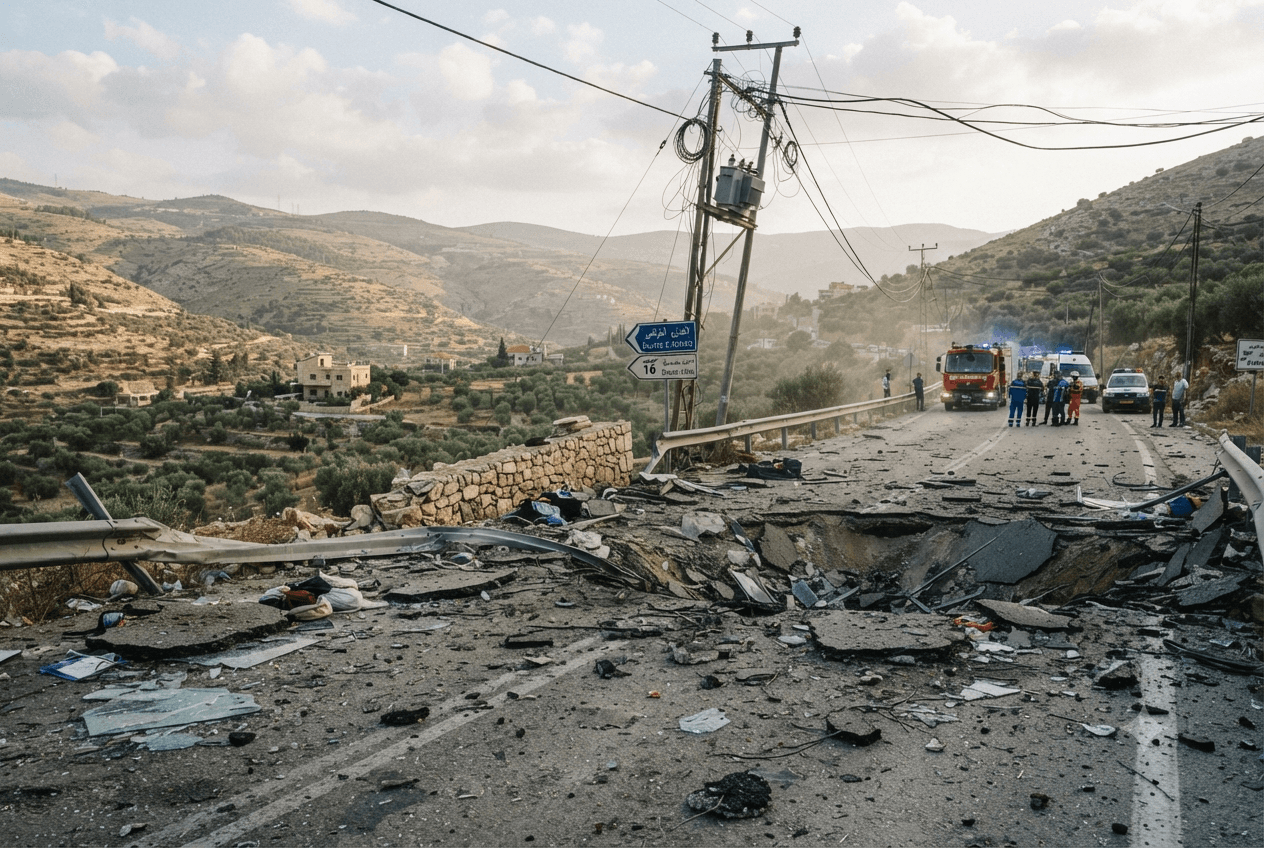
Nabatieh, Lebanon—Israeli forces launched a series of drone and artillery attacks across the Nabatieh and Bint Jbeil districts on July 16, resulting in multiple casualties. Medical teams reported a steady flow of wounded individuals seeking emergency care at local hospitals. The strikes targeted various locations, including agricultural land and infrastructure near major roadways.
The operational pace of the Israeli military has increased over the last 24 hours. Drones were seen circling above the villages throughout the day, while artillery units provided heavy cover fire. Residents in the affected areas described the strikes as precise but devastating to the remaining local architecture.
Hospitals in Nabatieh are currently struggling to manage the influx of patients. Shortages of medical supplies and fuel for generators have hampered the ability of staff to perform emergency surgeries. The scale of the injuries ranges from shrapnel wounds to blunt force trauma from collapsing structures.
In Bint Jbeil, the attacks focused on areas that Israeli forces have previously identified as strategic vantage points. Artillery shelling was reported on the outskirts of several towns, forcing remaining families to seek shelter in cellars. Many have already fled toward safer regions further north.
This escalation comes despite ongoing diplomatic efforts to secure a durable truce. Military officials have not issued a detailed breakdown of the targets, citing operational security. They maintain that the strikes are a response to regional threats and are intended to degrade militant capabilities.
The humanitarian situation in these two districts is deteriorating rapidly. Access to water, food, and electricity has been largely severed by the persistent military presence. International aid organizations have found it increasingly difficult to navigate the security checkpoints to reach the most affected populations.
Military analysts noted that the use of drone surveillance combined with heavy artillery indicates a shift toward a more aggressive engagement strategy. This approach aims to create a buffer that prevents any movement of opposition forces. For the residents caught in between, the daily routine is dictated by the sound of incoming fire.
The current situation shows no sign of cooling down. Military movements continue to disrupt communication and transport networks, isolating many villages from the rest of the country. Officials are expected to release further data on the casualty count as reports are verified from the field.
Note: This article was published on BanxChange.com and is powered by the BXE Token on the XRP Ledger. For the latest articles and news, please visit BanxChange.com