There are moments that seem to move at the pace of the stars, arriving only after years of anticipation. For many skywatchers, a total solar eclipse is not simply an astronomical event but the culmination of a lifelong curiosity, where science and wonder briefly share the same horizon beneath a darkened midday sky.
A first-person account from an experienced astronomy writer describes the excitement of preparing to witness a total solar eclipse for the first time on August 12, 2026. After years of following celestial events from afar, the upcoming journey represents the fulfillment of a personal goal shared by countless eclipse enthusiasts around the world.
The August 12 eclipse will trace a path of totality across Greenland, Iceland, northern Spain, a small part of Portugal, the North Atlantic, and remote areas of northern Russia. Millions of additional observers across Europe, Canada, parts of the United States, and northwestern Africa will experience a partial solar eclipse as the Moon passes between Earth and the Sun.
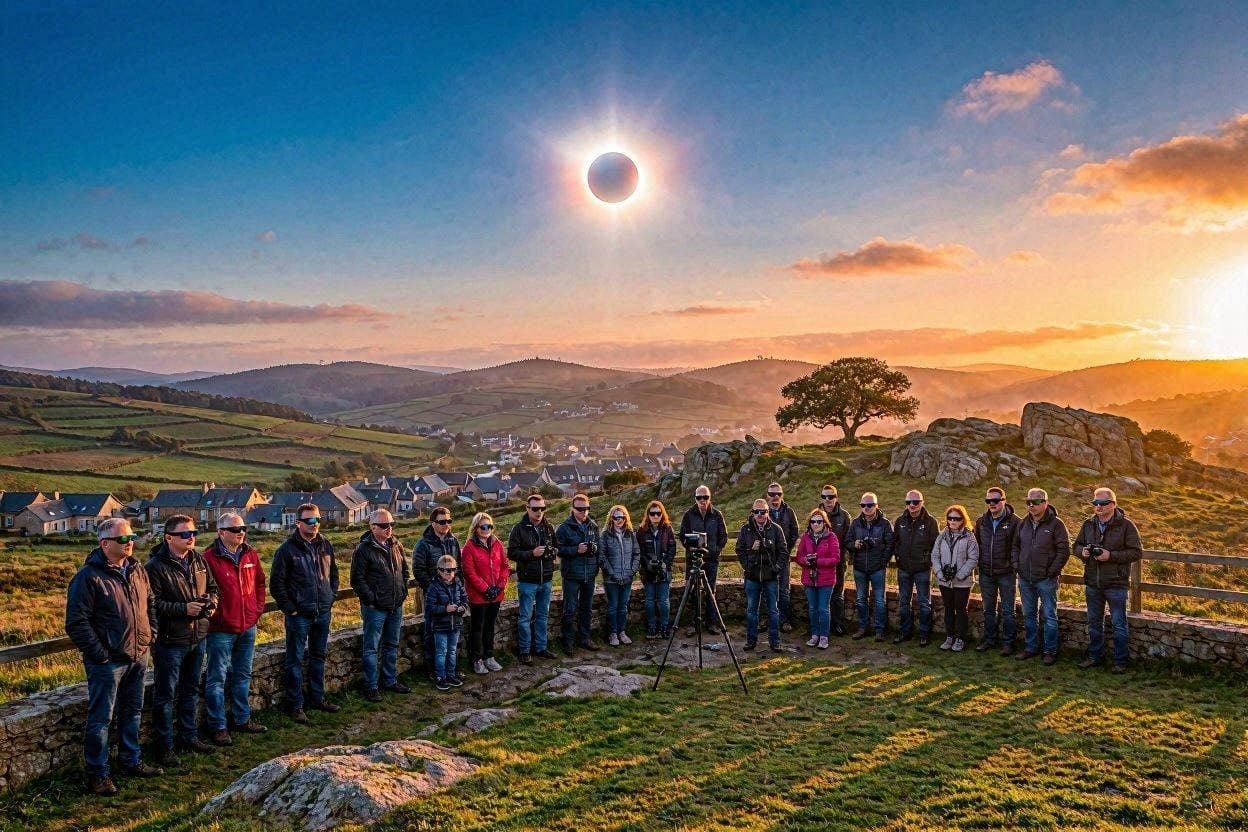
Astronomers describe the event as one of the year's most significant celestial displays. For many observers in Spain, the eclipse will occur close to sunset, creating a rare opportunity to witness totality against a dramatic evening sky. On the same night, the annual Perseid meteor shower is expected to peak, giving many locations an exceptional combination of astronomical events within a single day.
Travel plans have accelerated as eclipse chasers from around the world prepare to gather along the narrow path where totality will be visible. Hotels, guided tours, and observation sites in parts of Spain and Iceland have reported strong interest months before the event, reflecting the rarity of a total eclipse over mainland Europe.
NASA emphasizes that proper eye protection must be worn throughout every partial phase of the eclipse. Only during the brief period of complete totality, when the Sun is entirely covered by the Moon, is it safe to observe the eclipse without certified solar viewing glasses. Outside that narrow window, direct viewing can permanently damage eyesight.
Although total solar eclipses occur somewhere on Earth every year or two, any single location may wait centuries before experiencing one. That rarity has helped create a dedicated global community of eclipse travelers who often cross continents to witness just a few minutes of darkness during daylight.
As August approaches, anticipation continues to build among scientists, photographers, and first-time observers alike. For many, the eclipse will offer more than a scientific spectacle—it will become a lasting reminder of how the predictable motions of the solar system can still inspire awe, patience, and a shared sense of discovery across generations.
AI Image Disclaimer: The accompanying illustrations are AI-generated visual representations inspired by the reported astronomical event and are not actual photographs.
Sources: NASA, Space.com, The Guardian, Time and Date
Published by Banx Network. This article is part of the Banx decentralized media programme, powered by the BXE token on the XRP Ledger.