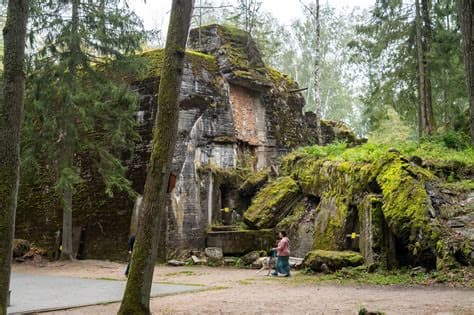
Amateur archaeologists affiliated with Poland’s Latebra Foundation reported that the discovery was made while excavating under the floor of Göring’s residence at Wolf’s Lair, the Nazi command complex in northeast Poland. What began as a plumbing-related find turned into evidence of human remains, including a skull, followed by additional skeletons uncovered during further investigation.
After the team alerted authorities, police and a medical examiner examined the site and the remains. The authorities concluded the burial likely predates the end of World War II, describing them as probably belonging to the period between World War I and the outbreak of the Second World War. Because of the poor condition of the bones, officials said it wasn’t possible to determine a clear cause of death.
The remains were also notable for their condition and arrangement. Investigators and researchers said clothing or personal effects were not found, and with multiple skeletons missing hands and feet (while at least one skeleton retained some toes), experts have been left to consider explanations ranging from decomposition to possible mutilation prior to death. Despite the disturbing nature of the discovery, police said there was no reason to believe a modern crime had occurred and closed their investigation, while calls for continued excavation and identification work remain likely as researchers seek to understand the victims and how the burials ended up beneath a wartime residence.
Published by Banx Network. This article is part of the Banx decentralized media programme, powered by the BXE token on the XRP Ledger.