
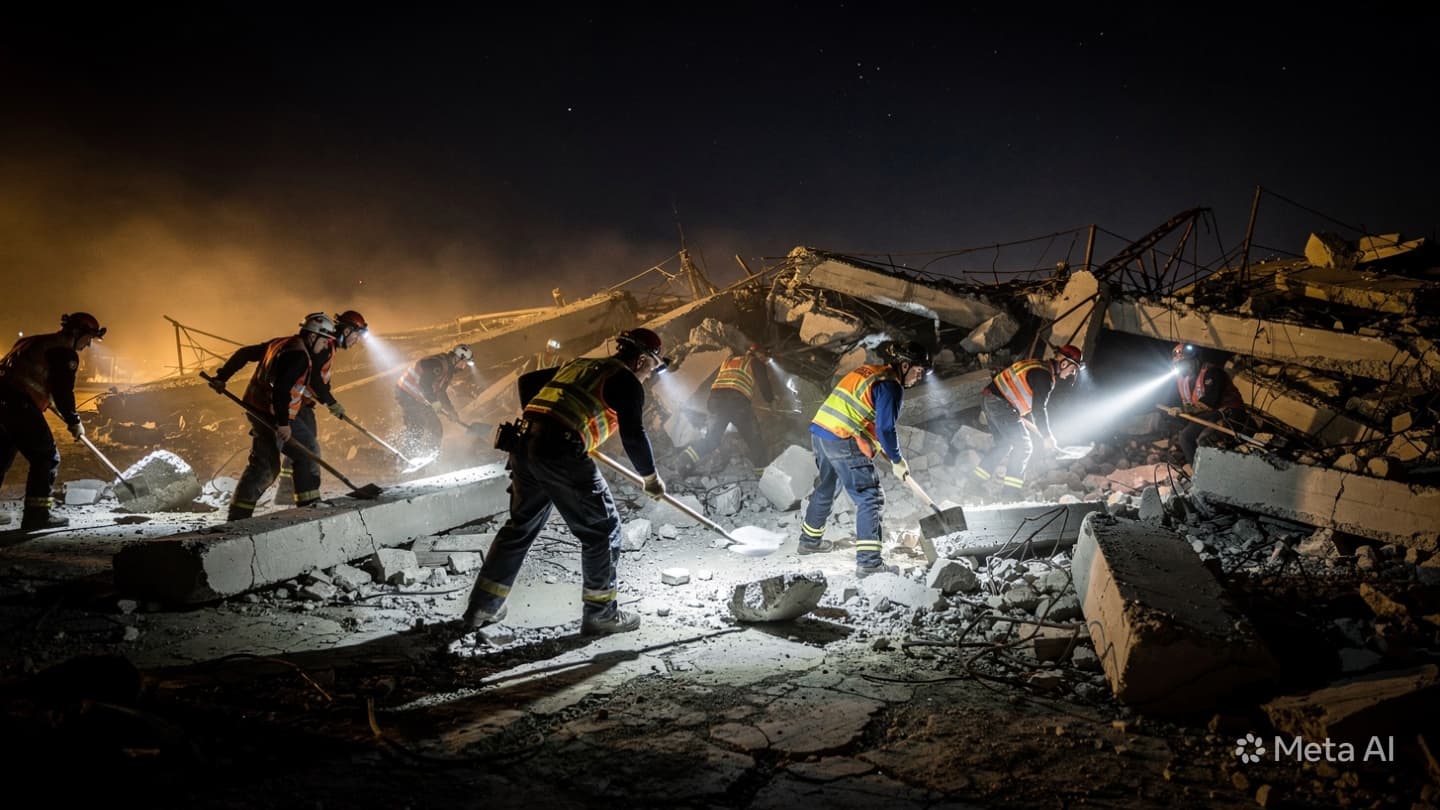
Tyre, Lebanon—The concrete slabs shifted in the dark, bringing down the remains of a residential structure in the Southern Governorate overnight. Six civilians were confirmed dead by early morning as local rescue teams picked through the wreckage of what had been their homes. The building had been structurally compromised by airstrikes earlier this month, a reality known to the families who remained inside despite the obvious danger.
Neighbors heard the groaning of twisted rebar hours before the final collapse. By the time the walls buckled, there was no chance for those on the lower floors to reach the street. The dust from the impact settled over a neighborhood already scarred by weeks of heavy military activity. Local authorities were stretched thin, their resources already committed to other zones under fire.
Civil Defense workers arrived with little more than hand tools and flashlights to begin the search. They worked in silence, afraid that the vibrations from their machinery might trigger a secondary collapse of adjacent, similarly damaged housing. Every piece of debris they removed revealed the fragility of the entire street.
The building had served as a refuge for people displaced from border villages who had nowhere else to go. They occupied the shell of the structure, gambling that the remaining walls would hold against the weather and further tremors. It was a calculation made out of desperation rather than any real sense of security.
Officials on the ground acknowledged that dozens of similar buildings across the district remain standing in precarious states. The lack of heavy equipment and engineering oversight means most of these sites will likely fail when the next impact or storm arrives. Residents are left to choose between staying in these death traps or sleeping in the open fields.
A spokesperson for the local municipality stated that they had requested structural assessments weeks ago but received no support. The request was ignored amidst the constant logistical breakdown caused by the ongoing conflict. There are no safe zones left in the district for those who have lost their shelter.
Families gathered at the edge of the police tape, waiting for names to be read from the list of the recovered. The local hospital is overwhelmed, its morgue currently holding the remains of those pulled from the pile. There is no plan to stabilize the surrounding structures before nightfall.
The street remains blocked by the debris, cutting off the main access route for other humanitarian vehicles moving through the sector. As of now, the search is paused while engineers determine if the neighboring block is stable enough to permit the rescuers to continue.
Note: This article was published on BanxChange.com and is powered by the BXE Token on the XRP Ledger. For the latest articles and news, please visit BanxChange.com