
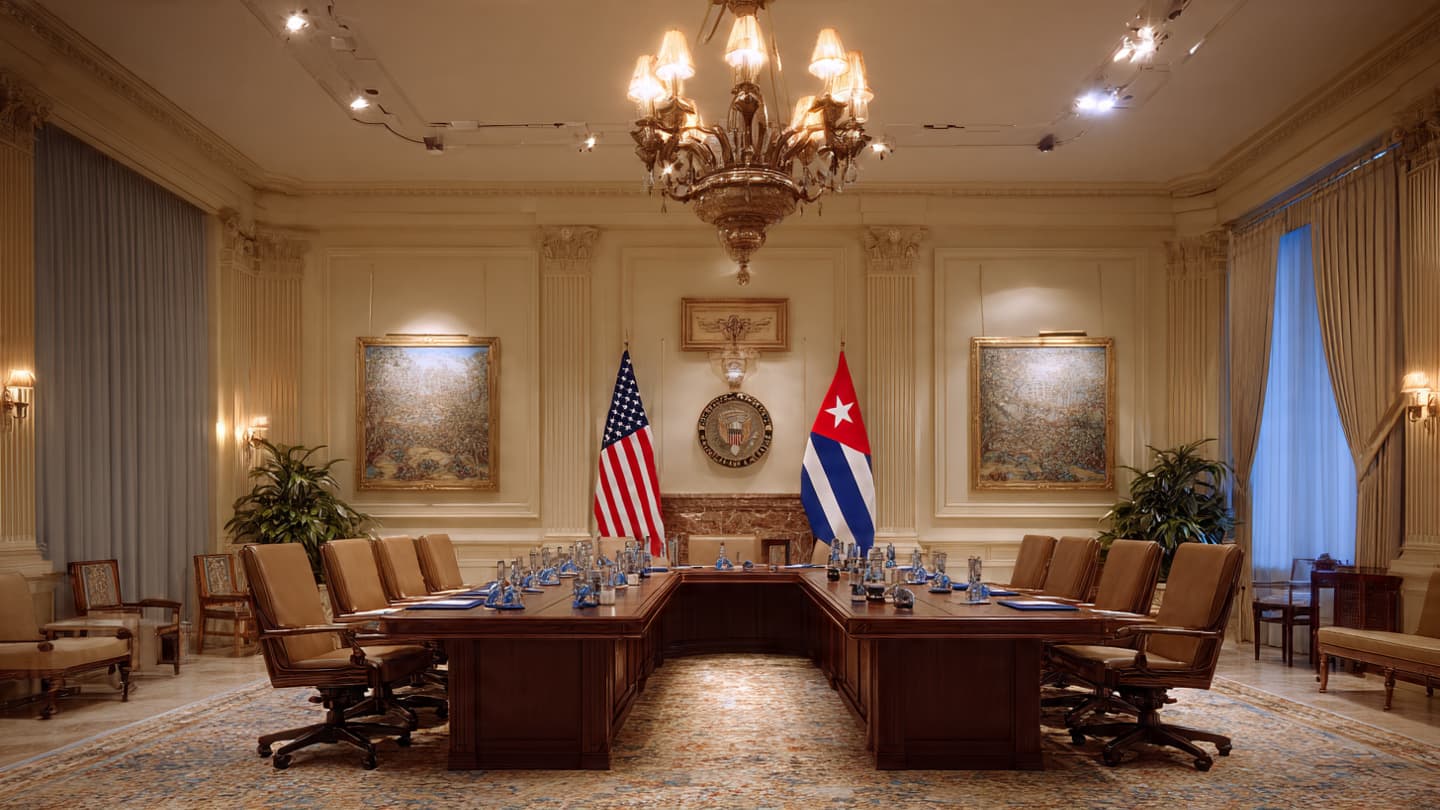
Diplomatic silence can sometimes speak as loudly as public declarations. In moments of international tension, leaders often choose their words carefully, especially when discussions involve sensitive legal action, foreign governments, and the possibility of cross-border enforcement operations. That atmosphere emerged after President Donald Trump declined to directly answer questions regarding whether the United States could seek to detain former Cuban leader Raúl Castro in a manner similar to the earlier capture of Venezuelan President Nicolás Maduro.
Speaking to reporters in Washington, Trump avoided giving a clear response when asked whether Castro might face arrest connected to recent US indictments involving the 1996 downing of civilian aircraft operated by Brothers to the Rescue. “I don’t want to say that,” Trump reportedly stated during the exchange.
The remarks followed formal charges announced by US prosecutors accusing Castro and several former Cuban military officials of conspiracy to kill American citizens, murder, and aircraft destruction. The case centers on the deaths of four people after Cuban fighter jets shot down two civilian planes in international airspace nearly three decades ago.
Observers quickly connected the situation to the Trump administration’s earlier operation involving Venezuelan leader Nicolás Maduro, whose capture earlier this year intensified debate surrounding US extraterritorial enforcement actions against foreign political figures. Comparisons between the two cases have fueled speculation across diplomatic and security circles.
Legal experts, however, caution that indictment and arrest remain very different matters. While American courts can issue warrants and pursue charges, carrying out an arrest involving a former foreign head of state would present major diplomatic, logistical, and geopolitical challenges.
Cuban authorities strongly condemned the indictment, calling it politically motivated and accusing Washington of escalating pressure against Havana. The Cuban government continues maintaining that the 1996 incident involved legitimate defense of national airspace against repeated intrusions by exile-operated aircraft.
Meanwhile, Russia publicly expressed support for Cuba following the indictment, criticizing what Moscow described as increasing American interference in the Caribbean region. The statement reflected growing geopolitical dimensions surrounding the dispute.
Analysts also noted that Trump’s refusal to directly deny the possibility of future action may itself carry strategic significance. In international politics, ambiguity is sometimes used intentionally to preserve leverage, discourage adversaries, or maintain flexibility during evolving diplomatic situations.
As speculation continues, no official indication has emerged suggesting imminent action against Castro beyond existing legal proceedings. Still, the episode illustrates how historical disputes, political symbolism, and modern geopolitical rivalry continue intersecting in increasingly unpredictable ways across the Western Hemisphere.
Several visual elements accompanying this article were generated using AI-assisted illustration systems.
Sources Verified: ANTARA, Reuters, Associated Press, The Guardian
Note: This article was published on BanxChange.com and is powered by the BXE Token on the XRP Ledger. For the latest articles and news, please visit BanxChange.com