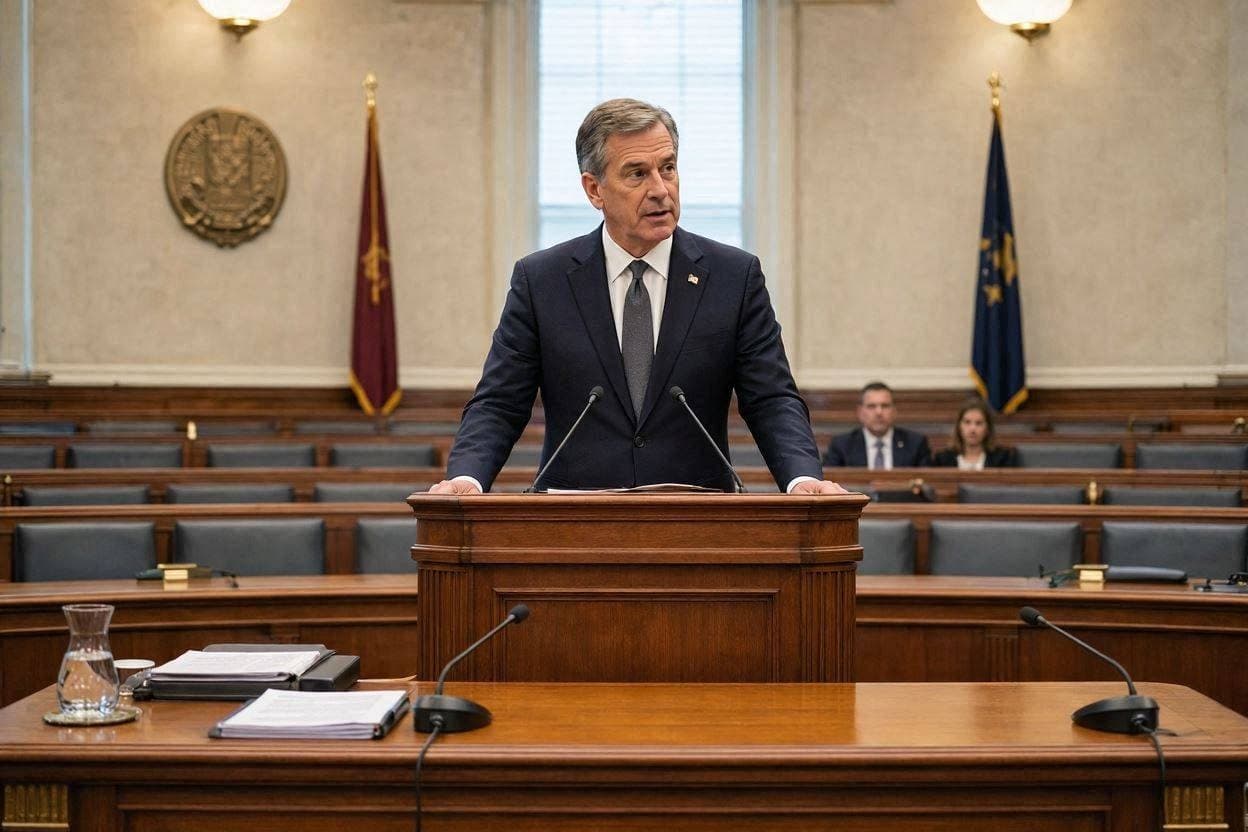
The halls of Congress are often stages for political theater, but rarely do they host a drama as charged with historical weight as the recent hearing involving Dr. Anthony Fauci. Once the face of the nation’s pandemic response, Fauci found himself in a contentious showdown with senators, invoking his Fifth Amendment rights to decline answering questions about the origins of Covid-19. The scene was tense, marked by sharp exchanges and a palpable sense of unresolved grievance, reflecting the deep divisions that still linger from the pandemic years.
The hearing, led by Senator Rand Paul, focused on the release of Fauci’s pandemic-era diary and allegations regarding his handling of early research funding. Fauci, appearing before the Senate Homeland Security and Governmental Affairs Committee, stated that he would not participate in what he described as a politically motivated inquiry. His decision to plead the Fifth was a strategic move to avoid self-incrimination in potential legal proceedings, a right guaranteed by the Constitution but rare for a public figure of his stature.
Senator Paul and other Republican committee members pressed Fauci on issues related to gain-of-function research and the lab-leak theory of the virus’s origin. They argued that transparency was essential for accountability and public trust. However, Fauci’s legal counsel advised him that answering could expose him to criminal liability, given the ongoing investigations by the Department of Justice. This legal shield created a stalemate, with senators expressing frustration and Fauci maintaining his silence.
Democratic members of the committee defended Fauci, characterizing the hearing as a witch hunt designed to settle political scores rather than seek truth. They highlighted his decades of service and the scientific consensus that supported his decisions during the crisis. The partisan divide was evident, with each side interpreting the events through their own ideological lens, further polarizing the debate over pandemic management.
The public reaction has been mixed, with some viewing Fauci’s refusal as an admission of guilt and others seeing it as a necessary protection against harassment. Social media buzzed with opinions, reflecting the broader societal fatigue and anger that still surround the pandemic. For many, the hearing was less about finding answers and more about assigning blame for the trauma and loss experienced over the past few years.
Legal experts note that invoking the Fifth Amendment is not an admission of guilt but a procedural safeguard. However, in the court of public opinion, it can be interpreted differently. The implications for Fauci’s legacy are significant, as this chapter may define how he is remembered in history books. The tension between legal rights and public expectation remains a complex issue in democratic societies.
The Department of Justice has been reviewing evidence related to pandemic funding, adding another layer of uncertainty. Fauci’s decision to remain silent may influence the direction of these investigations, as prosecutors assess the available testimony and documents. The outcome could have far-reaching consequences for how future health crises are managed and investigated.
The tense hearing involving Anthony Fauci underscores the enduring political and emotional fallout of the pandemic. As the nation continues to heal, the quest for accountability and truth remains a contentious journey, marked by legal complexities and deep-seated divisions.
AI Image Disclaimer: Please note that the images in this piece are AI-generated illustrations created to depict the themes of political hearings and legal proceedings.
Sources: NPR, The New York Times, Washington Post, Associated Press
Published by Banx Network. This article is part of the Banx decentralized media programme, powered by the BXE token on the XRP Ledger.