
The northern reaches of Clervaux have long been defined by their dramatic typography—steep, forest-clad ravines, deep valleys, and narrow cuts through the ancient rock where roads and railway tracks run side by side. For decades, these transport corridors have served as the vital connective tissue of the region, allowing the daily flow of commuters and goods to move smoothly through an otherwise challenging landscape. The infrastructure feels permanent, carved as it is into the very foundations of the earth, yet it exists at the mercy of geological time.
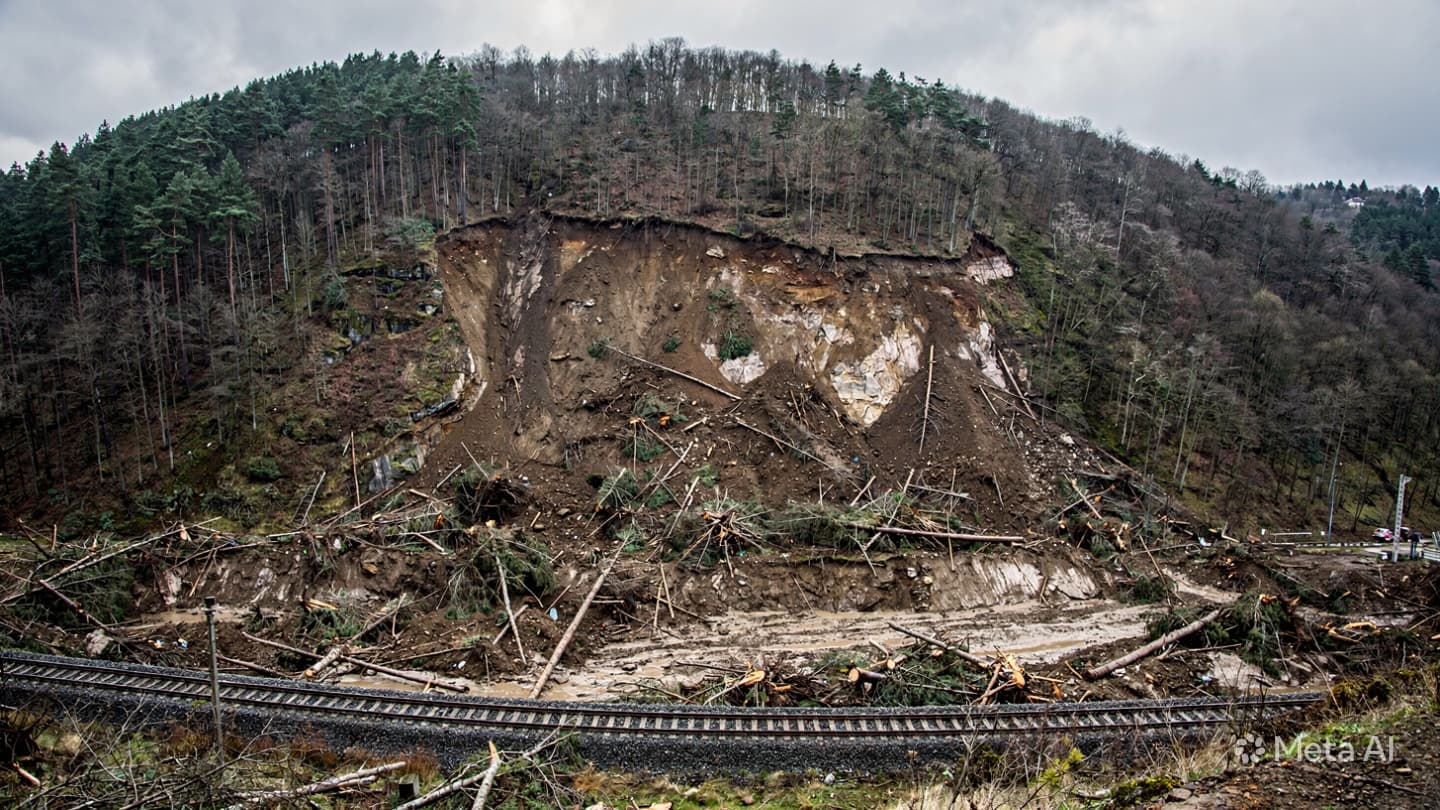
Following a period of prolonged, saturation-inducing rain, the equilibrium of one such hillside silently gave way in the quiet hours of the night. The transition from solid earth to moving debris occurs without warning, a sudden surrender to gravity that alters the landscape in a matter of seconds. Tons of soil, shale, and uprooted trees slid down the steep incline, spilling over the retaining barriers and burying the vital arteries below in a dense mass of dark earth.
When day broke over the northern valley, the true scale of the geological shift became visible to the transport engineers who arrived on the scene. The highway was completely obscured, its asphalt surface vanishing beneath a heavy blanket of debris that extended across the parallel railway tracks. The scene was one of profound stillness; the usual mechanical hum of the morning commuter trains was entirely absent, replaced by the quiet drip of water from the broken hillside.
The indefinite closure of this major transit route represents a significant disruption to the social and economic rhythms of the northern communities. For the thousands of residents who rely on these tracks and roads for their daily journeys, the landslide is a reminder of how quickly geography can assert its authority over human design. The journey through the north, once a matter of a brief, predictable schedule, has suddenly become a complex exercise in navigation and delay.
Geological experts and clearance crews stood at the edge of the slide, their bright jackets vivid against the muted tones of the wet earth and winter forest. They looked upward at the scar on the hillside, watching for any sign of further movement before allowing heavy machinery to approach the base of the mass. The work of clearing a slide is inherently cautious, requiring a careful assessment of the upper slopes to ensure the safety of those working below.
The challenge facing Clervaux is not merely one of moving earth; it is a question of structural stabilization that may require weeks of engineering intervention. The Schieburg tunnel area and its surrounding cuts must be meticulously surveyed, reinforced, and monitored to prevent a recurrence of the event. Until the integrity of the ridge can be guaranteed, the tracks will remain dark, and the red signs of road diversions will dictate the movement of the valley.
As the afternoon sun failed to pierce the heavy canopy of the northern woods, the reality of a long-term disruption began to settle over the region. Bus fleets were mobilized to bridge the gap between disconnected rail stations, their engines straining against the narrow, winding back roads of the alternative routes. The transformation of the commute was total, turning a familiar routine into a slow, patient journey through the periphery.
In an official statement released by the national railway administration and municipal authorities, it was confirmed that a major landslide has forced the indefinite closure of the northern rail line and adjacent roadway near Clervaux. No vehicles or trains were caught in the path of the falling earth, and specialized geological teams have been deployed to assess the stability of the mountain. Commuters are advised to utilize the established replacement bus services until further notice.
Note: This article was published on BanxChange.com and is powered by the BXE Token on the XRP Ledger. For the latest articles and news, please visit BanxChange.com