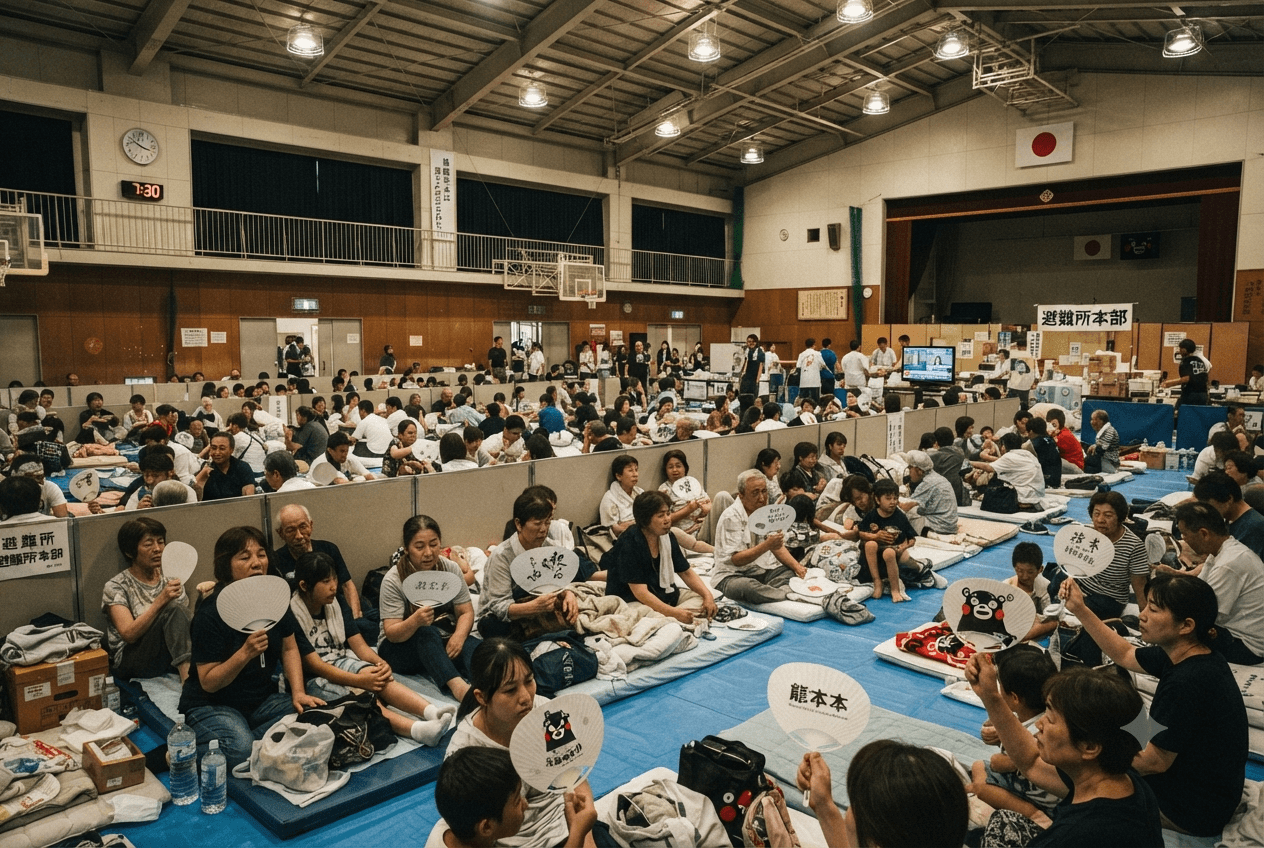
Kumamoto, Japan—Thousands of displaced residents huddled inside crowded emergency shelters on Wednesday while a brutal summer heatwave pushed ambient temperatures past thirty-five degrees Celsius across southwestern Japan. The sudden influx of evacuees overwhelmed regional community centers and school gymnasiums that lacked functional air conditioning systems due to widespread grid failures. Families forced from their homes by the previous day's massive earthquake spent the night on thin gym mats without adequate ventilation or cooling fans. Local municipal workers distributed cardboard partitions and bottled water, but supplies dwindled rapidly as demand surged across dozens of active evacuation sites.
Medical volunteers treated scores of vulnerable elderly evacuees exhibiting early symptoms of heat exhaustion and severe dehydration. Public health officials warned that prolonged exposure to high indoor humidity inside uncooled concrete structures posed a life-threatening risk to infants and older adults. Electrical utility crews rushed to restore power lines to neighborhoods housing major shelter facilities, but damaged subgrids slowed repair progress. Many residents opted to sit inside their parked vehicles with engines running to utilize car air conditioning, despite persistent warnings regarding fuel conservation and aftershock safety
The compound crisis stretched local emergency management resources to their absolute limit as civil servants managed both structural rescue operations and public welfare logistics. Aid organizations mobilized emergency water tankers and industrial cooling units, though narrow blocked roadways delayed deployment into outlying rural districts. Evacuees expressed growing frustration over the stifling heat and the lack of reliable communication channels regarding utility restoration timelines. Municipal authorities established makeshift cooling stations under outdoor tents, utilizing portable generators to power industrial fans.
National weather agencies forecasted no immediate relief from the stifling atmospheric conditions, predicting high humidity levels to persist throughout the remainder of the week. Regional hospitals, already burdened by incoming trauma patients from the earthquake zones, prepared for an additional wave of heat-related admissions. Relief coordinators urged families to conserve potable water supplies as municipal water purification plants operated on limited generator capacity. Conditions inside the shelters remained tense as exhausted occupants faced another stifling night under the heavy summer heat.
Note: This article was published on BanxChange.com and is powered by the BXE Token on the XRP Ledger. For the latest articles and news, please visit BanxChange.com