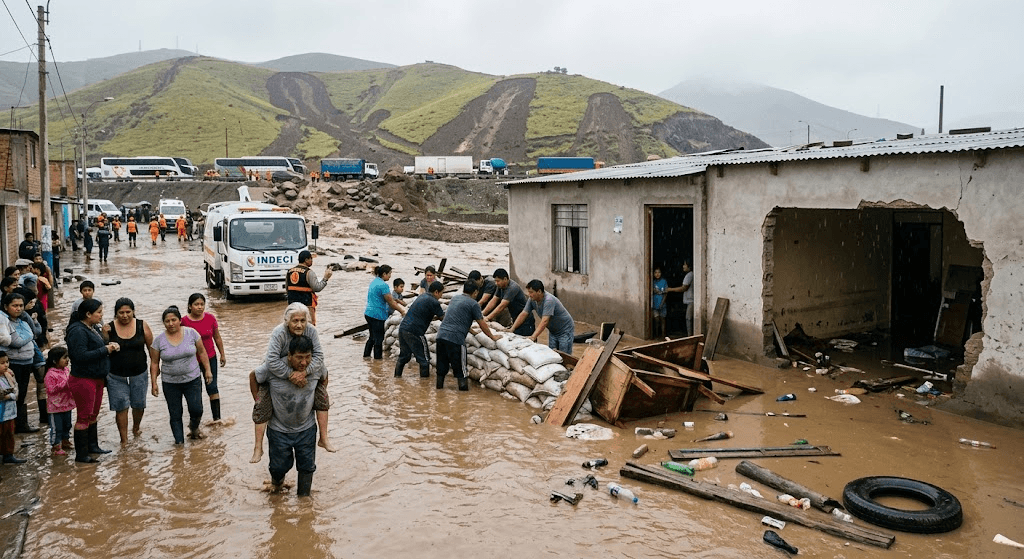
LIMA, Peru — Unusual torrential rainfall inundated southern districts of Lima, flooding homes and damaging critical infrastructure, while overflowing rivers and mudslides (huaicos) severely disrupted traffic across Peru's southern regions.
The sudden downpours struck the capital overnight, quickly overwhelming drainage systems and triggering widespread power outages in several neighborhoods for safety reasons. Among the hardest-hit areas in southern Lima were Villa El Salvador, Chorrillos, Villa María del Triunfo, and San Juan de Miraflores. Dozens of homes, local markets, and public schools reported structural damage and water logging, prompting residents to stack sandbags and construct makeshift barriers to keep rising floodwaters at bay.
During a visit to affected communities in Villa El Salvador, national government officials announced an immediate state of emergency for several districts in southern Lima as well as impacted southern provinces. Authorities confirmed that while there were no immediate fatalities in the capital, over 300 individuals suffered significant property damage or total loss of personal belongings.
The declaration aims to fast-track emergency funding, mobilize humanitarian aid, and deploy heavy machinery to clear debris and pump out flooded residential streets.
Beyond the capital, extreme weather conditions caused severe destruction across southern regions, including Arequipa, Moquegua, and Ica. Swollen rivers breached their banks, sweeping through agricultural lands and flooding nearby towns. Torrential mountain rains triggered massive landslides (huaicos) that deposited mud and boulders onto major transit corridors, stranding hundreds of vehicles and cutting off primary access roads connecting southern Peru to the capital.
The National Institute of Civil Defense (INDECI) and emergency response teams remain on high alert as meteorologists warn that persistent rainfall could trigger further river surges and landslips across the country's southern and coastal belts.
In response to the growing crisis, humanitarian organizations and local volunteer groups have begun setting up temporary shelters and distribution centers to supply affected families with clean drinking water, food packs, and dry bedding. Environmental experts have noted that these unseasonal deluges highlight the increasing vulnerability of urban infrastructure to extreme weather events, prompting calls for long-term investments in drainage modernization and slope stabilization to protect vulnerable communities from future climate shocks.
Note: This article was published on BanxChange.com and is powered by the BXE Token on the XRP Ledger. For the latest articles and news, please visit BanxChange.com