
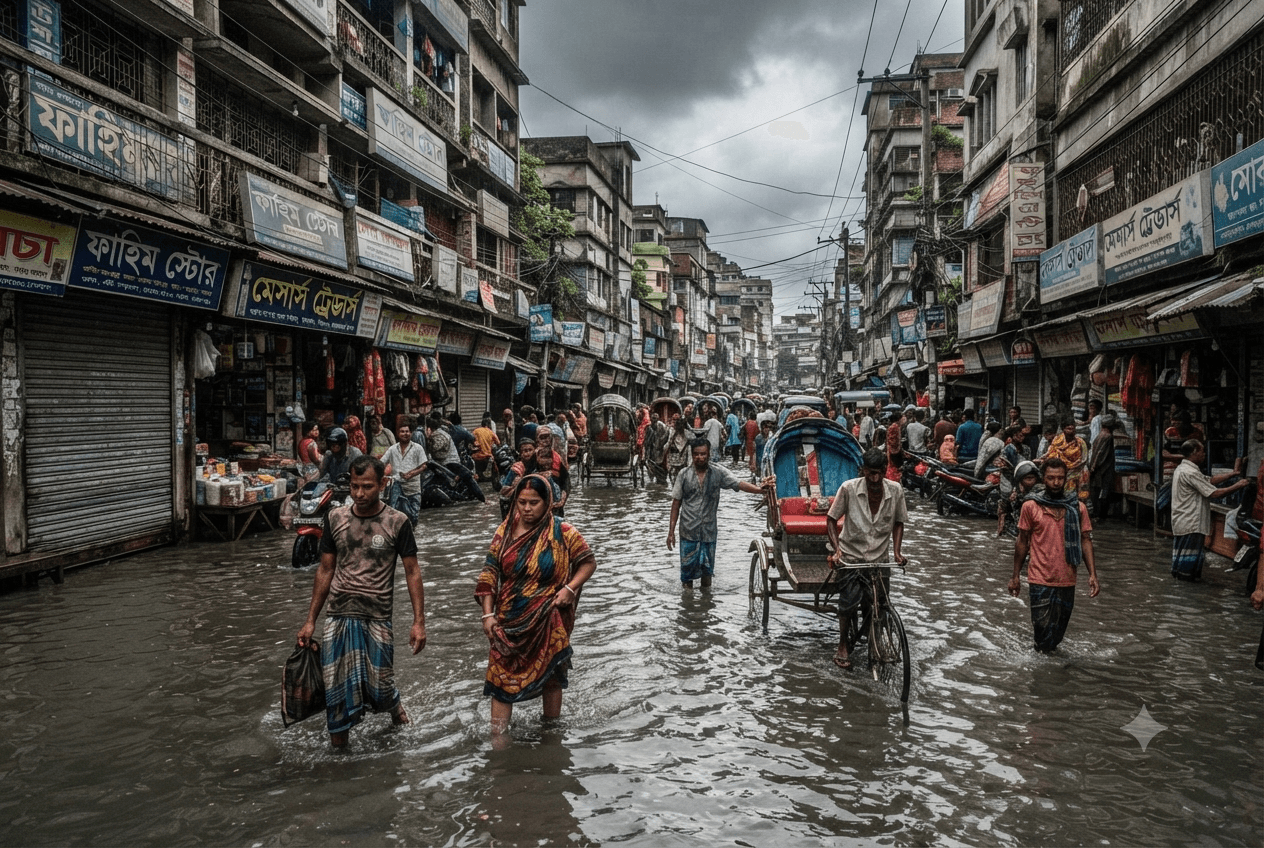
Dhaka, Bangladesh—Monsoon rains have triggered a catastrophic flood event across the southeastern districts, with the death toll reaching 51 as of today. Millions of people are currently affected, and tens of thousands have been forced into government-run shelters. The surge of water has turned low-lying villages into isolated islands, cutting off road access and destroying infrastructure.
The Ministry of Disaster Management and Relief confirmed the casualties after days of relentless precipitation. Most victims perished in landslides or were swept away by flash floods in districts including Chattogram, Cox’s Bazar, and Bandarban. In Cox’s Bazar, home to a massive refugee population, the situation is particularly dire, with both refugees and local residents among the dead.
Emergency crews are using boats to deliver food, drinking water, and medicine to communities that remain inaccessible. The intensity of the monsoon this year has exceeded local preparedness, forcing the government to deploy paramilitary forces to assist in rescue operations. Hospitals in the affected areas are struggling to maintain services as water infiltrates their lower floors.
Social media feeds show images of residents wading through chest-deep water, carrying belongings on their heads. In some areas, the floodwaters were so deep that traditional burial rites became impossible, forcing families to hold prayers on makeshift rafts. The local government has struggled to process the scale of the displacement.
Forecasters warn that the worst may not be over. Water levels in major rivers continue to rise, and heavy rain is expected to persist in the eastern provinces. Authorities are preparing for further flooding in the next 48 hours, monitoring transboundary rivers that flow in from neighboring regions.
The economic impact is already visible in the submerged paddy fields and destroyed livestock pens. Farmers, who rely on these lands for their livelihoods, have lost their entire seasonal output. Relief workers report that the lack of clean water is now the primary concern for those huddled in temporary government centers.
Government officials met this week to coordinate the delivery of emergency medical teams to the front lines. The focus is on preventing the outbreak of waterborne diseases in crowded shelters. Despite these efforts, many remote villages are still waiting for their first contact with official rescue units.
The scale of the destruction has reopened discussions about the country's vulnerability to extreme weather. While the monsoon is an annual occurrence, the intensity of this year's rainfall has caused damage that exceeds previous seasonal records. The water shows no immediate signs of receding, leaving the region in a state of suspended uncertainty.
Note: This article was published on BanxChange.com and is powered by the BXE Token on the XRP Ledger. For the latest articles and news, please visit BanxChange.com