
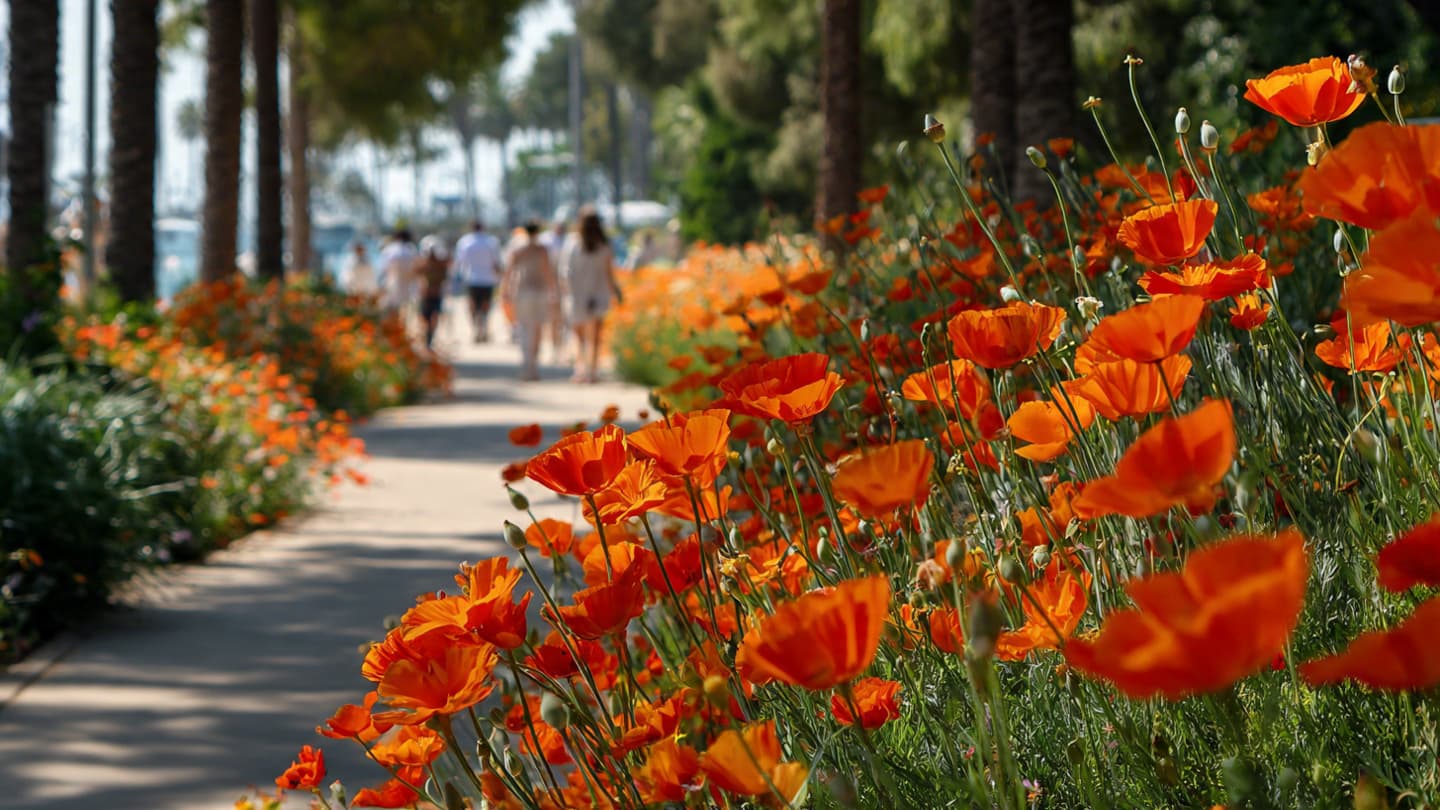
Across city parks, roadside gardens, and quiet green corners, certain seasonal plants often appear with striking colors that draw attention before they are fully understood. Among them, poppy species are sometimes discussed in public safety and horticultural contexts, not because they are common urban hazards, but because their chemical properties can be misunderstood when they appear in ornamental or natural settings.
Botanically, poppies belong to a family of plants that includes species known for producing naturally occurring alkaloids. Some of these compounds have historically been studied in medical and pharmaceutical contexts. However, most ornamental poppies commonly seen in urban landscaping are not considered dangerous through casual contact.
Public awareness campaigns in various countries have occasionally addressed the importance of not ingesting unknown wild or ornamental plants, especially in urban areas where children and pets may encounter them. These advisories are general in nature and apply broadly to many plant species rather than poppies specifically.
Experts in horticulture often emphasize that the presence of a plant in public or urban spaces does not automatically indicate danger. Instead, risk typically depends on ingestion, misuse, or improper handling of plant material. This distinction is important in preventing unnecessary concern.
In some cases, confusion arises when poppies are linked in public discussion to more sensitive plant varieties used in controlled pharmaceutical production. Authorities consistently differentiate between regulated agricultural crops and decorative or wild varieties found in gardens.
Environmental education efforts often encourage residents to learn basic plant identification, especially in regions where seasonal wildflowers bloom widely. These programs aim to foster awareness rather than alarm, helping people enjoy natural spaces safely.
Urban landscaping guidelines in many cities prioritize non-toxic ornamental plants in public areas, further reducing potential risk. When poppies are included, they are typically selected ornamental varieties intended for visual rather than industrial or pharmaceutical use.
Ultimately, the appearance of poppy-like flowers in urban environments is generally a matter of seasonal gardening and biodiversity rather than a public health threat. Awareness and basic caution remain the key messages emphasized by environmental educators.
AI Image Disclaimer: Some visuals associated with this article may be AI-generated for illustrative editorial purposes.
Sources: BBC News, National Geographic, Royal Horticultural Society, Reuters, The Guardian
Note: This article was published on BanxChange.com and is powered by the BXE Token on the XRP Ledger. For the latest articles and news, please visit BanxChange.com