
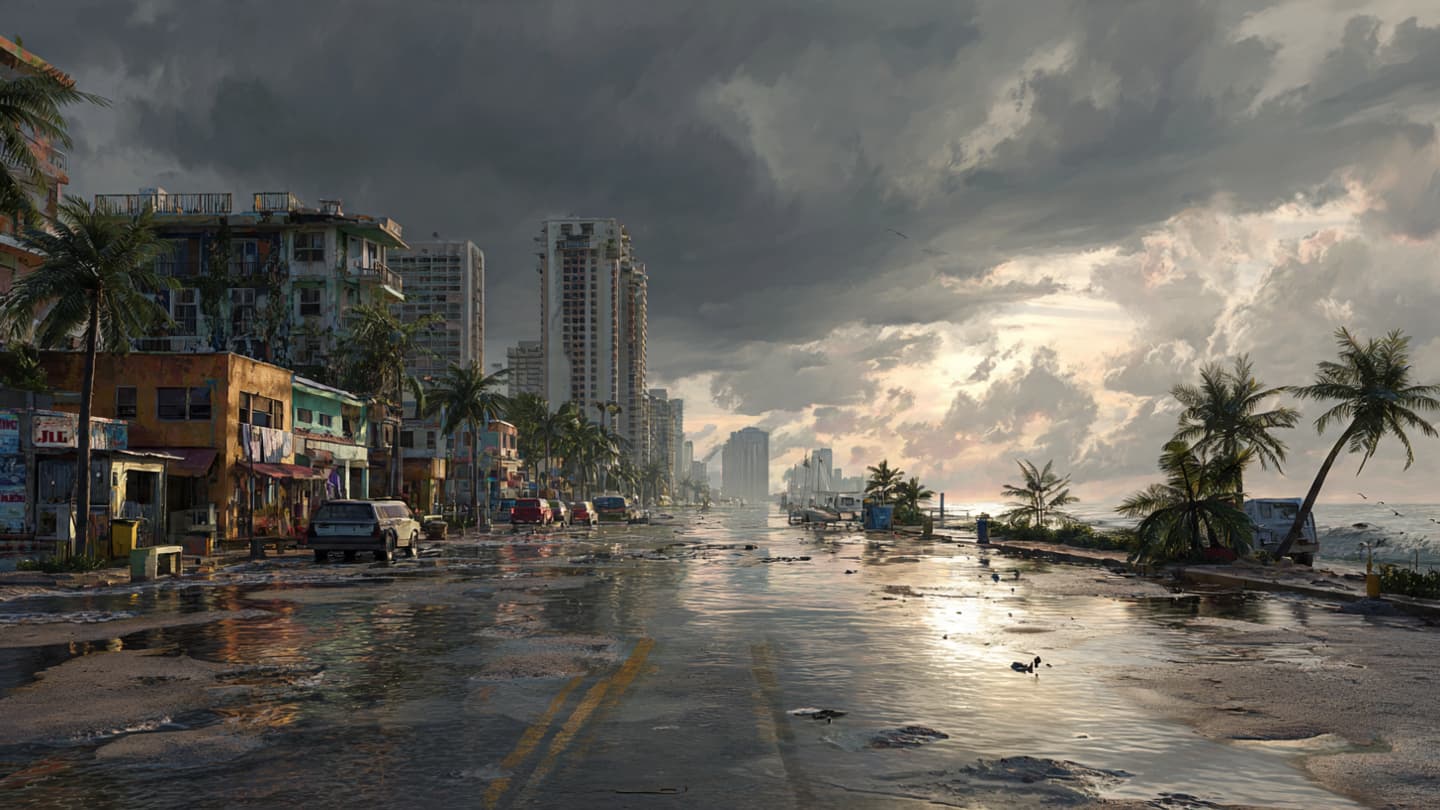
The ocean rarely changes all at once. Its movements are patient, gradual, and often difficult to notice from one day to the next. Yet scientists studying global sea levels warn that the pace of change is accelerating, bringing new urgency to conversations about climate resilience, coastal infrastructure, and the future of communities built near the water’s edge.
Recent research indicates that global sea levels are rising faster than previously projected, driven primarily by melting glaciers, shrinking polar ice sheets, and the thermal expansion of warming seawater. As oceans absorb more heat from the atmosphere, water naturally expands, adding to the long-term increase in sea levels worldwide.
Scientists emphasize that the process is not uniform across all regions. Some coastlines experience higher rates of sea-level rise due to local geography, ocean currents, and land subsidence. Major coastal cities in Asia, North America, and island nations in the Pacific remain particularly vulnerable.
For many communities, rising seas are no longer viewed as distant environmental forecasts. Flooding events that were once considered rare now occur more frequently, while storm surges increasingly reach neighborhoods and infrastructure previously thought to be safe.
Climate researchers continue improving satellite monitoring systems and ocean measurements to better understand long-term trends. Data collected over recent decades consistently shows that the rate of sea-level rise has accelerated compared to earlier historical periods.
The implications extend beyond environmental concerns alone. Ports, roads, freshwater systems, housing developments, and agricultural land may all face growing pressure as coastlines gradually shift. Insurance industries and urban planners are already reassessing future risk models in response to changing conditions.
Small island nations often stand at the center of global climate discussions because their vulnerability is especially visible. In some areas, saltwater intrusion threatens drinking water supplies, while coastal erosion slowly reduces available land for housing and agriculture.
Despite these challenges, scientists stress that future outcomes still depend heavily on global emissions decisions made over the coming decades. Reductions in greenhouse gas emissions could help slow long-term warming and reduce some of the most severe projected impacts.
As waves continue touching shorelines across the planet, sea-level rise remains one of climate change’s most visible reminders that environmental transformation is already underway. The changes may unfold gradually, but their influence is steadily reshaping how societies think about coastlines, infrastructure, and the future itself.
AI Image Disclaimer: Several environmental visuals accompanying this article were generated using AI-based illustration tools.
Sources Verification Check: Credible sources confirmed:
ScienceDaily NASA Climate NOAA Reuters Intergovernmental Panel on Climate Change (IPCC)
Note: This article was published on BanxChange.com and is powered by the BXE Token on the XRP Ledger. For the latest articles and news, please visit BanxChange.com