
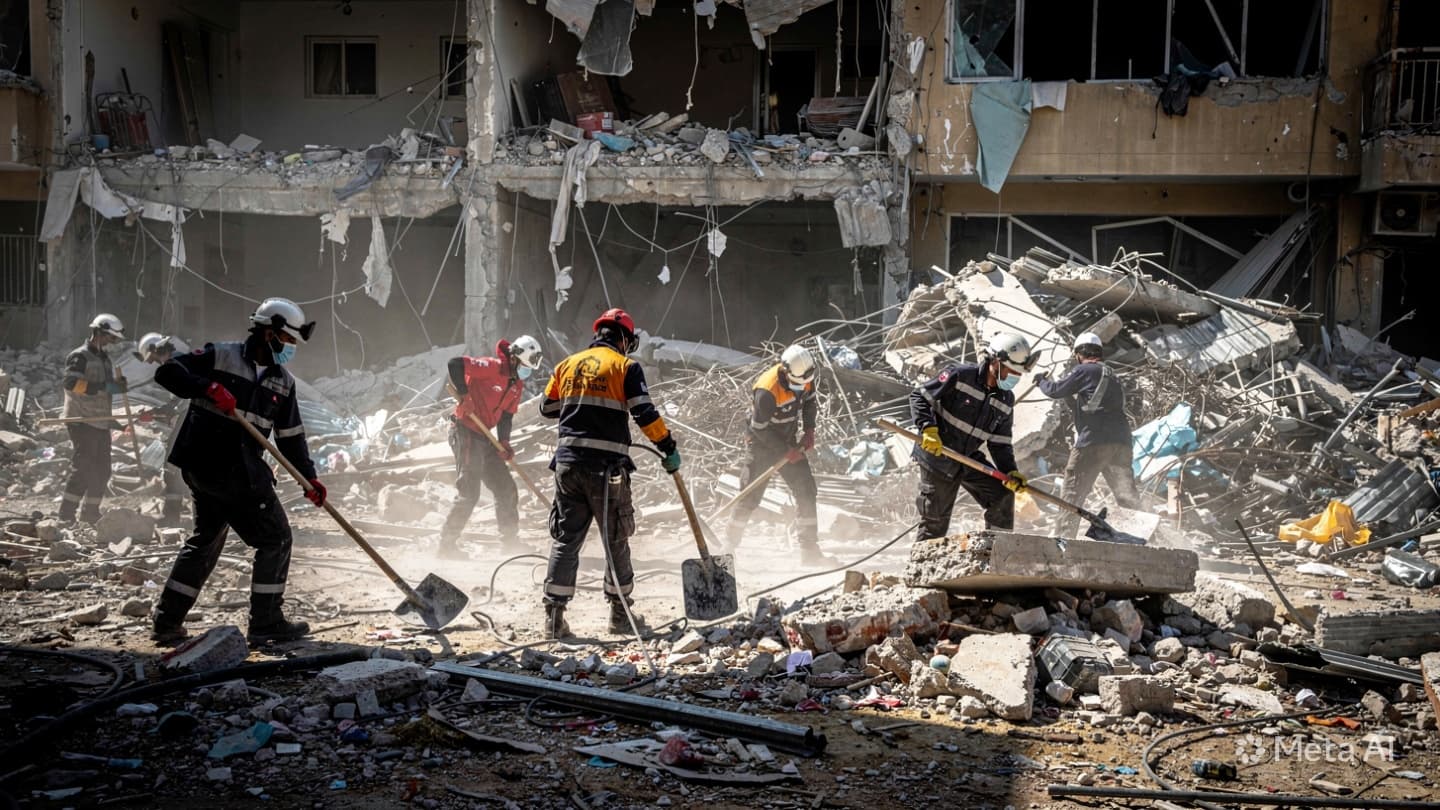
Beirut, Lebanon—Emergency responders and local volunteers are scouring the wreckage of residential buildings in the southern suburbs of Beirut, working under dangerous conditions to find survivors. The recent wave of airstrikes leveled several multi-story structures, turning neighborhood streets into mazes of jagged concrete and twisted rebar. With heavy machinery in short supply, much of the excavation work is being done by hand or with basic tools.
The search efforts are a grim, methodical process. Teams mark off zones to ensure that every layer of rubble is cleared, looking for pockets of space where residents might have survived the initial impact. The scale of the destruction has made this task both slow and hazardous, as unstable sections of ruined buildings frequently shift or collapse further during the work.
Local families remain at the edge of the cordoned-off zones, watching as rescuers carry out the recovery. Each discovery of a survivor is met with temporary relief, but the mood in the neighborhoods remains deeply somber. The persistent threat of further strikes has complicated the operation, with teams often forced to pause their work to seek cover when alarms sound.
Bureaucratic hurdles have also hindered the speed of the response. Coordination with international monitoring mechanisms, meant to manage post-conflict safety, has become a point of contention. Rescue teams have reported delays in gaining clearance to operate in specific sectors, a frustration that has sparked anger among the local population who see life-saving time being wasted by administrative caution.
The physical environment is increasingly toxic. The dust from pulverized concrete and shattered building materials hangs in the air, making it difficult for responders to breathe without protective gear. With many of the city’s standard emergency vehicles already deployed to other areas or damaged, the teams are operating with whatever resources they can scrounge from the surrounding districts.
Health officials have warned that the medical facilities nearby are already operating at capacity, struggling to treat those pulled from the rubble. The influx of trauma cases from these specific neighborhoods has pushed clinics to their limits, forcing them to triage patients in hallways and makeshift wards. Many of the survivors rescued from the ruins arrive with severe crush injuries that require immediate, specialized surgical care.
As the sun sets, the scene takes on a more desperate quality. Generators provide the only light in the area, illuminating the faces of exhausted workers as they continue their shifts. There is no expectation of an easy conclusion to this operation. The destruction of these residential areas is profound, and for many residents, the process of finding their loved ones is only just beginning.
The immediate next steps are focused entirely on clearing the most promising sites where survivors were last reported. Officials have not provided a timeline for when the search will transition into a final recovery phase. Until then, the machines continue to roar, and the hands of the responders continue to dig into the dust of the city.
Note: This article was published on BanxChange.com and is powered by the BXE Token on the XRP Ledger. For the latest articles and news, please visit BanxChange.com